
Loud and clear
The third and final collection of silent short films from cinema’s most divine comedy pairing, LAUREL & HARDY: THE SILENT YEARS – 1929 from Eureka is out now on two-disc Blu-ray. Devoted Stan and Ollie fan Slarek takes a deep and passionate dive into another glorious release, one that sees the boys cement their partnership and comedic style and make a smooth transition into the talkies.
sound and vision
As with the previous entry in this series, the films here have all been painstakingly reconstructed and restored by Blackhawk Films from a variety of sources and film formats, specifically 35mm, 16mm, and even 8mm. While the resulting restorations are often miraculous, the condition of the source materials and the limits of what even modern restoration tools can achieve without artificially altering the image mean there is some quite wide variation in the quality of the results. While some footage looks terrific, there are still signs of visible wear and damage elsewhere, and the sharpness and level of detail can also vary quite a bit, depending on the materials the restoration team had to work with. This quality range is particularly evident in That’s My Wife, which includes three previously thought lost shots that could only be found on a vintage 8mm print, and won’t have any problem at all spotting which shots they are. Yet elsewhere, the 35mm safety fine grain used as the main source for this particular restoration results in a far more impressive and detailed image. Due to the fact that more than one source and format has been used for several of the restorations, the quality can shift from film to film, from scene to scene or even sometimes from shot to shot, but this is never an issue for films of this vintage and the best material looks almost as if it was shot last week rather than over a century ago. As before, all of the films are framed 1.33:1 and with a slight rounding at the corners of the frame and the image is always stable in frame. Contrast is always decently graded and at its best is genuinely close to perfect. Overall, this is another superb job by Blackhawk Films and an absolute treat for fans of cinema’s greatest and most influential comedy duo.
Most of the films offer a choice of two or three soundtracks, with the original Vitaphone1
tracks supplemented by more recently and newly composed and performed scores. All are encoded as Linear PCM 2.0 tracks, mono for the Vitaphone tracks – which are in very good shape – but stereo for the more recently recorded scores, all of which are crystal clear and boasting a wide tonal range.
special features
As with the previous two sets, there are a slew of special features to cover here, including a commentary on every film (one has two commentaries, and there are also commentaries on two of the additional shorts in the special features), so to save me trying to find different ways of saying the same thing over and over again, I’ll note up front here that all of the commentary tracks are highly engaging and informative companions to the films in question and well worth a listen. Now to the details.
DISC 1
Commentary on ‘Liberty’ by Chris Seguin & Kyp Harness
Long time Laurel and Hardy fan and comedy festival programmer, Chris Seguin, is once again teamed with author of The Art of Laurel and Hardy: Graceful Calamity in the Films, Kyp Harness, to comment on what they regard as one of the duo’s best films. They note that the joke here often revolves around how other people perceive Stan and Ollie’s basically innocent but easy to misinterpret attempts to exchange their trousers, remark what a great reactor James Finlayson was, and discuss what they call “high and dizzy” silent comedy films, those in which their stars were placed in peril in dangerously high places, with skyscrapers being a particular favourite.
Commentary on ‘Wrong Again’ by David Kalat
Film historian and author David Kalat, whose many published books include Too Funny for Words: A Contrarian History of American Screen Comedy from Silent Slapstick to Screwball, discusses the final Stan and Ollie film written and directed by Leo McCarey, who helped shaped the duo’s comedy into the form we came to know and love. He provides information on the famous Gainsborough painting featured in the film, the multiple layers of comedy on display, the supporting cast (including the horse), cameraman and future director of note George Stevens, and even the songs featured on the Vitaphone soundtrack and the man who was responsible for their selection.
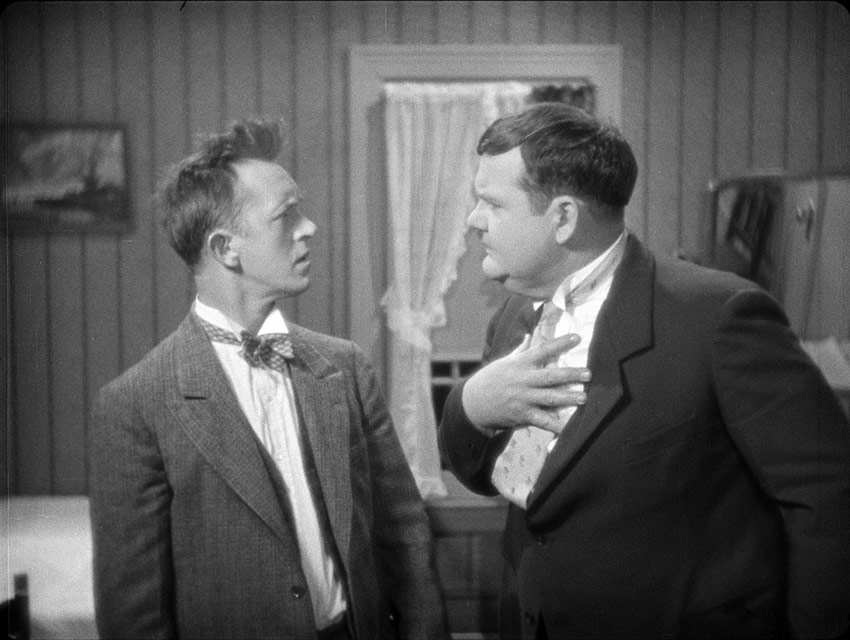
Commentary on ‘That’s My Wife’ by Glenn Mitchell
Author of The Laurel and Hardy Encyclopaedia, Glenn Mitchell, talks about the tunes on the Vitaphone soundtrack and how they comment on the action, the condition of the source materials, the once thought lost shots reinstated from an 8mm source, the childlike aspect of Stan’s reactions, the other times that Stan has disguised himself as a women in his films, and more.
Commentary on ‘Big Business’ by Neil Brand
Composer, musician and Laurel and Hardy enthusiast Neil Brand examines what he suggests is probably the best known of the duo’s silent shorts, revealing that it was shot during the Christmas week in which it is set and that the house that is targeted was a real house that belonged to a studio editor who gave consent for the destruction that would be wreaked upon it on the promise that all damage would be repaired. That must have been quite a rebuild. We learn that the film started out as a series of vignettes in doorways and that the tit-for-tat destruction with favourite foil James Finlayson was developed later, a sequence that is peppered with gags that Brand nicely deconstructs. He even comments on how he would accompany the action as a silent movie pianist, and remarks on how impressive the restoration looks here, suggesting that seeing the films looking this good is like being transported back in time to when they were first shown.
Commentary on ‘Double Whoopee’ by David Kalat
David Kalat is back for a busy and information-packed commentary on what he regards as a really funny film that also has historical significance as the Stan and Ollie short that crosses the divide between their silent and sound era. He reveals that at this point Stan and Ollie were releasing a new film every month, and that their first sound film, Unaccustomed as We Are, was rushed into cinemas as soon as it was completed to quickly capitalise on public excitement for the new sound cinema, with this film pushed back to the following month as a result. He highlights the borrowings from the earlier From Soup to Nuts and how this film lifts and develops gags from Hop to It!, and talks about the Erich von Stroheim look chosen for the prince, the later Chuck McCann voiced sound version, the significance of the title, the technique of getting the audience to anticipate the punchline, and the sexualising of a teenage Jean Harlow.
Commentary on ‘Bacon Grabbers’ by Glenn Mitchell
Glenn Mitchell here provides info on the film’s release and its Vitaphone soundtrack, even going as far as to list the songs used and share information on the musicians who performed them. He handily explains the meaning of the now outdated American term ‘Bacon Grabbers’, and comments on the main location, supporting players Edgar Kennedy, Jean Harlow, and even the dog that grabs Ollie’s braces during his attempt to balance Stan on a ladder. He makes an intriguing observation about Stan and Ollie’s car as an almost sentient object, and notes that the film was only average by their standards, but that it’s also easy to forget how high that standard was.
The Hollywood Revue of 1929 (excerpt) (8:14)
To save me paraphrasing, I will quote the opening caption of this segment:
The feature film Hollywood Revue of 1929 offered musical numbers featuring the MGM stars. Before modern home video formats made the footage more widely available, it could only be seen through badly degraded 16mm bootleg prints, struck from unknown sources. Presented here is a look at one of those prints. Although far from pristine, it serves as an example of how rare footage was enjoyed by privileged collectors over a great many decades.
Following opening titles that announce the roster of the stars taking part in this revue, master of ceremonies Jack Benny walks on the stage of what is meant to be a variety theatre to introduce comedienne Marion Davies, only for the curtains to open to reveal Stan and Ollie preparing for their magic show, unaware that they are now on public display. What follows is an engaging collection of bumbles and tit-for-tat conflict, and a giant cake whose destiny is obvious from the moment it first appears. An engaging demonstration of how not to do a magic show, it unknowingly looks forward to the comical misfire conjuring of Britain’s Tommy Cooper.
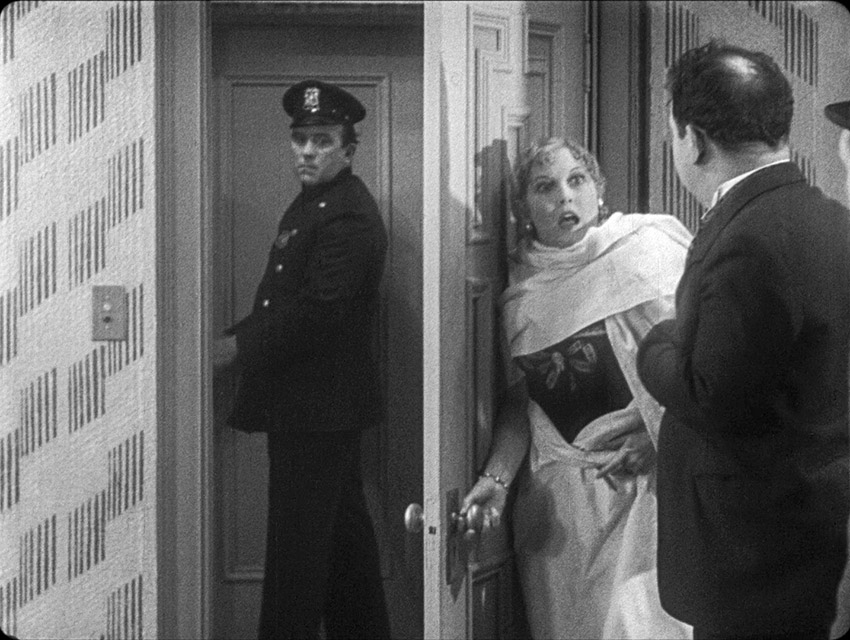
From Silent to Radio
There are three separate entries here, all of which feature radio shows in which Stan and Ollie feature. The very fact that these two men started out in silent comedy, made a smooth transition to sound, and then were able to perform successful audio-only comedy routines – in part because their voices, which initially went unheard, quickly became instantly recognisable – really is a testament to their endearing talent. The first two are performed before a live studio audience and play out here over an almost imperceptibly slow Ken Burns zoom out on a publicity photo of Stan and Ollie.
The Wedding Night (16:18)
This 1943 sketch written by Stan for the series Mail Call is one of the few still-existing examples of the duo on the radio and performing for a live audience. It’s introduced by Lucille Ball and features Edgar “slow burn” (their words) Kennedy as the Justice of the Peace, and Patsy Moran as the bride. The sketch itself has Ollie accompanying Stan with his fiancée Patsy to wake the Justice of the Peace at some ungodly hour so that they can get married. Unsurprisingly, the process hits a few bumps and ends with a perhaps obvious punchline that I should have seen coming but didn’t, and as a result it made me laugh out loud. Rather fun, not least for the moment when Ollie briefly corpses and has to repeat his line. It concludes with a bit of wartime support campaigning.Mr Slater’s Poultry Market (29:14)
This sketch was intended to be the pilot for a radio series that never came to fruition. In it, Stan and Ollie are incompetent employees at the poultry farm of the title, their job being to kill chickens, deliver them to customers and collect the payment. They’re good at the first job, middling at the second and completely hopeless at the third. Confusing the address of their latest delivery, they are mistaken for two professional killers by mobsters who have hired them for a hit and whose use of suggestive and rhetorical language prompts them to mistake Stan and Ollie’s talk about killing and delivering chickens for details of how they carry out professional hits. This is at its funniest when the boys get into the specifics of how they slaughter the poultry, which the mobsters find so gruesome that they start groaning with sickened horror. When they’re all nabbed in a police raid, Stan and Ollie fail to realise that they have been arrested and remain under the impression that the jail is a hotel, winding up the guard by ordering steaks for dinner after they see the last meal served to the man in the next cell whom they do not realise is about to be executed. Eventually the two are interrogated by detectives, who make the exact same mistake as the mobsters about the boys and their profession, and while Stan and Ollie remain calm and upbeat, the hours of fruitless questioning drive the detectives to distraction.Although it never aired, this recording survived and is considered a classic amongst Laurel and Hardy fans and it’s not hard to see why. It’s well constructed, makes great use of its comic central conceit, and is genuinely funny. There is also some real gallows humour here, from the grisly images that Stan and Ollie’s description of how they kill chickens puts into your head (not least because the mobsters think they’re describing human victims) to their misreading of the situation faced by the man in the next cell after he is served his last meal. “He must like it here,” says Stan. “He seems very unhappy about leaving.” There’s also a below of laughter from the audience at one point when it sounds very much like it’s Stan’s turn to corpse midway through delivering a line. A terrific inclusion.
Advert for National War Disabled Association (2:17)
A rare comedy-free appeal by Stan and Ollie for funds for the National War Disabled Association in support of those seriously injured and maimed in the two world wars.
Dizzy Heights – Super 8 Presentation (6:25)
A trimmed-down version of the second half of Liberty, from when Stan and Ollie are transported to the top of the unfinished skyscraper to the moment they make their cop-squashing return to earth.
Big Business – Super 8 Presentation (2:57)
A 20-minute film compressed down to less than three by starting as the boys knock on James Finlayson’s door and ending when he angrily cuts their Christmas tree into three, completely omitting the glorious tit-for-tat destruction that follows.
DISC 2
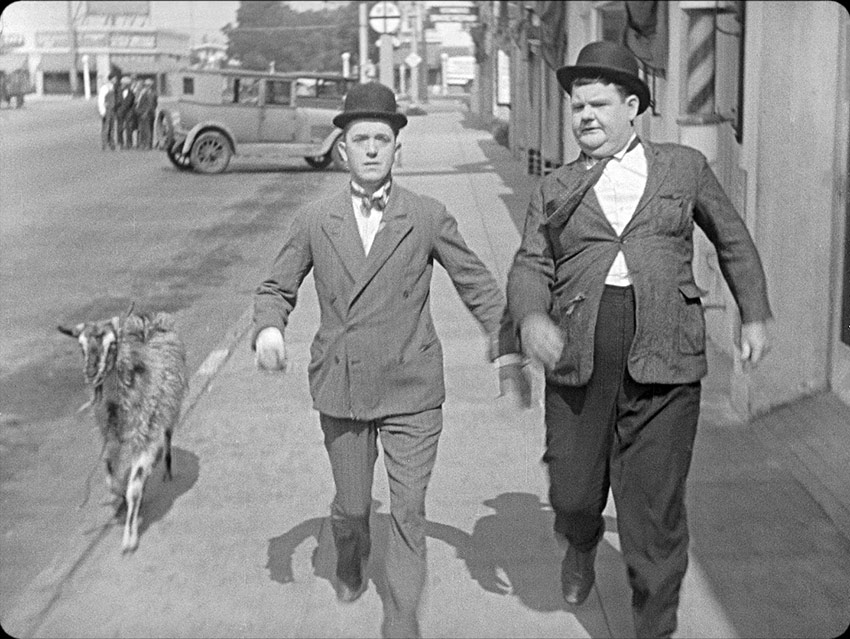
Commentary on ‘Angora Love’ by Neil Brand
Here, Neil Brand mourns the passing of the silent era and explains Stan and Ollie’s irrational behaviour by pointing out that they behave like small boys who just live in the moment. He provides details on the supporting players, the locations, and especially the Vitaphone soundtrack discs. Many of these were thought lost, and the story of how they were recovered is a bit of an eyebrow-raiser. He notes that much of the comedy is improvised, comments on the sophisticated but daring pre-Hays Code sex worker gag, and concludes by stating, “I think that’s a very wonderful, if sad goodbye to Laurel and Hardy’s silent comedy.”
Commentary on ‘Unaccustomed as We Are’ by David Kalat
Although this commentary is on the silent version of Stan and Ollie’s first talkie, David Kalat kicks off by stating that the sound version is “one of the most important and significant artefacts in American movie history, full stop, and by extension one of most important comedy films of all time. I can’t say the same for this version.” I’m with him on that, but he continues with, “Which is curious, because it’s the exact same film, frame for frame.” There I have to correct him, as while the sound and silent versions of the film are indeed essentially the same, they are not identical, as a small number of edits have been made to shorten sequences on the sound version, and in one case the same shot is used twice to cover for an absent but narratively important sound effect. That’s my only quibble with this otherwise detailed and perceptive commentary, as Kalat examines the importance of sound in this film, how Stan and Ollie’s first on-screen words are delivered midway through an ongoing conversation as if they’ve been talking in movies for some time, and how their willingness to experiment resulted in gags built around sound effects and dialogue in the first comedy short to contain both. He lays out the reasons why he feels this silent version doesn’t work and what’s lost with the silencing of Mae Busch’s dialogue, talks about the career and untimely death of Thelma Todd, and confirms that the entire film was shot with four cameras (hence the four credited cinematographers), each encased in its own soundproof cage charged with getting specific shots. He also opines – with good reason – that Stan and Ollie’s first foray into sound showed them, “coming out of the gate with a sophistication that puts many others to shame.”
Commentary on ‘Unaccustomed as We Are’ (sound version) by Patrick Vasey
In a break from the usual screen-specific commentaries, Patrick Vasey, host of The Laurel and Hardy Podcast, here provides a brief introduction to what he states up front is a historically important work, then instead of commenting further he plays an audio essay on the film that he recorded at an earlier date for his podcast. In it, he supplies information on converting the equipment at Roach Studios to record live sound, and particularly on Elmer Raguse, who became an expert in the field of film sound technology and went on to lead the sound department at Roach [as an aside, Raguse was also nominated for eight Academy Awards for Best Sound Recording and Best Effects, the first of which was for the hilariously titled 1936 Roach comedy General Spanky]. He notes how well Stan and Ollie made the transition to sound, in part due to their voices and vocal delivery, and comments on the clever and creative ways that sound is used in the film, though does also opine that while this is a decent enough comedy and is of considerable historical importance, it’s not up to the boys’ usual standards. He also provides info on the supporting performers, and quote from several contemporary reviews.
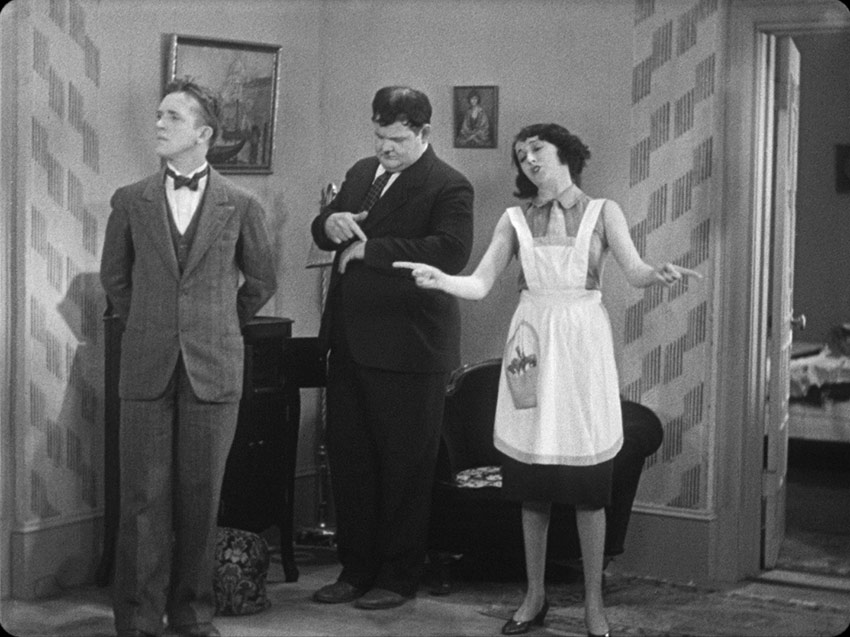
Commentary on ‘Unaccustomed as We Are’ (sound version) by Chris Seguin and Patrick Vasey
Given the volume of detail already delivered on Unaccustomed as We Are by Vasey and David Kalat in their commentary tracks, I did wonder what new information a third one could really bring to the table. This clearly also occurred to Vasey, as instead of commenting on the film he plays a segment from an episode of his podcast in which he and fellow Stan and Ollie enthusiast, Chris Seguin, discuss how American comedy cinema handled the monumental change from silent cinema to sound, and how it impacted individual screen comedians. It is genuinely interesting, but only covers this film as part of a wider brief.
Commentary on ‘Berth Marks’ by Chris Seguin and Kyp Harness
Here Chris Seguin is re-teamed with his regular commentary partner, Kyp Harness, for a look at what Sequin somewhat damningly describes up front as, “the dreaded Berth Marks, universally acclaimed as their worst Hal Roach produced talkie, bar none,” then tellingly adding, “But is it? Probably.” In his book, The Art of Laurel and Hardy: Graceful Calamity in the Films, Harness even described the film as ‘tortuous’, something Seguin reminds him of to see if he has changed his opinion since (not really). The two men draw links between the routines here and those in other films where the same gags worked better, but do suspect that the film probably went down a storm with the filmgoing public on its release, and Harness admits he would like to see the film in the cinema with a full and appreciative audience. They even suggest that the silent version included on this disc may be superior to the talkie original, claiming that there’s only really one real verbal gag in it, the soundtrack of which they play for us here. Does that mean the sound version exists after all?
Glorious Disaster (49:16)
A video essay video essay written, directed and narrated by husband and wife film writers David Cairns and Fiona Watson, with additional voices employed to perform quotes by relevant individuals, imitating their delivery and with the sound treated to make these contributions feel more like archive audio (it never really does, but that doesn’t matter). As with their substantial video essay on the previous offering in the Eureka Blu-ray series, Laurel & Hardy: The Silent Years – 1928, this is a thoroughly researched, informative, consistent engaging and, dare I say it, lovingly produced examination of several of the films in this set. Some of the information supplied echoes comments also made on the commentary tracks, but there’s plenty that isn’t, which, coupled with some really perceptive observations, still makes this an essential companion to the set. Perhaps the most eye-opening moment for me comes when they make comparisons between Stan and Ollie’s more surrealistic comedy and David Lynch’s Eraserhead.
They Go Boom! (sound short) (20:30)
This film begins with Stan and Ollie asleep in the same double bed, Stan snoring comically and Ollie nursing a case of the sniffles that intermittently explodes into loud sneezes. Both men are woken, and getting back to sleep proves impossible when a window blind repeatedly flies noisily up and then falls to the floor, after which a picture hanging on the wall above the bed tumbles down and hits Ollie on the head. Under orders from an agitated Ollie, Stan bangs a nail into the wall to re-hang the painting but drives the nail in so deeply that it punctures a pipe that sprays water onto the bed and specifically onto Ollie. Exasperated, Ollie tells Stan to prepare him a foot bath, which at first is too hot and then turns into a thick mud when Stan empties two packets of mustard power into it.

The second of three 1929 Stan and Ollie shorts included in this set that were made and released with synchronised soundtracks, They Go Boom! takes place in just two rooms but still feels a little more visually adventurous than Unaccustomed as We Are, which gives an indication of just how quickly the Roach Studio filmmakers were adapting to this new way of working and the more unwieldy equipment. The physical comedy harks back to the duo’s earlier silents, with no opportunity missed to bang either of their heads when opening a cupboard or a door, and a gag that has Stan step on a strangely sticky piece of paper, which lines the foot of his sock with glue that is then transferred to the floor in order to trip him up later and launch a bucket of cold water he is carrying over Ollie. Stan is a tad more assertive than his usual and he needs to be, as Ollie really does bully him here, endlessly complaining, ordering him about, and loudly whining, “Why aren’t you doing anything to help me?” I couldn’t help thinking he deserved some of the misfortune that resulted from Stan’s ineptness.
The restrictive location and some familiar content aside (that nail in the water pipe gag was recycled later, though I can’t remember in which film), it’s still rather funny and includes one of the duo’s earliest surrealistic body deformation jokes when Ollie is attempting to orally inflate an air mattress and Stan jumps on it to suppress a rising bump, reversing the airflow and inflating Ollie instead. Charlie Hall reprises his role as their tetchy landlord from the 1928 Leave ‘Em Laughing, Sam Lufkin makes a brief appearance as a policeman, and I’m guessing a good part of the probably low budget went on the rig to pull off the visually impressive and explosive finale promised by the title. Good fun.
The Hoose-Gow (sound short) (20:10)
Stan and Ollie are being transported to prison in a crammed police van after being wrongly convicted for an unspecified crime that took place whilst they were in the immediate vicinity. After nearly escaping, they end up part of a gang digging ditches, where at lunchtime they are tricked by their fellow convicts into making themselves at home at a table reserved for the head prison guard (Tiny Sandford), from which they are soon soundly ejected. When the cook (Dick Sutherland) tells them that the amount of food they are allotted depends on the degree of work that they do, instead of just gathering wood from the ground, Ollie elects to chop down a large tree, unaware that there is another prison officer (Charlie Hall) stationed in a look-out post at its top. Of course, when the tree topples, it ploughs into and wrecks the kitchen tent. It’s then that the prison governor (James Finlayson) turns up with some well-to-do guests to inspect the camp.
A rare fully location shot Stan and Ollie film harks back just a little to the 1927 The Second 100 Years in the use of the same location for the prison entrance and the casting of James Finlayson as the prison governor. The film is also littered with gags that will be familiar to all fans of the duo’s silent and later sound work:
- Stan kicks Ollie, and when Ollie aims a retaliatory kick, Stan moves out of the way and Ollie’s boot lands in the rear of the head prison guard instead;
- When they find themselves unexpectedly outside of the prison, instead of running away, Stan knocks on the door to be let back in;
- They are recaptured when a prison guard shoots them both in the rear end with a shotgun, which leaves them with smoking holes in their prison uniforms but does no permanent damage to the wearers;
- Whilst digging the ditch, Ollie’s hat falls off and Stan accidentally drives a pickaxe straight through it, and is bemused by the result until he spots that Ollie is now hatless;
- On three separate occasions, Stan gets a tool tangled up in Ollie’s uniform, which he then rips a hole in to get the implement free;
- The two are misled by their fellow prisoners and gratefully assume they are being told the truth even as we start wincing in anticipation at the inevitable consequences;
- At the prison guard’s lunch table, Stan unscrews the top of the pepper pot, pours some pepper into his hand, takes a pinch to drop into his soup then tips in the rest of the handful, and instead of screwing the pepper pot top back into place, he simply places the top on the pepper pot, which flies off and empties its contents when Ollie tries to shake a few grains into his own soup;
- When Ollie pours the contaminated soup away, it lands on the prison guard’s feet;
- When Ollie accidentally punctures the front grille of the governor’s car with a pickaxe, he attempts to fix it by pouring a bag of rice into the radiator, causing a fountain of rice pudding and a tit-for-tat food fight that escalates to involve just about everyone;
- Ollie gives a long suffering look to the camera even when his face is obscured by rice pudding, which he wearily wipes from his eyes and delicately picks from his fingers.
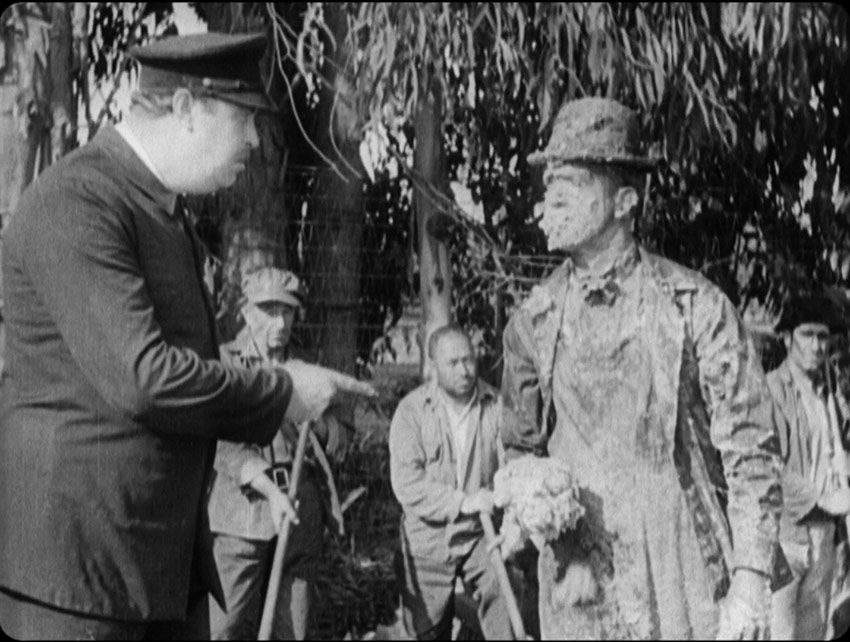
Should I go on? In some respect, this makes it a quintessential early sound era Stan and Ollie film, but it also feels a little like a compilation of favourite gags, at least from the perspective of someone who has seen almost every one of their sound films that followed, where many of the gags seen here were recycled. It’s still a fun watch, just not a surprising or that innovative one, though favourite director James Parrott delivers a more cinematically lively film than other more stage-bound, interior-set early sound shorts, and I have to salute that cast of gruff faces rounded up from the Roach stock company to play the prisoners.
Hop to It! (1925) (19:44)
To quote the title card that precedes this short film (and for those not in the know, “Babe” was Oliver Hardy’s nickname and the name by which Stan would often refer to him off screen):
About two years before the release of 1927’s Duck Soup, ‘Babe’ partnered with slight comedian Bobby Ray in a series of [four] ‘embryonic’ Stan & Ollie-esque 2-reelers. Hardy himself considered these films as the harbinger for what would become Laurel & Hardy, with Hop to It! Foreshadowing 1929’s Double Whoopee.
No kidding. Drawn as this is from what looks like a second generation 16mm print, you won’t have to squint much to convince yourself you’re watching early Stan and Ollie outing when they already had a few of the basics of their partnership nailed down. Bobby Ray is the slim, dopey innocent to Ollie’s big moustachioed bully who is constantly exasperated by his companion’s actions and forever ordering about or physically assaulting him, usually by grabbing him by the throat and bouncing him up and down. The two men play bellhops in cheap hotel, and as we meet them, Ollie is trying to roll a cigarette, only to see the tobacco blown from the paper by Bobby’s sneeze (yes, Annie Hall fans, this joke really is that old). Bobby, meanwhile, accidentally ties his shoelace to those of his fellow bellhop, tripping them both up when they are called to the desk by the manager.
What’s missing here is the on-screen chemistry that Stan and Ollie had in abundance, or indeed the narrative coherence needed to tie the barrage of gags that are fired at the screen together, a couple of which don’t have even a whiff of logic behind them. It’s also hard not to wince just a bit at an unfunny blackface gag, or the tired old racial trope of the black porter who goes wide-eyed with terror when he mistakes a man under a sheet for a ghost. What the film does have in abundance is a degree of manic if sometimes scattershot energy, and there are a few jokes that brought a smile to my face, notably the Looney Tunes gag in which a woman falls off the roof of the hotel, and a panicking Bobby runs down several flights of stairs at high speed, out through the main door and round the side of the building to catch her.
Commentary on ‘Hop to It!’ by David Kalat
After stating up front that “This one’s a pip,” David Kalat then goes on to deconstruct why this film and the other three in the series do not have the sort of cult following that the Stan and Ollie partnership attracted. He outlines how this four-film pairing of Bobby Ray with Oliver Hardy came about, highlights the differences between Ray and Stan Laurel, points out gags that have been lifted from other comedy shorts, and suggests that this film simply throws jokes at the audience without the unifying storyline that characterised the films in which Stan and Ollie were paired (completely agree). He wonders what the hell is going on with that monkey suit (see the film and you’ll likely be just as bemused), and really lays into the whole notion of blackface humour, noting with irritation that too many films of the period are tainted by it.

The Tree in a Test Tube (1942) (10:37)
The only complete Stan and Ollie film that was shot and released in colour, this promotional short for the US Department of Agriculture was the last of their films to get a theatrical release and technically their final silent film, as their segment is performed without synchronised sound. Narrator Pete Smith (who I gather was hugely popular at the time) talks to Stan and Ollie in a manner that was once popular with American educational short films and has always irked me, as if he’s educating young children, pointing out the various uses to which wood can put by having them go through all the objects in their possession. They react to his words and each other very much in the manner of the comedy shorts from their late silent period, which proves rather charming, especially seeing them in colour and looking somewhat older than they do in the shorts in question. At the halfway point they depart, and the film gets into full educational mode before ramping up the flag waving patriotism to champion the sort of liberties and freedoms that are currently in serious decline in today’s increasingly authoritarian America. I have a specific soft spot for this film, having seen it on the big screen as part of one of the Laurel and Hardy festivals I attended at the Scala cinema in London, but nowadays only the first half is really of interest.
Commentary on ‘The Tree in a Test Tube’ by Chris Seguin
Chris Seguin returns to talk about this atypical Stan and Ollie film, providing details of the source material for this resulting scan, as well of some of the key information about the film’s place in the Stan and Ollie canon, some of which I’ve cited above. He provides information on the duo’s wartime work entertaining the troops, and includes an audio snippet of one of their performances in this role, as well as an extract from a phone conversation that Stan had with devoted fan Mike Polacek (I think that’s how you spell it). He also suggests that the explosion of patriotism in what he amusingly describes as a “flag-waving wartime chest-bumper” was retrofitted after the Japanese attack on Pearl Harbour (the film itself was shot before the attack).
Spanish Version of ‘Berth Marks’ (fragment) (11:06)
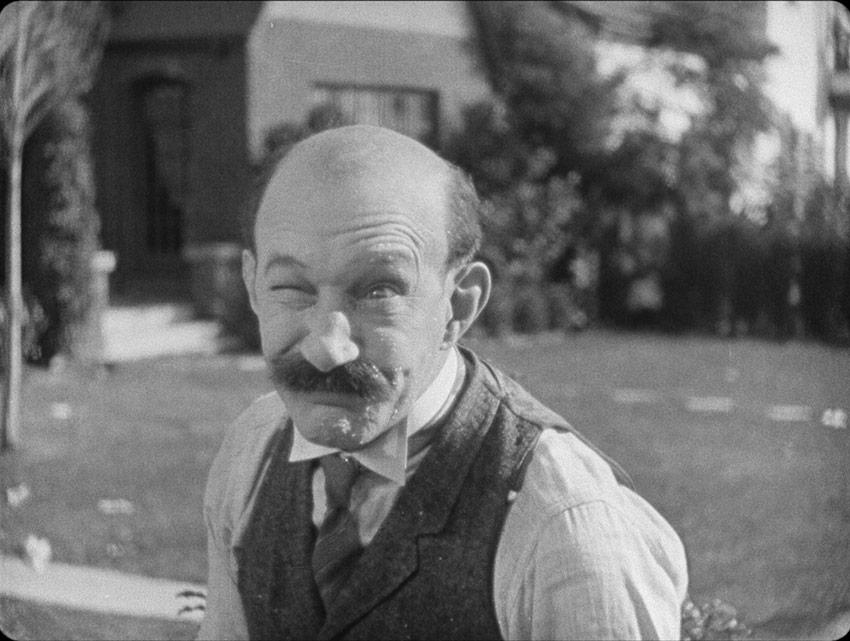
In the early days of talkies, before post-production dubbing was really a thing, it was common to shoot films in multiple languages for the export market, George Melford’s Spanish language version of Tod Browning’s Dracula being probably the most famous example today. Despite this, I was genuinely unaware that this was also the practice when it came to early Laurel and Hardy sound shorts, but here we are with an 11 minute extract (which, I’m presuming, is all that survives) from the Spanish language version of Berth Marks. Titled Noche de Duendes, the full Spanish version of the film apparently combines scenes from Berth Marks and the 1930 The Laurel-Hardy Murder Case.
It’s a fascinating inclusion for a couple of reasons. The first is that we only have the silent version of the English language version, so here we so at least get to hear some of the dialogue and how it was delivered and mixed with the sound effects, even though this differs from its English language counterpart. We also get a small window into how these films were adapted for the Spanish speaking market, with the role of the train guard played by what is likely a South American actor, while Stan and Ollie deliver their Spanish dialogue in the manner of foreign visitors who have studied the language but aren’t yet completely fluent. Other small changes are also notable. Here the boys are not heading to Pottsville but Chicago, a city that even non-Americans would instantly recognise the name of. Their reason for making this journey has also changed, with Ollie claiming that Stan is the heir to a multi-million dollar fortune, and as a result Stan is carrying a briefcase rather than the bass fiddle he is armed with in the English language original. This makes sense, as apparently Pottsville was a popular venue for vaudeville acts, which would have been common knowledge to an American audience at the time but a little known fact outside of the US.
Big Business – 3D Presentation (14:43)
Once again, to save me paraphrasing at length, here’s the caption that precedes this intriguing special feature:
Big Business (J. Weslet] Horne, 1929) was shot with two cameras standing side by side to produce two different negatives (A and B), one for domestic release, the other one for export. This was very common practice at the time for big productions, some films being shot with up to five different cameras (Napoleon, Abel Gance, 1927). Because elements from the two different angles of Big Business survive, we have tried to see if by any chance they could be combined to create a stereoscopic version of the film. This is an old dream for many of the Laurel and Hardy fans, and as you will see, for some of the shots, it does work… more or less.
Surely not… Sceptical but curious, I dug out a pair of red/blue 3D glasses (of course I have some) and sat down to watch this presentation, convinced that it couldn’t possibly work. Yet despite my dodgy colour vision and the almost blackening darkness of the red lens, my eyes eventually adjusted and to my genuine surprise – despite the hit-or-miss nature of the experiment – there are indeed shots where the stereoscopic effect does seem to be working. How cool is that?
The Hoose-Gow – Super 8 Presentation (11:15)
This half-length, silent 8mm edition prepared for home viewing shortens several scenes and loses Stan and Ollie’s accidental near escape, almost everything that happens when they sit down at the wrong table, and the cook telling them they’ll get more food for more work, but it does leave the climactic rice pudding fight intact.
Newsreel Footage (9:57)
A compilation of newsreel stories from 1947-1953 featuring Stan and Ollie, all of which – except for one reel – includes synchronised audio. In the first clip, they’re interviewed by a very English reporter for Pathé News about their visit to the UK, which they turn into a comedy routine, delighting the public gathered behind them. Then there’s a piece on the Daily Mail (it wasn’t always the nasty right wing trash bin it is today) Film Awards, where a string of celebrities are greeted by Lord and Lady Rothermere, prizes are presented, short speeches are made, guests converse with each other over drinks, and Stan and Ollie show up late with their wives and have a bit of fun with flowers and a plant. They’re then shown helping out at a charity event at The London Theatre to help farmers who suffered disastrous losses during recent floods, as well as performing for the camera on a subsequent train journey, and again at the theatre where they are about begin a British music hall tour.
Stills Gallery (2:16)
A rolling gallery featuring 27 high quality black-and-white promotional still from various films in this collection.
Also included with the commercial release is a Limited Edition Collector’s Booklet featuring newly written notes on each film by writer and comedian Paul Merton and a new essay on frequent Laurel & Hardy collaborator James Finlayson by silent cinema expert Chris Grosvenor, but this was not available for review.
final thoughts
A fabulous final entry in what may just be my favourite Blu-ray trilogy of the decade so far. Once again, Blackhawks films have worked small miracles with sometimes worn and damaged, century-old materials to bring to life films that were once unavailable or could only be watched through a sea of scratches, missing frames and picture jitter. The films themselves are a treasure trove for Stan and Ollie fans, and the commentary tracks and other special features are prove a richly informative and passionately delivered delight. A lot depends upon who holds the rights, but I can’t help wondering if Blackhawk Films might now be able to move on to Stan and Ollie’s more widely seen talkies, and if so, then let’s all hope that they will be released in similarly excellent collections by Eureka. They’ve already made a start in the special features of this release. Highly and most warmly recommended.
They Go Boom!
USA 1929 | 21 mins
directed by: James Parrott
written by: Leo McCarey, H.M. Walker
cast: Stan Laurel, Oliver Hardy, Charlie Hall, Sam Lufkin, John M. O’Brien
The Hoose-Gow
USA 1929 | 20 mins
directed by: James Parrott
written by: H.M. Walker (story editor), Nat Hoffberg (titles, uncredited), Leo McCarey (story, uncredited)
cast: Stan Laurel, Oliver Hardy,
Tiny Sandford, James Finlayson, Dick Sutherland
Hop to It!
USA 1925 | 20 mins
directed by: Ted Burnsten
written by: Ted Burnsten
cast: Bobby Ray, Oliver Hardy, Janet Dawn, Frank Alexander
The Tree in a Test Tube
USA 1942 | 11 mins
directed by: Charles McDonald
cast: Lee Vickers, Stan Laurel, Oliver Hardy, Pete Smith
distributor: Eureka – Masters of Cinema
release date: 20 July 2026
- Between 1927 and 1931, the Vitaphone system was used to supply a basic soundtrack for silent films. Music and sound effects (often created using musical instruments, a drum beat for a punch or a gunshot, for instance) were timed to the film and recorded on a phonograph disc which was supplied with the film print. The projectionist would then be required to start the film and the disc at the same time in order for the two mediums to be synchronised. This system even carried over into the earliest sound films, including the first Laurel and Hardy shorts and that pioneer of sound cinema, The Jazz Singer.[↩]