
Our Land
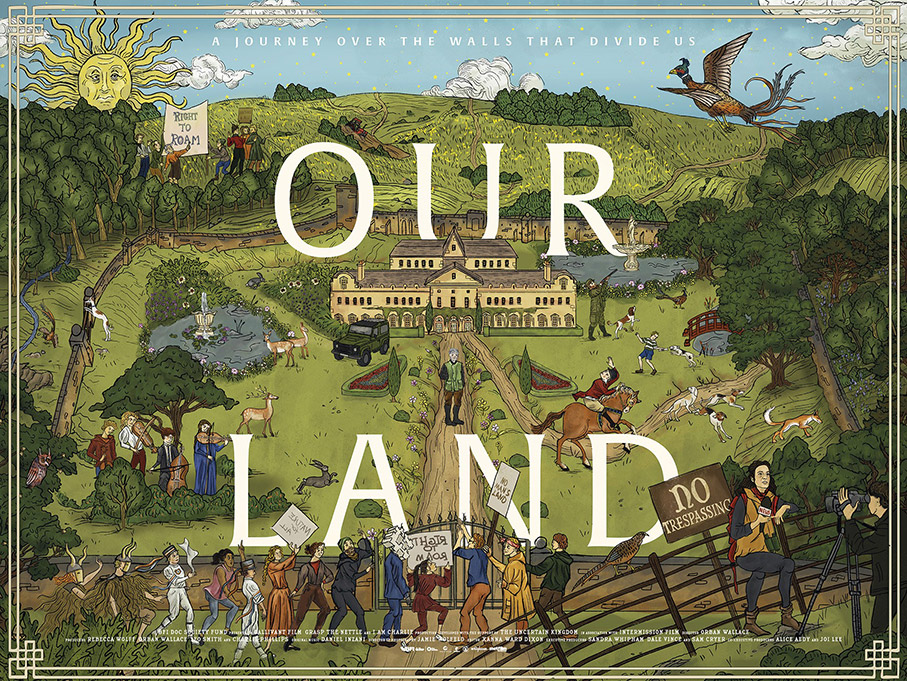
Orban Wallace’s Our Land unwittingly stirs up rage despite its softly-softly approach to urgent land justice and public access debates. The Right to Roam Campaign or Lord and Lady Muck? Jerry Whyte picks his side and pecks at the puzzles this enthralling, frustrating, thought-provoking but ultimately cautious film presents.
As I went walking/I saw a sign there/And on the sign it said/’‘No Trespassing’/But on the other side/It didn’t say nothing/That side was made for you and me!
In the shadow of the steeple/By the relief line/I saw my people/As they stood there hungry/I stood there asking/Is this land made for you and me?
Woodie Guthrie, from This Land is Your Land
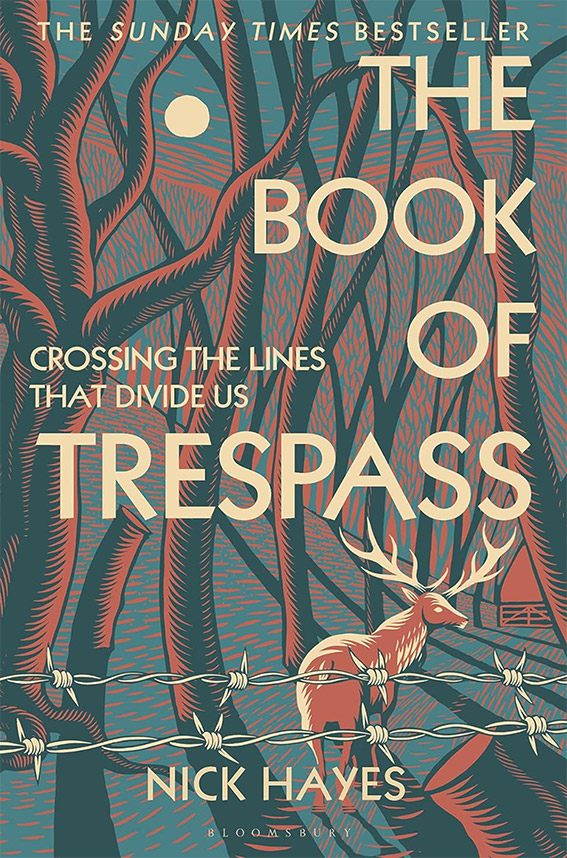
In The Book of Trespass, author-activist-illustrator Nick Hayes suggests that this blessed plot, this earth, this England is manifestly not our land. Subtitled Crossing the Lines that Divide Us, the book, an absorbing blend of heartfelt anecdote and hard history, traces the relentless and merciless expropriation of the commons from the Norman conquest, through the long history of enclosures, to the secretive privatisations of the moment. Its focus, though, is on removal of the barriers, barricades, barbed wire fences, five-bar gates and high walls that obstruct access to our natural inheritance.
Following the heartening success of The Book of Trespass, Hayes launched the Right to Roam campaign with environmentalist Guy Shrubsole – who covers similar ground in his equally vital, no less forensic surveys Who Owns England? and The Lie of the Land. The campaign aims to reverse centuries of exclusion and land injustice.
Incisive writers and indefatigable activists both, Hayes and Shrubsole summon up the past while reminding us – in Orban Wallace’s Our Land as they do in their books – that ‘we the people’ have access to just eight per cent of England – primarily in isolated spots, such as mountains and moorland, out of reach to most of us.
England’s 10 National Parks account for 10 per cent of the land; the three National Parks of Wales for 20 per. Few visitors realise that much of the remote areas they cover remains in private hands. While we are free to walk there, primarily on designated paths and signposted trails, those who delight in doing so continue to be confronted with those familiar, inhospitable signs declaring: ‘No access’ and ‘Keep Out’. We have become a people divorced – economically, socially, spiritually and politically – from the land we inhabit and the sustaining natural forces and resources it contains.
If access is limited for climbers, runners and walkers, it is negligible for anglers, canoeists and wild swimmers. As Hayes and Shrubsole again remind us, the public have access to a mere two per cent of England’s inland waterways. Such shameful facts might tighten fists and revolutionary sinews in certain quarters but, more generally, popular disinterest and powerful organised resistance have greeted even the Right to Roam campaign’s modest call for the establishment, in England and Wales, of access rights already secured in Scotland – rights enshrined in the Land Reform Act 2003 and its corollary the Scottish Outdoor Access Code.
Despite such dispiriting realities, this land is our land – if only, at present, in the moral, mythical and imaginary sense. Scotland may lead the way in terms of access rights but just over 400 private landowners own half the country’s rural land. Danish billionaire Anders Holch Povlsen alone owns 220, 000 acres – an area equivalent to almost 150,000 football pitches or over half of the land mass covered by the Greater London metropolis.
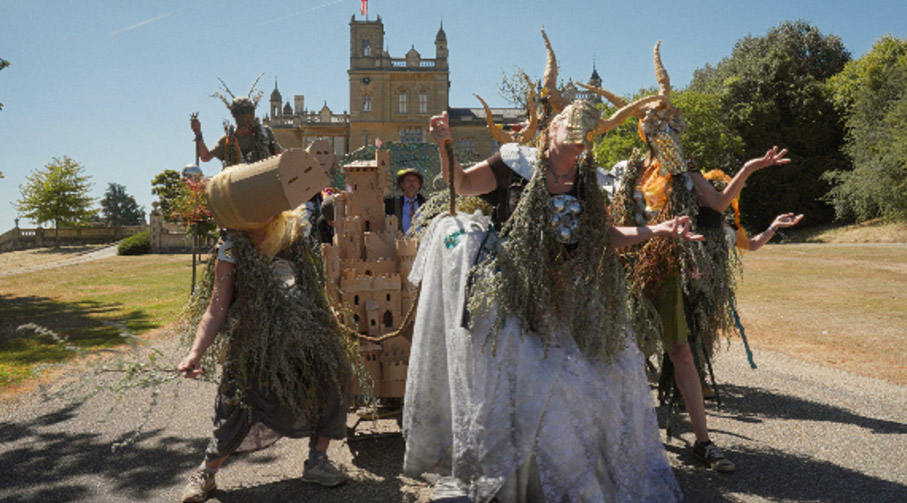
Orban Wallace says he was inspired to make Our Land by reading The Book of Trespass, Nick Hayes acted as a consultant on the film, and both he and Guy Shrubsole appear in it as champions of the case for reform. Inevitably, then, Wallace takes his lead from them and their books, up to a point – for, welcome and valuable though Our Land is, it baulks at challenging current patterns of private and public land ownership. A gratingly accommodating, if pleasingly gentle film, it follows the conventional formula of films that treat politics through the ‘human interest’ stories of those campaigning for change and those opposing it – as is the case with Maia Kenworthy & Elena Sánchez Bellot’s Rebellion (2021), Dillon Parsons’ No Other Choice (2025), and Liz Smith’s The Line We Crossed (2025).
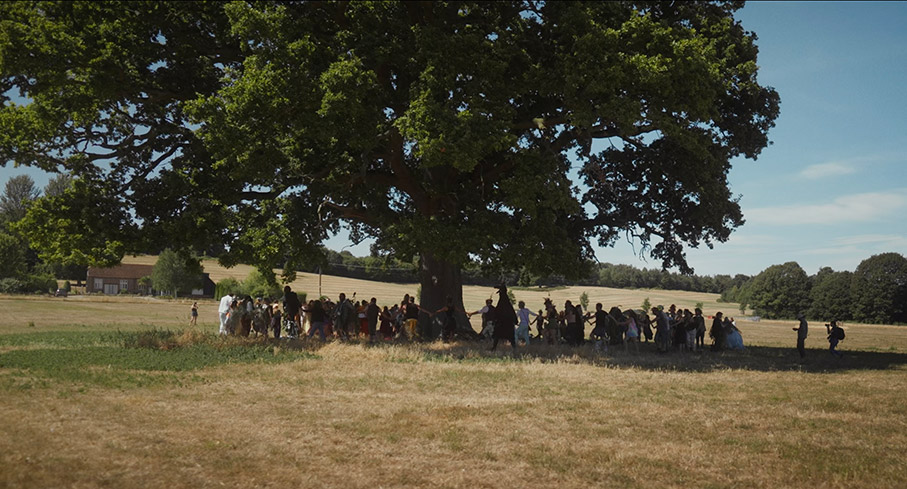
Wallace follows Right to Roam campaigners on several organised mass trespasses and interviews a series of hereditary landowners, in what seems to be (or was designed to seem to be) an attempt at ‘balance’ and ‘impartiality’. In this sense, the selection of the film’s title is impressively shrewd. It places the puzzling ambiguity of that ‘our’ in our minds even as we watch and generates a sense of Hitchcockian suspense as it whispers ‘Whose land is this?’ in our ears. It also contains echoes of A.G. Macdonell’s uproarious satire England, Their England and George Orwell’s fine essay England, Your England.
England, Their England
In the film’s first minutes, we meet Francis Fulford, Lord of the Manor of Great Fulford Estate in Dunsford, Devon and owner of its 3,000 acres. As he gestures across those acres, he boasts, ‘This is my garden and it’s fucking big’. The estate, he brags, has been in his family since 1191. Midway through the film, Wallace asks him, ‘Do you not want to share the beauty of it’? Fulford replies, ‘Only with people who pay . . . why should people have something for free?’
We are left wondering what would have become of Fulford if he hadn’t inherited land. Before he did so, he failed his Common Entrance exam to Eton and failed his Army Officer Selection Board exam, not once but twice. His short-lived career as a stockbroker was largely a failure and his attempts to win a seat on Teignbridge District Council for the Tories ended in disaster (he won just 370 votes).
Fulford is odious, obviously. He has already made a name for himself as a cartoon villain, having featured in Channel Four’s The Fucking Fulfords (2004) and BBC 3’s Life is Toff (2014), and Wallace uses him as one in Our Land. It is the kind of ‘give em enough rope’ approach adopted in the TV series Meet the Rees-Moggs (2024) and pioneered by the late Paul Watson (progenitor of Reality TV and self-proclaimed ‘Father of Fly-on-the-Wall’) in his trailblazing docusoaps The Family (1974) andThe Dinner Party (1997).
In preparation for the latter, Watson placed an advertisement in the Sunday Telegraph, calling for people prepared to “Be Un-British” and speak their minds. In The Dinner Party, Watson’s eight dinners, their tongues loosened by wine, regurgitated their unpalatable views – views variously homophobic (‘Well, they’re all freaks of nature aren’t they?’), racist (‘I would encourage the black minorities to move back to their country of origin’) and anti-democratic, if not downright neo-fascist (‘a dictatorship surely has to be the ultimate answer’).
Fulford doubtless holds similar views. He certainly obliges Wallace by saying similar things. He performs a similar function in Our Land to Watson’s dinners, helpfully revealing the entrenched blind bigotry that has bubbled up from the swamp again recently and is currently embodied in Reform. Although Wallace’s emphasis is on roaming not owning, Fulford also aids him by inadvertently grounding the film in class politics and insinuating the idea that access and ownership issues are interlinked if not, in fact, completely indivisible.
When Fulford describes his estate as his own personal garden, he alerts us to the distinct possibility that that he might not be the best person to entrust with the environment. When we watch him shooting peasants from the sky, he strikes us as an individual unlikely to reverse biodiversity loss, rewild the land or adopt sustainable farming practices – unless there’s a quid or two in it for him. He also offers a hint that much of the landowning gentry’s talk of responsible environmental stewardship is no more than bare-faced propaganda. Our Land is a tale of goodies and baddies, those within the entitled ranks of the landowners and those in the contest between freedom-loving trespassers and the trustees of property.
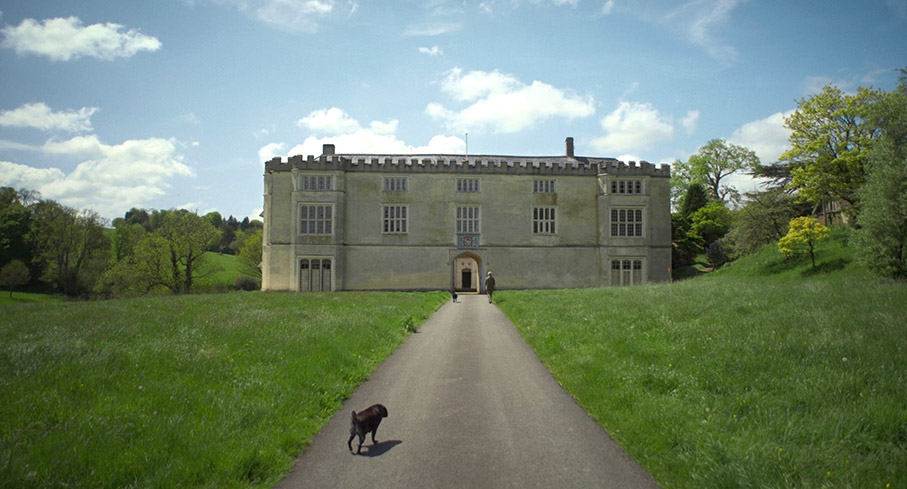
The likes of Fulford and Reece-Mogg may be goofy soft targets, but class servility runs deep in England and many latter-day helots relish pressing their noses against the windows of the wealthy. Heritage culture guides them, but they will seldom get as far as those windows, because just one percent (0.06 per cent to be precise) of the population of England owns half its landmass. We are incessantly told that we live in a property-owning democracy, but England’s 15 million owner-occupiers account for just five per cent of land. Meanwhile, the aristocracy (their ranks swelled by insatiable bankers) own 30 per cent of that considerable chunk of our most prized national asset. How did this come to pass?
The Old Oak
Our Land provides an immediate answer to that burning question – in five minutes flat. As the film proper begins with a flourish, we watch spellbound as an animated film-within-the-film takes us on a breathless dash through the history of land ownership. May Kindred-Boothby’s beguiling illustrations perfectly complement a delightfully lyrical, impressively precise text by feted writer Robert MacFarlane – one of the ‘parliament of owls’ advising the Right to Roam campaign. This short sequence is a minor masterpiece of succinct, innovative explication. It is one of the highlights of the film, does much of Wallace’s heavy lifting for him, and merits quoting from at length. An ancient English oak, the symbolic ‘witness tree’ that neatly bookends the film, guides us through the centuries:
Let me tell you a story of people, land and power . . . A thousand years ago, as a sapling oak, I saw England fall beneath the Norman yoke . . . And the land? Oh, the land was cut up, measured and mapped, trapped and cracked into thousands of pieces, and given to the Barons as long-term leases . . . Nature hardened into property. Next came the enclosures. What was once deemed common ground . . . became fenced and controlled . . . Did the enclosures create class as we know it? Or fire up the industrial revolution? What I saw, for sure, was this: the ownership of land concentrated in fewer and fewer hands . . . Soon grand houses and vast estates flourished, nourished by empire, built with funds funnelled from abroad . . . asset stripping on a global scale. Later came mechanization, tractor replaced horse, the countryside turned into a factory floor. . . Fewer people passed beneath my branches . . . paths criss-crossed the land, but walkers stepped off them at their peril . . . Oh yes, I’ve seen it all happen. I’ve been a thousand-year witness to these struggles for land and I’ve seen both sides try, with force and with kindness, to entrench and to cross the lines that divide us.
That exquisite sequence is crafted with such panache that it prompts thoughts of what Wallace might have achieved had he continued in that vein and opted to make a film on trespass actions comparable to, say, Flee (2021) Persepolis (2007) or Waltz with Bashir (2008). In the event, Our Land is a formally conventional affair composed largely of to-camera interviews and human-interest stories. Which is not to say that the film has no virtues beyond its thought-provoking content. Its expertly assembled soundtrack, by turns aptly baroque and folksy, artfully melds birdsong with the words of Robert Burns and music by Cosmo Sheldrake and Ewan McCall. The film is also elevated by some fine landscape photography (a sublimely ethereal shot of an icy-silvery lake at dawn stands out.
While MacFarlane works metrical magic, his adroitly condensed but sweeping precis of history inevitably leaves a few important gaps. It even, to some degree, plays into that tradition which fetishizes the neat and tidy landscapes of Humphrey Repton and Lancelot ‘Capability’ Brown – a tradition that peddles those resilient romanticised concepts of a prelapsarian, pre-capitalist Merry England that continue to twist our views of land out of shape.
The Commons
The Commons were not a playground. They were a vital bulwark against starvation and destitution. Their seizure in the enclosures killed thousands and fatally wounded the idea of England as a happy home for all. In 1776, as the main wave of parliamentary enclosures picked up steam, even Adam Smith was moved to write, in The Wealth of Nations, ‘as soon as the land of any country has all become private property, the landlords, like all other men, love to reap where they never sowed, and demand a rent even for its natural produce’.
It is unsurprising that the ineradicable memory of abominable suffering and displacement attendant upon enclosure led some writers to sentimentalise an earlier arcadian age. Oliver Goldsmith, for example, encapsulated the desperate illusion of an early idyllic England in his poem ‘The Deserted Village’ of 1770:
Ill fares the land, to hastening ills a prey,
Where wealth accumulates, and men decay:
Princes or lords may flourish, or may fade,
But a bold peasantry, the country’s pride,
When once destroyed, can never be supplied.A time there was, ere England’s griefs began,
When every rood of ground maintained its man,
For him light labour spread her wholesome store,
Just gave what life required, but gave no more,
His best companions, innocence and health,
And his best riches, ignorance of wealth.
It is well put, seductively framed, and reveals an essential truth about the subsistence, sustainable livelihood the common people could eke out, against all odds, from the gleaned resources of the commons. But, please, ‘light labour’? Goldsmith clearly never worked the fields through fog and filthy air, in thunder, lightning or in rain. In 1783, George Crabbe set the record straight in ‘The Village’, the first part of his prodigious epic poem about rural poverty and social indifference. Crabbe was, as the poem’s title suggests, responding directly to Goldsmith when he composed this barbed counterblast:
When Plenty Smiles – alas, she smiles for few –
And those who taste not, yet behold her store,
Are as the slaves that dig the golden ore –
The wealth around them makes them doubly poor.
Or will you deem them amply paid in health,
Labour’s fair child, that languishes in wealth?
Go then and see them rising with the sun,
Through the long course of daily toil to run,
See them beneath the dog-star’s raging heat,
When the knees tremble and the temples beat . . .
Through fens and marshy moors their steps pursue,
When their warm pores imbibe the evening dew,
Then own that labour may as fatal be
To these thy slaves, as thine excess to thee.
Orban Wallace sits uneasily between the wealthy and their slaves, the landowners and the Right to Roam campaigners. For good and ill, Our Land presents competing perspectives from both sides of the fence. On the Right to Roam side: ornithologist Nadia Shaikh – a woman of mixed ethnic and class background now based on Skye, Andy Wightman – the indefatigable author of Who Owns Scotland?, and Hayes and Shrubsole – who have followed Wightman’s shining example and continue to build on it.
Ladies and Gentlemen
On the landowners’ side: Hugh Inge-Innes-Lillingston – owner of the Thorpe Estate, Staffordshire (2,500 acres), John Mildmay-White – owner of the Flete Estate on the Erme Estuary, Devon (5,000 acres), John Grant, 13th Earl of Dysart, formerly styled Lord Huntingtower – owner of the Rothiemurchus Estate, in the Cairngorms (17,500 acres), and that dull-witted dyspeptic rotter Franny Fulford. We are many miles removed, here, from the world of forty acres and a mule.
Setting Francis Fulford and his peasant-shooting cronies aside, these landowners appear to be affable, articulate men of good will who have the best interests of the environment at heart and who willingly provide responsible public access to their land. Inge-Innes-Lillingston acknowledges that ‘The enclosures were the big turning point’ and is vexed by the question of how we reverse-engineer that historic injustice. As he contemplates the agonising decision of which of his sons to leave his estate to, John Mildmay-White revels in the delight on walkers’ faces as they cross ‘his’ beaches. John Grant speaks passionately about custodianship and talks about land managers as distinct from landowners. Wallace own position seems to be that these gents are decent chaps all and if we’d only all tread carefully they’d surely forgive us our trespasses against them.
They may well be decent, even if they behave differently off camera, but the film raises doubts about how fair ‘balance’ can be in an unfair contest. Given that powerful landed interests have the unquestioning support of the print and broadcast media, an umbilical connection to Government and Whitehall, and huge resources to lobby unstintingly for the status quo, Wallace’s superficially fair-minded strategy is open to question.
By adopting an ‘impartial’ approach, Wallace does at least answer a question about the aristocracy many have asked down the years: who the feck are these people? Or does he? Is this a representative sample? We can assume that those owners who agreed to appear in the film are, Fulford aside, among those most open to debate and amenable to reason. Others, who Wallace may or may not have approached, are, in Claude Lanzmann’s useful phrase, the presence of an absence. Their silence, as the saying goes, speaks volumes.
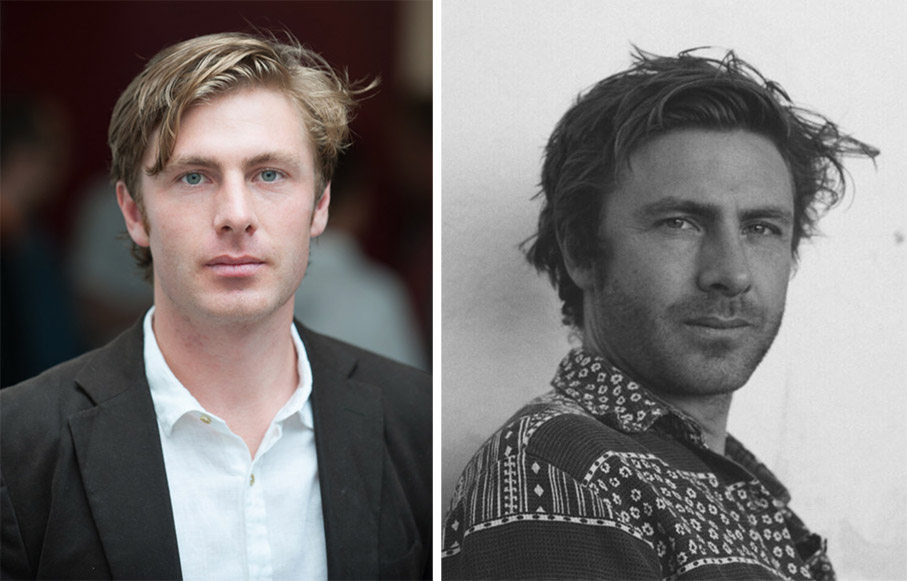
An example of, as it were, an ‘absentee owner’ might be instructive and help highlight certain problems largely elided in Our Land. Who better to visit in search of a case study of actually existing Neo-Feudalism than the Drax family, and where better to head than their Charborough Estate, Dorset (14,000 acres). At one point in the film, we follow Nick Hayes as he visits Charborough – to trespass there, as he does in The Book of Trespasses. Despite being an experienced campaigner and resolute nonconformist, Hayes appears daunted by the pressing weight of power and tradition he encounters and intensely senses there. Exclusion from the land entails a profound psychic as much as physical disenfranchisement.
As he gazes down on Charborough House from an elevated folly, he murmurs breathlessly, ‘It’s nerve wracking, isn’t it? This is a seat of great and ancient English power that has caused a lot of people a lot of pain’. Trespassing can be a heart-thumping act that calls for courage and even Hayes, who possesses courage in spades, finally flees, sweating nervously, for the safe cover of the woods. In this reviewer’s favourite case of product placement, he mischievously leaves a gift behind before he leaves: a copy of his own book, for the edification of the elusive owner, Richard Plunkett-Ernle-Erle-Drax.
Drax of Draxby Hall
Drax and his family have an enlightening, if unenlightened history. Their vast wealth was historically derived largely from sugar, slavery and the plantations they owned on the Drax Estate, Barbados (621 acres). One of England’s largest landowners, Richard Drax is the living personification of ruling class power and his intrusive influence on public life has been far more functionally destructive than that either of Francis Fulford or the likeable, eminently reasonable landowning gents Wallace interviews in Our Land.
Drax and the Draxes speak from the past to the present, so we do well heed what they tell us of England. As Paul Lashmar says in Drax of Draxby Hall, his book on the Draxes’ Barbados estate, while landowners were enriched beyond the dreams of avarice by chattel slavery abroad, their wealth was also based on the exploitation of the landless poor and agricultural labour at home.
Charborough House lies less than 10 miles from the village that gave birth to the Tolpuddle Martyrs and free Trade Unionism. While slaves were being transported from Africa and worked to death on the Drax plantation, the pioneering Trade Unionists celebrated in Bill Douglas’s magisterial epic Comrades (1984) were being transported to Australia and worked to death on the land. As the enclosures continued apace, entire villages were abandoned, flattened or moved elsewhere – often on the egotistical whims of landowners who felt they spoiled their view (for the same reason, Inigo Jones’s design for Queen Anne’s House, Greenwich contained an unobstructed view of the Thames and Christopher Wren’s design for the riverfront Royal Naval College has a hole in the middle!)
A Conservate MP before being ousted in 2024 by Labour’s Lloyd Hatton, Richard Drax is the largest individual landowner in Dorset. He also owns the Ellerton Abbey Estate in Swaledale, Yorkshire (2,200 acres), neighbouring Copperthwaite grouse moor (520 acres), and the notorious ‘killing fields’ of the Drax Estate in Barbados (621 acres). Although his family’s wealth derived principally from the slave trade and compensation paid after abolition, Drax refuses even to discuss reparations and while campaigning for Brexit, he said ‘I believe, as do many of my constituents, that Britain is full’. Although his personal wealth is estimated at £150,000,000, he also opposed Richi Sunak’s windfall tax on oil and gas and described that move to ease the hardship of millions as ‘throwing red meat to socialists’. It would have been interesting to hear from Drax in Our Land.
To Replicate Scotland
On the campaign’s side, Nadia Shaikh sums up Wallace’s approach in Our Land when she admits activists were initially nervous about being too forthright: ‘To come right out at the beginning and say “Hey, we’re Right to Roam and we want to replicate Scotland” would have freaked a lot of people out’. Who, we wonder, would have been freaked out by a more unambiguous, explicit approach in this instance? The landowners? Potential recruits to the land justice cause? Parliament? And which horses would have been spooked by a more incisive and partisan film than Wallace’s?
Throughout Our Land, I found myself yearning for more robust analysis and concrete information and fewer close-ups of cows and aerial shots of fields. The animated opening sequence and a few flimsy oh-so-polite questions aside, Wallace all but ignores the thorny subject of land ownership. His laudable focus on the Right to Roam campaigners and evident sympathy with them is all for the good but, after all, they would not need to trespass at all if only land were more equally distributed.
The demand for public access rights cannot be divorced from the demand for land justice. Both imply psychological as well as physical forms of exclusion. Both insist we pay close attention to the disposal of public land as well as private land. The demand for access to the land is linked to the privatisation of what we once owned.
Reviewing Shrubsole’s Who Owns England for The Land magazine, Mick Hannis says: ‘What the Normans and subsequent enclosers imposed was not only a grossly unfair pattern of land ownership. It was also the very idea that land itself should ever be privately owned by anyone. To really ‘take it back’ requires challenging that idea’.
Wallace keeps his gauntlet on his lap and misses a trick by not quizzing Shrubsole and Wightman about ownership, their area of expertise. We know 30 per cent of England is owned by aristocracy; in reality, they may devour an even larger slice than that. 17 per cent of the total is designated as ‘unregistered land’ and Shrubsole thinks it likely aristocrats have hoarded that too. He and Andy Wightman continue to expose the hidden nature of the unavailable data.
The Great Privatisation Trick
In his smart, searing book The New Enclosures: The Appropriation of Public Land in Neoliberal Britain, Brett Christophers says, ‘One of the most remarkable, idiosyncratic and controversial aspects of private land ownership in Britain is the opaque veil of secrecy that surrounds it. The government’s insistence, during the neoliberal era, that public landownership be fully exposed to public scrutiny stands in stark contrast to its long-standing reluctance to do anything meaningful to make private land ownership more transparent. This is a clear case of double standards, with clear political implications’.
Christophers stops short of calling this a cover-up, but it has all the appearances of one. He found that the state had sold about a tenth of Britain’s landmass since 1979. At today’s prices that privatised land would be worth over £400 billion or ten times the amount realised by the right-to-buy bonanza. Given the green light by Thatcher and her fellow-travelling ideologues – who believed the ‘nanny state’ should be divested of its holdings – a buying and selling frenzy took off. Going, going, gone – allotments, airfields, army housing, bowling greens, children’s centres, council houses, farms, forests, moors, naval dockyards, museums, theatres, parks, playgrounds, town halls, swimming pools and school playing fields – over 10,000 playing fields.
We now ask where the North Sea oil windfall went, other than on politically expedient tax cuts. We might also productively ask where the enormous sums of money gleaned from land privatisation went? At least in part, into private hands and the purchase of private land. Astonishingly, the public were persuaded that selling public land was in the public interest. How was this deliberate devaluation of the public estate achieved? Most obviously, by selling public assets on the cheap, as a means of anchoring those able to buy on the side of a shareholding-property-owning- democracy.
Also, by sleight of hand and a nefarious process that labelled public land ‘inefficient’ or ‘surplus’ – a reworking of the argument that justified the enclosures of the 18th century, when landowners sought to maximise profits on common land that had previously been tilled, grazed, or strip-farmed by the peasantry. Efficiency: long before arguments about land-sparing gained currency, Thatcherites had begun arguing that land must be put to work and pay its way. Surplus: for example, establishing a minimum area for playing fields in proportion to the number of pupils at a school, and declaring anything above that figure surplus to requirements. Cute.
The New Enclosures
We are repeatedly told – by those whose interests are served by saying so – that class struggle is a thing of the past. As the old joke has it, the Tories don’t talk about class war – because they are too busy fighting it. Now, apparently, we are all either entrepreneurs or happy shoppers. Meanwhile, land-hoarding and property speculation, essentially money for old rope, is rife, but barely a word is said of that. Speculation there was and is though. As Christophers says, by the 1970s speculation was ‘becoming nothing less than the pre-eminent feature of the British land market’. And as Financial Times columnist Martin Wolf warned as long ago as 2010, we risk placing a ‘ruinous trust in land speculation as the route to wealth’. This is nothing if it’s not a modern form of enclosure.
Given what we know about enclosures, there is a telling, tragi-comic aspect to the language used in the government’s recent (baby) steps to open up the Land Registry: the Economic Crimes Act 2022 (with its reformed Unexplained Wealth Orders) was swiftly followed by the Levelling-Up and Regeneration Act 2023. The tendency to Doublespeak also afflicts the Countryside Stewardship Subsidies paid to those landowners that most mismanage and despoil the northern uplands on their grouse and peasant moors.
It must be stressed that the motivation for the government’s tinkering at the edges of the land question is not to enfranchise the public but, rather, to hunt down land-banking financial institutions, oligarchs, shell-companies, trusts, and the like. The government has nudged things in the right direction where information exclusion is concerned though, not least by removing the Land Registry search fee relating to the millions of land parcels that cover England.
It is a small thing, but in the present political climate even incremental change must be welcomed. As Tom Hazeldine says, the present Labour leadership is more committed to a Washington-led capitalist world order than any other previous Labour Government. Certainly, Starmer’s timid Labour administration was never likely to follow through on the party’s 2023 promise for a universal right to roam, let alone tackle the inequities of land ownership – the companies that own 19 per of the land or the City bankers and oligarchs who own 17 per cent. Perhaps a chart in Our Land.
During the Thatcher-Reagan era the biggest corporate buyers of privatised land were financial institutions and property developers. Today, the biggest corporate landholdings are held by the universally despised privatised water companies, which Labour refuse to renationalise, and the ecologically destructive grouse moor management companies Guy Shrubsole rails against.
If some are shocked that so much land is owned by aristocrats, many more are surprised that royals and clerics own two per cent of England too. That will sound reassuringly quaint or shockingly mediæval, depending on the views you hold on class, colonialism, private property, race, religion, social justice, and so on, but surely there is something badly amiss when such archaic ownership patterns persist in a secular, inclusive, multi-cultural, faux-democratic society well into the 21st Century.
England, Your England
One of the most pleasing aspects of Our Land is the film’s refreshingly modern recognition of diversity and the added layers of exclusion experienced by the Black community and people of colour. In the interwar years, cycling clubs and rambling groups thrived as a vital part of an urban, working class, predominantly white and left-wing, culture that led to the mass trespass on Kinder Scout in 1932. Now, groups like Boots and Beards, Black Girls Hike, Peaks of Colour and We Go Outside Too are springing up to demand access rights for people of colour. They too are insisting this land is our land.
In the film, we follow walkers on a ‘Kinder in Colour’ trespass in Edale. As academic Maxwell Ayamba, one of the participants, says, ‘This is historic . . . this is the first time many of the people you are seeing here today have set foot in this place. The countryside has been seen as a white space. It is frightening for people coming out of their safe environments. They don’t know how they are going to be welcomed. We are trying to reframe the narrative’.
For all its faults, Our Land also attempts to reframe the narrative. Orban Wallace may fight shy of contestation, and he may, as it were, see both sides of an unequal triangle. He may, consequently, suffer the splinters afflicting all those who sit on the fence. He has, nonetheless, shone a light into certain dark corners with this thought-provoking, enthralling film. Our Land makes a vital contribution to an essential debate. For its scintillating opening sequence alone Wallace deserves our grateful thanks.
In Richard II, Shakespeare considered what had become of the England of his day. His words, as they so often do, transcend time.
This land of such dear souls, this dear, dear land,
Dear for her reputation through the world,
Is now leased out – I die pronouncing it –
Like to a tenement or pelting farm.
England, bound in with the triumphant sea,
Whose rocky shore beats back the envious siege
Of watery Neptune, is now bound in with shame,
With inky blots and rotten parchment bonds,
That England that was wont to conquer others
Hath made a shameful conquest of itself.
Tithes and tied cottages may be a thing of the past but, were he with us still, England’s Bard would surely recognise the stark social divisions of our times – certainly those between landlords and rent-payers, landowners and the landless poor, the new and old aristocracy and the rest of us. He would weep to see the people excluded from the land they dwell in but cannot freely roam upon and do not own. Our Land makes a valuable, if limited contribution to the conversation about how we correct and heal that injury to all.
Our Land
UK 2025 | 90 mins
directed by: Orban Wallace
cast: Francis Fulford, Nick Hayes, Hugh Inge-Innes-Lillingston, Nadia Sheikh, Guy Shrubsole
UK distributor: MetFilm Distribution
UK classification date: 8 May 2026