
On the Beach
The end of the world is nigh in ON THE BEACH, directed by Stanley Kramer from the novel by Nevil Shute, starring Gregory Peck, Ava Gardner, Fred Astaire and Anthony Perkins. Gary Couzens reviews the Blu-ray release from the BFI.
In the near future of 1964, a month-long World War escalated to nuclear weapons and as a result the northern hemisphere has been devastated, with no one left alive. Air currents are circulating clouds of fallout into the southern hemisphere. Melbourne is the last remaining surviving city on the planet, but soon the radiation will reach it too and everyone will die. American submarine commander Dwight Towers (Gregory Peck) arrives in the city. He is working with Australian naval officer Peter Holmes (Anthony Perkins), who has a young daughter with his wife Mary (Donna Anderson). Although Dwight had a wife and children back in the USA who are almost certainly dead, he meets Moira Davidson (Ava Gardner) and a mutual attraction develops. However, a signal is received from the area of San Diego and Dwight and his crew are sent to investigate.
A decade and a half after the bombs at Hiroshima and Nagasaki hastened the end of World War II, the world was in the midst of the cold war, with wartime allies on different sides. Inevitably nuclear war and the possibility of Mutual Assured Destruction were on many people’s minds, and eventually found their way from pulp science fiction and its cinematic equivalent to more overtly “serious” work. An example is On the Beach, both Nevil Shute’s original novel of 1957 and this film from two years later, produced and directed by Stanley Kramer. The film is serious to a fault, though humour does lighten its message which then and now makes it hard tack for entertainment seekers. It’s one of Kramer’s films which cover such weighty topics in the guise of a big-budget Hollywood A pictures with major stars, something he had done the previous year with the theme of racial tensions in The Defiant Ones.
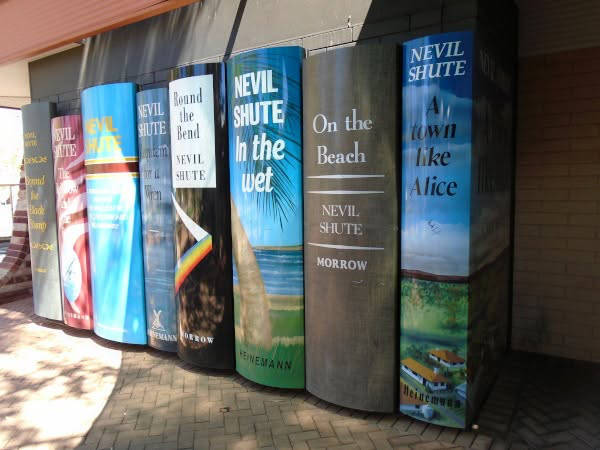
Nevil Shute Norway was born in England, in Ealing in 1899. An aeronautics engineer by profession and trade, he drew on his background in much of his fiction, some of which borders on science fiction. As well as On the Beach, another example, also set in Australia, is In the Wet (1953). He became a published novelist in 1926 and served in the Naval Volunteer Reserve in World War II. After the war, he relocated to Australia and became a full-time writer, becoming a particular best-seller in his adopted country. His best-known novel was A Town Like Alice in 1950, which was filmed in 1956 with Virginia McKenna and Peter Finch (later a 1981 miniseries with Helen Morse and Bryan Brown). Alice Springs, the Alice of the title, has a memorial to Shute at its library, and here is a picture I took on a visit in March 2020. For reference, the “books” are about six feet tall.
The novel of On the Beach has a few differences to the film version, one being that the book begins at the end of 1962 (27 December is given as a Thursday) with the main action taking place in 1963. The film moves it on a year, as revealed by a calendar in Peter and Mary’s home. At thirty-seven, Ava Gardner is about a decade and a half older than the Moira of the novel, which makes her a little miscast, however good she is in the role. Also, and without spoilers, the film does soften the end of the story, while still being amazingly bleak for a film intended to bring in audiences worldwide. Shute was not happy with some of the changes made to his story. Kramer always was a good director of actors. As a director, he tends to the self-effacing, though he throws in a few tilt shots at particular moments. He’s abetted by cinematographer Giuseppe Rotunno, who had made his name in his native Italy, particularly with his work with Visconti beginning with White Nights (1957), also in black and white, and had just began to work internationally.
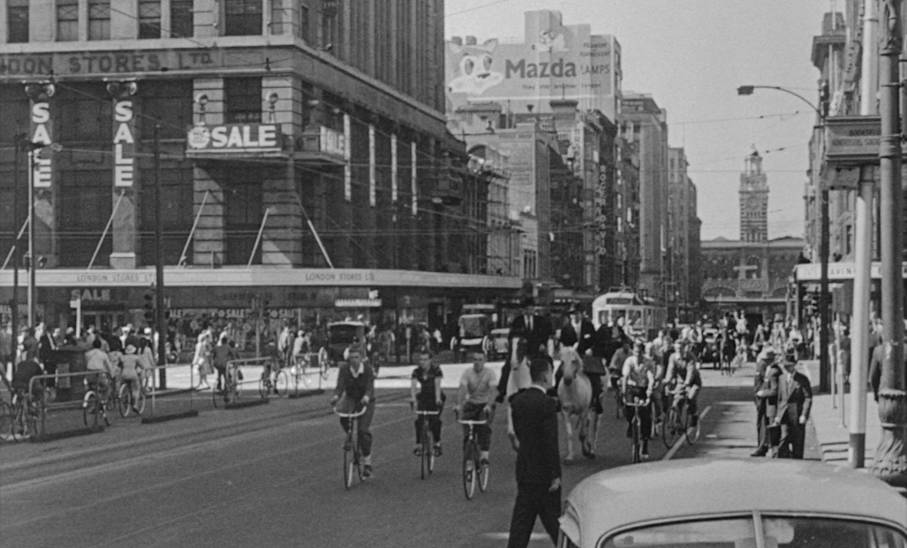
On the Beach was shot in and around Melbourne largely in the suburbs of Berwick and Frankston (the car racing scenes were back in California) at the height of an Australian summer, January to March 1959, in fact the worst heatwave for some twenty years. Ava Gardner got into trouble with the locals by quipping that Melbourne was the perfect place to shoot a film about the end of the world…though she didn’t actually say that and the quotation was made up. At the time, Australian film production was in a slump which would last most of the coming decade, with the country in commercial films mostly used as a location for overseas productions and the pioneering local directors now silent. (Charles Chauvel, for example, had made his final feature film with Jedda, released in 1955, and Australia’s first dramatic feature in colour. He made a television series in 1958, Australian Walkabout, a coproduction between the BBC and Australia’s ABC, and died in 1959.) Many Australian actors had relocated to the UK (or in Rod Taylor’s case the USA) for the greater opportunities there and would mostly not return until the industry revived in the 1970s. The Australians cast in smaller roles and bit parts in On the Beach had almost all not made a film before, however widely experienced they were on radio, television and the stage. Needless to say, the arrival of a big Hollywood production and major stars (including Fred Astaire, impressive in his first non-dancing acting role) attracted a lot of attention and possibly some thought that the country which had after all made the first-ever feature film in the world (The Story of the Kelly Gang, 1906) might one day make its own feature films again, something which intensified as the decade went on.
The following paragraph contains spoilers. If you want to avoid them before seeing the film, please skip to the “sound and vision” section.
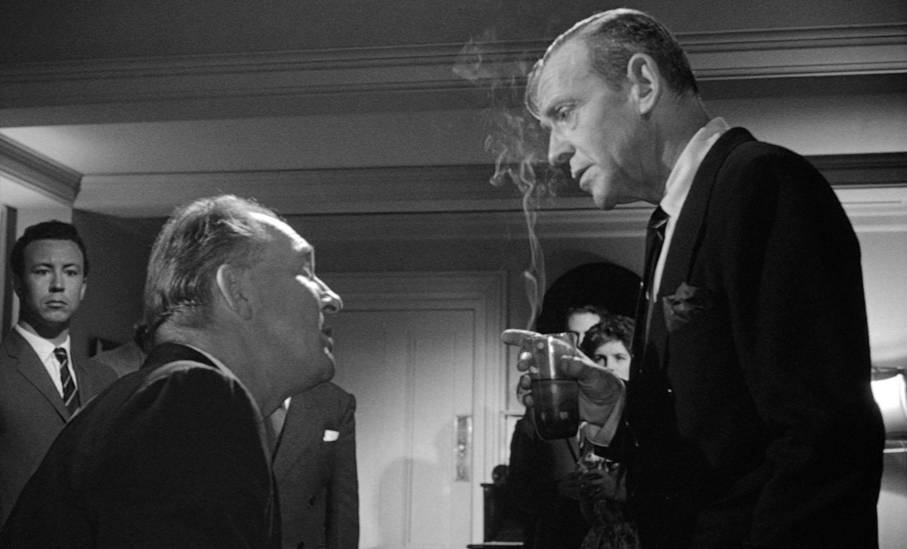
On the Beach has a little strain as a “message” film leavened by the presence of big stars and some romance between Dwight and Moira. There is some humour to be had too, such as two old gents in a Melbourne club complaining about the waste of having four hundred bottles of port to hand as how could they use it all up? (I’m sure they could give it a good go.) The final shots, with their deserted streets, stick in the mind, a banner (“There is Still Time…Brother”) giving us a little hope at the final fadeout. That’s different to the novel ending, which is as bleak as you can get, with the principal characters taking themselves out, finally Moira with the aid of suicide pills.
In the days of films opening everywhere all at once all over the world, the opening of On the Beach might not seem exceptional. However, On the Beach was such an event that it premiered in eighteen cities across all seven continents (including Antarctica) on Thursday 17 December 1959. Within the Soviet Union, the Moscow premiere was attended by Gregory Peck and his wife. Ava Gardner was in Rome, and the Hollywood shindig had Fred Astaire, Anthony Perkins and Stanley Kramer, with guests including Cary Grant. Nevil Shute, however, was unhappy about the changes to his story. A month later, however, he was dead – on 12 January 1960 from a stroke, five days before his sixty-first birthday. Despite of the film’s hopes of reconciling its downbeat message with the demands of a commercial feature film, On the Beach was not a success. It probably didn’t help that it was in the cinemas at the same time as one of the major wide-screen, large-format films epic in scale and length, Ben Hur. In London, that film opened a day before On the Beach, and the posters for both stared at each other across Leicester Square, Ben Hur at the Empire (now the Cineworld) and On the Beach at the Leicester Square Theatre (on the site of what is now the Odeon Luxe West End). Critics were generally positive, though some on the right thought the film was too pessimistic and might “stir up sentiments against war and nuclear weapons”.
That year’s Oscars bent over backward to award Ben Hur, so On the Beach made do with just two nominations, for Frederic Knudtson’s editing and Ernest Gold’s score, which incorporates that archetypal Australian tune “Waltzing Matilda” over Gold’s objections. At the British Academy Awards, Ava Gardner was nominated for Best Foreign Actress (losing to Shirley Maclaine in Ask Any Girl) and the film won the United Nations Award. In 2000, much as had happened with A Town Like Alice, On the Beach was remade as an Australian miniseries, starring Armand Assante, Bryan Brown and Rachel Ward, updating the story to the then near future of 2005.
sound and vision
On the Beach is released by the BFI on Blu-ray, a disc encoded for Region B only. The film had an A certificate in UK cinemas in 1959 and for homeviewing it is a PG, uncut each time. Operation Hurricane had a U certificate on its original release, and you can see the BBFC card at the start. As it’s a documentary, it’s been exempted for classification on this release.
The film was shot in black and white 35mm and is presented on this transfer in the ratio of 1.66:1 – a little narrower than the usual non-Scope ratio for US major studio films at the time, which was 1.85:1. The provenance of this transfer isn’t indicated other than to say that it was delivered in HD from MGM, but there are some minor scratches and specks. Giuseppe Rotunno’s cinematography is often against the light, which leads to a lack of shadow detail, noticeable in a few scenes between Peck and Gardner and in Australian actor John Meillon’s one scene, in his film debut. (I haven’t seen the film in the cinema so don’t know if this was the case with 35mm prints back in 1959 on the big screen.) There’s nothing too distracting and for the most part it looks fine, but it’s not the most top-flight of HD transfers out there.
On the Beach played in mono in cinemas, rendered as LPCM 2.0 on this disc. I haven’t found any evidence that the film ever had a stereo soundtrack – which would only have been heard in showcase cinemas in major cities, and would likely have been four-track magnetic if it existed – but the disc has an alternative track in DTS-HD MA 5.1. I listened to the mono and sampled the stereo, and suggest you ignore the remix and stick to the original. If the original mono had been missing from this disc, I would have marked it down accordingly, if we did star ratings on this site. Dialogue, music and sound effects are as they should be – this being a product of Hollywood technical expertise, after all – though there is the occasional thump that shouldn’t be there, most likely at what would have been reel changes in cinema prints. English hard-of-hearing subtitles are available for the feature only, and I didn’t detect any errors in them.
special features
Commentary written by Dr Philip Davey, read by Douglas Hansell
This has been carried over from the 2015 Signal One Blu-ray edition of On the Beach. Dr Davey is the author of the book When Hollywood Came to Melbourne, about the making of the film, published in 2005. So he is clearly an authority on the subject and this comes over in the commentary, read for him by Australian actor Douglas Hansell. This is a very scene-specific commentary and there are a lot of details about the production itself, less so about anything wider. This extends to career details of cast members we see on screen but who aren’t credited, including their television and radio careers as almost all of them hadn’t made a film before. Gaps do get longer as the commentary progresses, which goes to show that 134 minutes is a lot of time to fill. Certainly worth listening to on a facts-and-figures basis.
Commentary by Scott Harrison
This commentary is newly recorded. Harrison doesn’t introduce himself other than by name, but he is a film historian and screenwriter. If there are going to be two commentaries on a film like this, of not inconsiderable length, and in the absence of anyone actually involved in the production, then they should be contrasting takes. That is the case with this one. Harrison begins by quoting T.S. Eliot’s poem “The Hollow Men”, which gives the novel and film its title (more or less: it’s “on this beach” in the poem) and also provides in its most famous lines (about how the world ends) the novel’s epigraph. Harrison’s commentary overlaps a little with Kim Newman’s piece in discussing how the themes of potential nuclear apocalypse were reflected in cinema in the 1940s and 1950s, by the end of that decade more serious and prestigious films like this one. Linus Pauling is quoted, making the rather grandiose claim that On the Beach was “the movie might have saved the world”. Harrison locates On the Beach as the first of three Stanley Kramer films in three years taking on weighty themes like this with a liberal sense of social injustice, followed by Inherit the Wind (1960) and Judgment at Nuremberg (1961), all sober, all-star vehicles in appropriately serious black and white. Harrison talks about the differences between the novel and film and Shute’s original dissatisfaction with the ones made, such as making the relationship between Dwight and Moira less platonic than it was originally. We also have some notable factoids, such as that Shute was the first person in Australia to own a dishwasher. Harrison does manage to fill his two and a quarter hours and this is a detailed commentary which complements the other track nicely.
Making On the Beach (9:18)
While the cast and crew were on the beach filming On the Beach, in temperatures hitting 105°F (40°C), amateur filmmaker Richard Goslin was there with his 8mm camera. This is the footage he took, with a title card and a disclaimer saying that any “similarity to any other film is extremely nonsensical”, plus his own jokey voiceover. So we see Fred Astaire, Ava Gardner and Gregory Peck signing autographs in an orthopaedic hospital, and meanwhile the cast and crew go into the sea as a relief from the heat. We don’t see the bystanders who stood in the water and applauded after each take, to Stanley Kramer’s annoyance.
Interview with Donna Anderson (19:08)
This interview dates from June 2015. Anderson is still with us as I write this, due to turn eighty-seven in September and is the last remaining cast member of On the Beach. It was her first film, at the age of nineteen, and she won a role which Debbie Reynolds was considered for. She has an “introducing” in the opening credits. She had been a dancer from the age of nine, appearing on television from a year later. Stanley Kramer had seen her at age fifteen and had her under contract, waiting until she was old enough before casting her. She says that Kramer spent most of the time on set talking to the technicians rather than the cast. So the actors had to plan their roles around where the camera was. She finds her character, Mary, self-centred and in denial and thinks she missed some of the colour of the role. She also finds the ending Hollywoodised. Donna Anderson worked for Kramer again in Inherit the Wind and she continued acting on the large screen and small until 1984.
Kim Newman on Apocalypse Cinema (21:37)
Produced in 2022 for Imprint’s previous Blu-ray release, this piece shows Kim Newman talking about films dealing with the apocalypse. As he points out at the start, back in the nineteenth century, the one of the Four Horsemen who had the most exercise was Pestilence, with plagues of some variety finishing us off in Mary Shelley’s The Last Man, for example. However, War soon caught up with his brothers, particularly in the wake of World War I and especially II, with its unleashing of the atomic bomb on Hiroshima and Nagasaki. So, come the 1950s, the possibility of atomic war was a concern in cinema, at first in more disreputable films. Towards the end of the decade, the topic was seen more seriously, in larger-budget, more prestigious films, of which On the Beach was one. Come the 1960s, the possible nuclear holocaust to come could be treated as the subject of pitch-black satire as in Dr Strangelove or deadly seriously in Fail-Safe, both of which came out in 1964 and the public preferred the former. The world after the bombs fell could be the subject of a love triangle and rivalry in The World, The Flesh and The Devil (1959, the same year as On the Beach) or what Newman calls the hard-right version in Panic in Year Zero! (1962) where the imperative is to preserve your food and goods even if it means killing your neighbours. More recently, apocalypses have returned to the pestilential variety, with or without zombies. As you would expect from a Kim Newman piece, there is a blizzard of film references (with their posters on screen) in twenty minutes or so, not always easy to keep up with, and a guarantee that most of them you won’t have seen before.
Clothes to Die For: The Costumes of Ava Gardner (15:33)
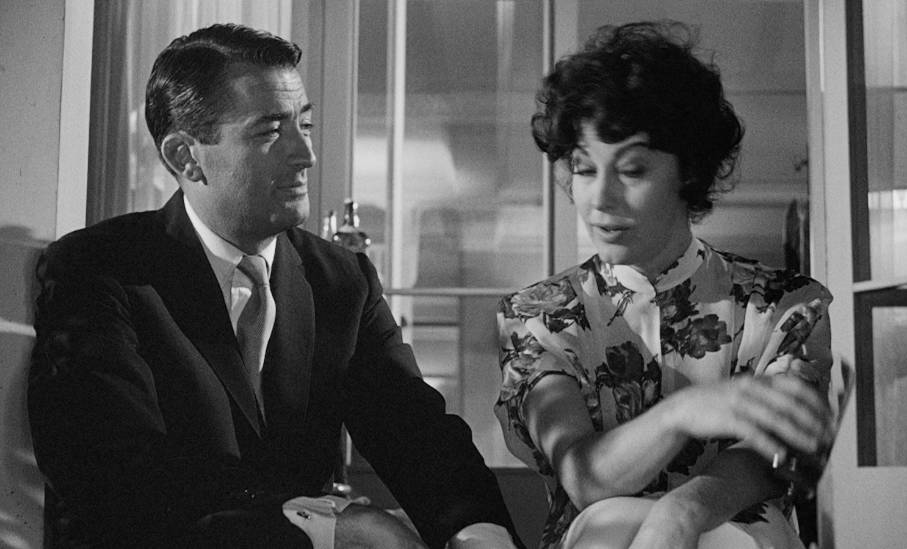
This also dates to 2022’s Imprint release. It begins with the Australian serviceman’s comment of “Get a load of the Charlie Wheeler!” (sheila) as Ava Gardner walks along the jetty in a dress which, if the film had been in colour, would have been revealed to be red. The role of Moira was originally earmarked for Deborah Kerr and may have been called Beryl, though she’s Moira in the novel. Gardner’s many costumes were provided by the Fontana Sisters of Rome, and may have been intended to add some glamour to the film, and maybe along with the romantic element entice female audiences. With the aid of costume-test stills and clips from the film, costume historian Elissa Rose takes an in-depth look at what Gardner wears and its effect on the scenes it appears in.
A Tribute to Stanley Kramer (14:29)
Stanley Kramer died in 2001, aged eighty-seven. This tribute dates from 2004 and can also be found on the BFI’s Blu-ray release of Judgment at Nuremberg, where to be honest it’s more appropriately placed. Interviewed here is his widow Karen Sharpe Kramer, twenty-one years younger than him and still with us as I write this. She was his third and last wife and mother of two of his four children, and won a Golden Globe for her role in the 1954 film The High and the Mighty. Kramer first became aware of her in the early 1950s. She had a small uncredited role in The Sniper in 1952, which Kramer produced but Edward Dmytryk directed but she didn’t meet her future husband until he was making Ship of Fools in 1965, though she isn’t in that film.
The other interviewee is Abby Mann (who died in 2008, aged eighty). He talks mostly about Judgment at Nuremberg, understandably as the film was based on his television play and he won an Oscar for his script. He credits Katharine Hepburn with showing the TV play to Spencer Tracy, who wanted Kramer to make the film version in which he played the leading role. Mann comes in eight minutes in, his comments interspersed by more from Karen Sharpe Kramer, who says that Kramer always was the lead male role in the films he made. He strove for authenticity in all the films he made, wanting to shoot the whole film in Germany, but due to not being able to use the actual courtroom, he had it measured and recreated in exact detail in a Hollywood studio.
Operation Hurricane (33:15)
Made in 1952, Operation Hurricane is another item which has done BFI extras duty before. You can find it on the now-out-of-print releases of The Day the Earth Caught Fire and Blue Sky. Operation Hurricane is a documentary of a nuclear bomb tests in the Monte Bello Islands, off the north coast of Australia, one of three such tests carried out by the British in the 1950s. Directed by Ronald Stark and narrated by Chester Wilmot, the film details the preparations for the tests, before the explosion itself. With some thirty miles of film shot, the film had to be approved for security reasons and so some cuts were made. The film is very sober in its approach, indeed sobering when you realise that the Islands remain radioactively dangerous to this day, over seventy years later. The documentary shows how nuclear testing was simply an aspect of scientific progress at the time, when within a decade On the Beach shows nuclear bomb use at the path to disaster. The film is in black and white, but at the end, the blast and the mushroom cloud are replayed in colour, which must have been particularly vivid at the time but sadly, the surviving colour negative from which this has been scanned has faded over the years.
Theatrical trailer (4:46)
A lengthy trailer, as you can see from the running time, and the first two minutes cover the multi-national premieres on the same day, with Ava Gardner in Rome, Gregory Peck in Moscow, Fred Astaire and Stanley Kramer in Los Angeles. This is a frankly rather self-important trailer, which tells us that motion picture history has been made and if you see just one film, make it this one. Miss it at peril of your soul.
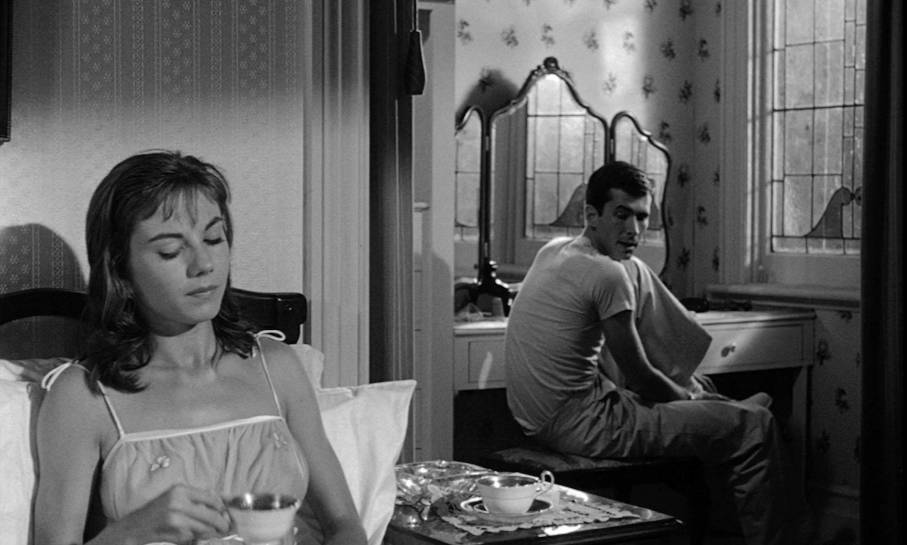
Image gallery (6:28)
A self-navigating gallery of posters, admats, press cuttings and stills, the latter in both black and white and colour for this monochrome film.
Stanley Kramer’s Photo Album (9:19)
As a souvenir of the production, Stanley Kramer splashed out of photo albums for the principal cast and crew, embossed with the name of the recipient on the front. This was Ava Gardner’s copy, or rather that of her manager David Hanna, presented as a self-navigating gallery, each black and white still captioned.
Booklet
The BFI’s booklet available with the first pressing of this release runs to thirty-two pages plus covers. This is a hard film to spoil but, just in case, there is a spoiler warning at the start. We begin with “Not with a Bang: The Quiet Apocalypse of Stanley Kramer’s On the Beach” by Dr Christina Brennan. This begins with mentioning the late scene featuring a Salvation Army band, sounding mournful despite the uptempo brass entering your ears. But then, says Brennan, this is not your average apocalyptic film – no mutated creatures running riot, but a slowly approaching end of the world as people come to terms with something they won’t escape. Brennan covers the production of the film, with Stanley Kramer buying the rights to Shute’s novel a month after it was published, clearly intending to make a statement with the film. This is a useful overview of the film.
It’s followed by Jennifer Frost with “Stanley Kramer (1913-2001)” a five-page biography of the producer-director, which takes account of his liberal sentiments and how those were reflected in the films he made in his peak period, of which On the Beach was one.
After a cast and crew listing for the main feature, we have “This is the Way the World Ends…Key Armageddon Movies” by Barry Forshaw. This is pretty much as it says, but begins in the nineteenth century and literature rather than the screen, with the Mary Shelley novel mentioned above and above all H.G. Wells, who gave us a vision of future apocalypse in The Time Machine (filmed in 1960 by George Pal, with Aussie expat Rod Taylor in the lead). Pal also provided us another waiting-for-the-end-of-the-world tale with When Worlds Collide back in 1951 and also tackled Wells’s classic tale of alien invasion as apocalypse with War of the Worlds (1953). Forshaw moves over to Wells’s native Britain, in particular The Day the Earth Caught Fire, directed by Val Guest in 1961, another world ending brought about by nuclear weapons. Inevitably, this covers much the same ground as the Kim Newman video piece mentioned above, but brings in quite a few more titles, as up to date as 2021’s Best Picture Oscar nominee Don’t Look Up.
The booklet ends with notes on and credits for the special features, including a longer note by Vic Pratt on Operation Hurricane.
final thoughts
Stanley Kramer’s films on large social themes have had a mixed reputation over the years, the obvious sincerity mixed with a tendency to preach and to spell things out for the slower audience members at the back. He did this by working within the Hollywood commercial industry, aware of the necessity to attract audiences with big stars and their glamour. On the Beach remains a well-made, compelling film which holds the attention despite its clearly downbeat subject matter, and it’s well presented on this BFI Blu-ray.
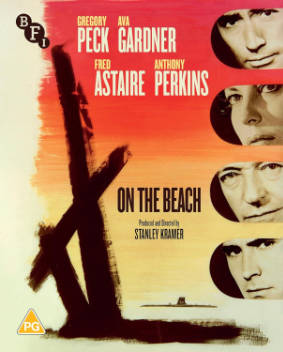
On the Beach
USA 1959 | 134 mins
directed by: Stanley Kramer
written by: John Paxton; from the novel by Neville Shute
cast: Gregory Peck, Ava Gardner, Fred Astaire, Anthony Perkins, Donna Anderson, John Tate, Harp McGuire
distributor: BFI
release date: 27 July 2026