
Only the lonely
A woman returns from the dead with a thirst for blood and slowly rediscovers her identity with the help of her dearest friend in THE LIVING DEAD GIRL [LA MORTE VIVANTE], Jean Rollin’s violent but beautifully realised study of friendship and loss, now available as a glorious 4K UHD release from Indicator. An empathetic Slarek descends into the crypt.
As I’ve noted in previous reviews of Indicator releases of his films, the work of French director Jean Rollin is justly celebrated within the horror fraternity, or at least it is today – I have no doubt that Rollin would have liked to see his films being as acclaimed as they are now back when they were first released. He never had a big hit, and the fact that he and his regular American producer, Sam Selsky, were able to repeatedly raise the money needed to make the very distinctive and personal films for which he is so highly regarded is something of a miracle. A few years ago, I interviewed Phantasm director Don Coscarelli, and he bristled a little when I asked him whether the ten year gap between Bubba Ho-Tep and John Dies at the End was the result of funding difficulties or personal choice. As he went on to make clear after a discomfortingly long pause, if the funding was there then he would absolutely have made more films, but it simply was not. Part of the problem for Coscarelli is that the sort of films he makes do not fit snugly into any ready-made genre box, and the same was equally true for Jean Rollin. His fascination with vampires and the bond between his favoured dual female leads has given rise to some memorably individualistic films, ones whose blend of horror, eroticism and poetry are instantly identifiable as the work of this director but are in no way typical of the genre norm. His 1982 The Living Dead Girl [La Morte vivante] is a case in point, a modern-day wandering into territory mapped out by the likes of George Romero that delivers on early 1980s gore, but whose prime concerns are ones of love, loss and the lifelong bonds of friendship.
It all kicks off in somewhat typical genre fashion. Three unscrupulous workers from the local industrial plant are using the cavernous basement of an uninhabited chateau as a dumping ground for toxic waste. As they arrive with their latest consignment, one man (Alain Petit) waits by the van as the other two (Jean-Pierre Bouyxou and Jean Cherlian) roll the metal drum underground and place it alongside its many companions. While there, the older of the two plans to descend into the castle crypt below and open the coffin of the castle’s former owner, Antoinette Valmont, to rob her corpse of jewellery, directing his less enthusiastic companion to do likewise with the coffin of Antoinette’s also deceased adult daughter, Catherine (Françoise Blanchard). A sudden earth tremor causes the newly placed barrel to topple to the ground and start spilling its lethal contents, which creates a gaseous cloud that revives the surprisingly well preserved Catherine, who kills the younger man by stabbing her razor-sharp fingernails into his eyes. Having been knocked off his feet and rendered temporarily unconscious by the tremor, the older man is unprepared for the stream of toxic fluid that runs down the floor and onto his face, burning it so badly that he also expires in a torrent of screams. When the third man descends into the crypt to find out what’s taking his companions so long, Catherine suddenly appears and thrusts her fingernails into his neck, causing him to bleed profusely and die.
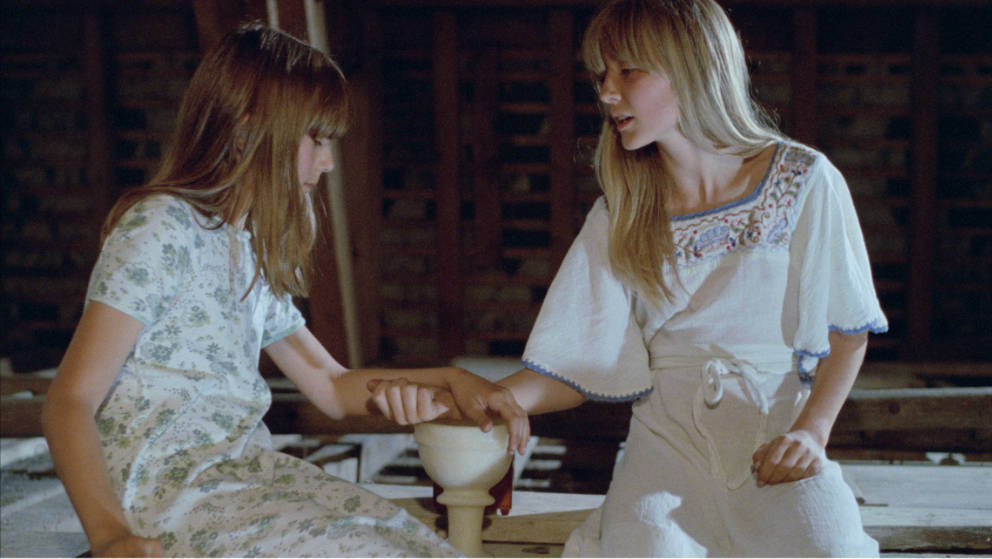
In some ways we’re in familiar territory here, as by the early 1980s toxic waste had become a popular substitute for radiation in horror cinema, and us genre fans took with a pinch of salt its various mutational and even semi-supernatural effects on both the living and the dead. It was never crucial to the story, just a handy device for kicking off the narrative, and that’s where The Living Dead Girl [La morte Vivante] really gets interesting. Rather than terrorising the neighbourhood and laying waste to anyone she encounters, Catherine instinctively wanders back to the château in which she was raised, seemingly in a trance and with no memory of her life or even a clear understanding of who she is. Here, certain objects trigger flashbacks to her childhood, particularly the bond-of-blood friendship she had with Hélène (Marina Pierro), who still deeply misses the girl she had pledged to love forever and to follow to the grave if Catherine should die before her, a pledge that we can presume she has not yet had the courage (or the foolishness) to act on.
Although empty since Catherine’s death two years earlier, the château is now up for sale, and as Catherine enters the property through an open side patio door, the building is in the process of being shown to a pair of wealthy Americans (played by Sam Selsky and his wife) by a young estate agent (best guesses have this as Patricia Besnard-Rousseau). Fortunately for them all, their paths do not cross (the moment when they nearly do is quietly effective), but the estate agent still unknowingly digs her own grave when she and her boyfriend (played by assistant director Dominique Treillou) use the house keys to have a sexual liaison that evening in the perceived privacy of the château’s plush surroundings, only for them both to be bloodily slaughtered by Catherine. Her once dear friend Hélène, meanwhile, is given a start when she phones the château and is greeted by the sound of a music box that she gave Catherine as a present back when they were children. She rushes to the châteaux to be confronted by the sight of the slaughtered bodies of the estate agent and her lover and the blood-spattered girl she that she thought was dead sitting naked at the piano. Hélène initially assumes that Catherine never died after all and puts her current inability to communicate down to her being on a state of shock due to the murders that she has inadvertently committed. Eventually she realises what has actually occurred, but love conquers horror and after it becomes clear that Catherine needs to ingest human blood to survive, the devoted Hélène sets out to procure victims for her, convinced that this will eventually return her friend to the land of the living.
There’s a sense of the hybrid about The Living Dead Girl that those familiar with Rollin’s work should be familiar with by now but that may well divide the uninitiated. Despite some dodgy prosthetics – which it turns out were the result in part of the right materials not being available in France at the time of the film’s production – gore hounds will find plenty to chew on here, while the full-frontal female nudity should keep a portion of male audience intermittently happy. But an exploitation movie this is not, being primarily a sensitively handled, deeply melancholic and ultimately tragic tale of love tested to the extreme, of the moral choices we are prepared to make in its name, and of its potential as a destructive and even self-destructive force. All of this is likely to bemuse a sizeable number of those who tuned in for the sex and violence, which is a shame, because this is precisely makes The Living Dead Girl something special. Crucial to this is the antemortem bond that Catherine had with Hélène, whose devotion to her friend overrides her own sense of right and wrong and proves ultimately self-serving, with Hélène’s determination to bring back the girl she was once so close to blinding her to Catherine’s later pleas for her own destruction. It’s the sequences involving the two women – and indeed the two girls they once were in the captivating flashbacks – that give the film its heart.
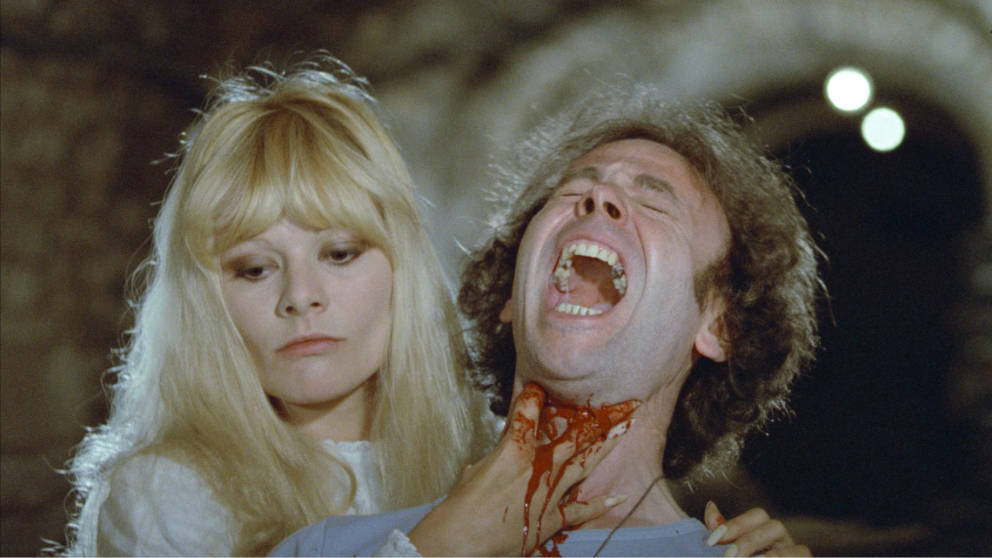
Largely rejecting the concept of a supernatural resurrection in favour of a biochemical one, the film may see Rollin responding to horror trends by switching from his favoured vampires to the living dead, but he does so without letting go of the subgenre in which he made his name. Although in essence a reanimated corpse, the newly revived Catherine has clear vampiric qualities, instinctively drinking the blood of her human victims, without which she quickly starts to show signs of complete mental disintegration. The traditional vampire fangs are replaced here with the long nails on the two fingers that Catherine plunges into the eyes, mouth or throats of her various victims, opening gushing wounds on which she is able to freely feed. On recognising the urgency of Catherine’s need, Hélène initially offers her own open vein to drink from (a move that directly echoes the blood oath the two took as children), then puts her own morality aside to flag down a helpful motorist and lure her to the châteaux for her friend to feed on. Tellingly, having pushed the woman into the basement where Catherine awaits, Hélène then runs away, traumatised by the sound of the poor woman’s terrified screams. Yet just as its seems Hélène is prepared to do whatever it takes to bring her friend back to the land of the living, Catherine’s gradual awakening to who she really is has made the price that must be paid for her continued existence intolerable to her.
It helps immensely that Catherine’s initial confusion, gradual awakening and inner torment are so convincingly captured by a consistently superb Françoise Blanchard (her wordless performance in the early scenes is remarkable), while Italian actress Marina Pierro makes Hélène’s drift from shocked surprise into almost self-centred obsession completely believable. The love she has for Catherine feels completely real, as does Catherine’s increasing desperation and gut-wrenching anguish when she realises that she has lost control of her bloodlust. Also impressive are the two girls who play the women as children in the flashbacks – non-professionals they may be (they’re played by Rollin’s niece and the niece of production manager Lionel Wallmann) but their performances are winningly natural and their friendship believable.
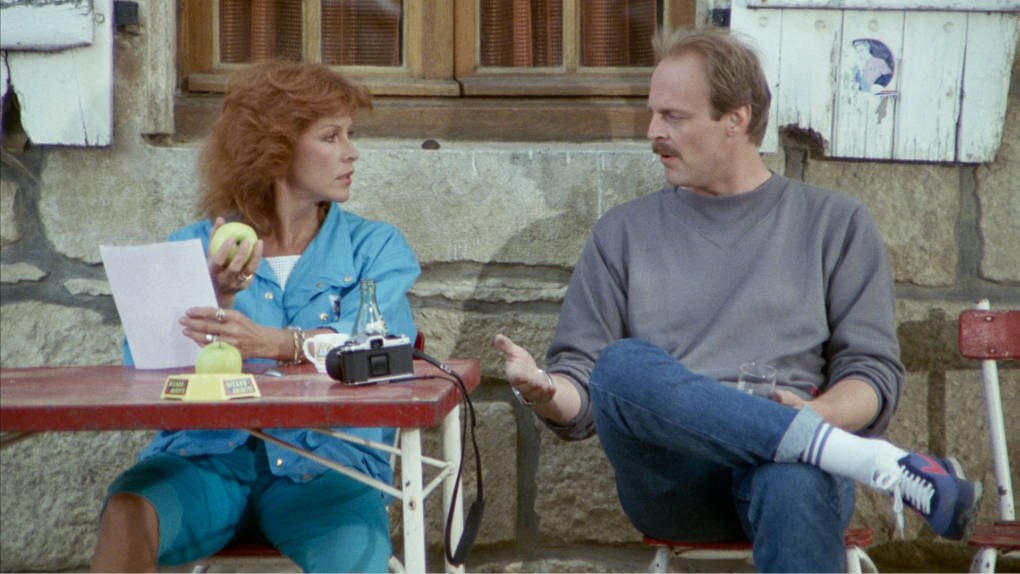
Not everything on the performance and character front is of a similar calibre, and those who know the film will doubtless already have guessed that I’m talking about holidaying American couple Greg (Mike Marshall) and Barbara (Carina Barone). Part of the problem for me is that they’re the only conventional aspect of a film that otherwise kicks soundly against all genre norms, particularly that weary horror trope that has the man dismissing claims made by his far more ready-to-believe female partner. It’s due to this that they spend a substantial portion of their scenes together bickering and delivering dialogue that has an unfortunately “English is not the writer’s first language” ring. It doesn’t help that Barone really overplays the couple’s first on-screen argument, complaining loudly – complete with colourful gestures and head twitches – after being given a camera to take photos by Greg that, “I’m not a God-damned photographer! I’m an actress!” which is delivered with such drama that I half expected it to be followed by, “reduced to the status of a bum!” in true Withnail fashion. That said, this side-story does have a narrative function and conclude in enjoyably eye-catching fashion, and I’ll give Rollin points for having Barbara swap the standard lens on her camera for a telephoto one to better capture an image of the distant Catherine. A trivial point, perhaps, but it’s the sort of realistic touch you rarely see in films when actors are seen using SLR cameras.
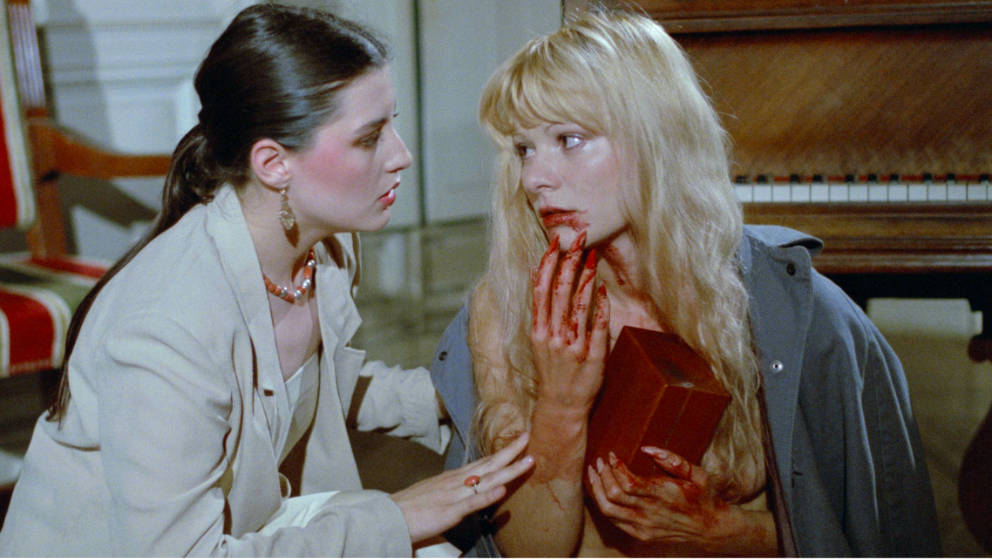
Where the film is positioned in the league table of Rollin’s oeuvre has also split opinion, with those who see it as a lesser work (including, surprisingly, his close friend and collaborator Jean-Pierre Bouyxou) counterbalanced by its enthusiastic supporters, some of whom regard it as one of the director’s best, with a few even lauding it as his finest feature. Despite some stiff competition on this score, several viewings in I’m inclined to agree, and it’s not easy to pin down exactly why. It certainly has two of the most captivating lead performances you’ll find in a Rollin film, and for me the gore and nudity always feel like they’re in service of the very real and deeply touching poetry of the piece. The bickering American tourists aside (and my dislike of them has mellowed over the years), Rollin’s direction is consistent assured, creating a wistfully dreamlike atmosphere of melancholic sadness and loss, a task in which he is aided immeasurably by Max Monteillet’s warm cinematography and Philippe d’Aram’s carefully rationed but deeply emotive score. There’s even a documentary-like handheld vérité sequence following Barbara through what looks like a real street market, not something I’m used to seeing in a Rollin film. I’ll also give a shout out to editor Janette Kronegger, whose seamless cutting between past and present as Catherine experiences brief memories of childhood is some of the best you’ll find in all of Rollin’s cinema. Some will disagree, but for me this is Rollin at the absolute top of his game in the way he melds such seemingly disparate elements into such a purposefully lyrical whole, right up to the genuinely heartbreaking finale. Indeed, it seems almost paradoxical that what is generally regarded as Rollin’s goriest and most violent film is also one of his most subtle, most moving, most subtextually affecting. and most darkly beautiful works, and for this humble fan, quite possibly his best.
sound and vision
From the booklet:
The Living Dead Girl was scanned, restored and colour corrected in 4K HDR at Silver Salt Restoration, London, using original 35mm negative materials. Phoenix and PFClean image processing tools were used to remove many thousands of instances of dirt, eliminate scratches and other imperfections, as well as repair damaged and missing frames. No grain management, edge enhancement, or sharpening tools were employed to artificially alter the image in any way.
The resulting 2160p transfer is a thing of beauty. Although there are some minor variations inherent to the source material, on the whole the image is sharp while still retaining that very slight softness that is organic to film. The fine detail is clearly defined, something particularly evident in close-ups but also visible on textured surfaces such as clothing, brickwork and even skin. The contrast is sublimely graded, with solid black levels, well defined highlights and a generous tonal range between, and the pastel-leaning colour palette is beautifully captured here, both elements doubtless given an extra lift by the Dolby Vision HDR. As the above quoted text suggests, the image is clean and free of damage, and there is no errant movement of the picture within the 1.78:1 frame. A fine film grain is visible, and the picture has the sort of texture that I absolutely love and that you only ever get with meticulous transfers from 35mm acetate film. Superb. (Note: the screen grabs here had to be obtained via an unusual process and lack the HDR vibrance of the image as it appears on screen.)
The film’s original mono soundtrack is presented as Linear PCM 1.0 and is also in good shape, being clear within the expected tonal range restrictions. There is a trace of background fluff if you really crank the sound up loud, but it’s a vast improvement on the far more prominent hiss that you can hear in the quieter moments in the Jean Rollin commentary track.
Optional English subtitles kick on by default, but you can also select English subtitles for the hearing impaired on the main menu.
special features
Françoise Blanchard foreword (0:26)
When you elect to play the film, there is an option to precede it with a brief introduction by lead actress Françoise Blanchard, which is directed straight to camera and was recorded in 2005 in the same session as her interview detailed below.
German Version ‘Scare’
Also available as when you select Play Film on the main menu is the option to watch the German release of the film, which was retitled Scare and dubbed in German (no surprises there). More significantly, Philippe d’Aram’s music has been replaced by an electronic score that was composed and performed by persons unknown. It’s not terrible by any means and in places is quite effective, but it doesn’t come close to capturing the film’s melancholic sense of loss, something d’Aram’s score does with subtle aplomb. In addition, some sequences that play effectively without music in Rollin’s original have had music added here, presumably in an attempt to add an artificial air of mystery or suspense.
It’s worth noting that this transfer has been sourced from a VHS copy that at present appears to be the only medium on which the German cut still exists and is framed 4:3 with a slightly abrasive Dolby Digital 1.0 soundtrack. For what it is, the image quality is not that bad but unsurprisingly is absolutely blown out of the water by the 4K restoration. It’s inclusion really does make this release feel definitive.
Audio commentary with director Jean Rollin
Recorded in 2003, this commentary by director Jean Rollin is a rare treat, considering how few of his films he appears to have done such a commentary for, and Rollin has plenty to say about the film, its production and his collaborators, as well as the thinking behind specific scenes and filmic decisions. We get information on the actors and even some of the bit-part players, on the difficulties of lighting and filming in certain locations, and on the influence of Georges Franju’s Eyes Without a Face (Les yeux sans visage,1960) and – more surprisingly – Roy William Neill’s Frankenstein Meets the Wolf Man (1943) and Luis Buñuel’s The Criminal Life of Archibaldo de la Cruz (Ensayo de un crimen, 1955). Rollin is not above criticising elements that didn’t turn out quite as he hoped, but also highlights moments that worked out as planned, including his favourite scene in which Catherine returns home and comes across various objects that remind her of her previous life. He even amuses himself by wondering who lit the torches in the crypt, something he claims only an American would seriously question. There’s an interesting story about the casting of Marina Pierro, a brief but revealing musing on gore in literature and film, an always welcome reflection on his regular use of two girls and the emotional bond that binds them, and much more. An essential companion to the film.
Audio commentary with Kevin Lyons and Jonathan Rigby (2026)
Euro Gothic author Jonathan Rigby and Encyclopaedia of Fantastic Films and Television website editor Kevin Lyons – two of the most learned commentators on horror and fantastique cinema – appeared unified in their high opinion of The Living Dead Girl, describing it up front as one of Rollin’s most extraordinary films, with Lyons admitting that it’s his favourite. There’s plenty of information provided on the actors, co-screenwriter Jacques Ralf, special effect makeup artist Benoît Lestang, and cinematographer Max Monteillet, as well as discussion on the way individual scenes are filmed and can be read. They kick against the popular view by admitting that they find the American couple rather engaging, relate a fair few anecdotes about the filming, and while they do point out elements that they don’t feel quite work, this is overshadowed by the heartfelt praise that they have for the majority of things that do. There’s much more to get your teeth into here, all of it worthwhile.
Selected scenes audio commentary with Françoise Blanchard (25:59)
Recorded in 2005, this selected scenes commentary with lead actress Françoise Blanchard – who is intermittently prompted by an unidentified male voice – brings a second first-hand viewpoint to sequences involving her character. Pleasingly, there is information delivered here that is not found anywhere else in the extensive special features, including the reveal that her character doesn’t blink once throughout the film, that she was angered by the imposed decision to cut the nails she had spent some time growing and replace them with false nails instead, and that Marina Pierro – whom she praises for her kindness and the almost maternal care she took of her – had to be dubbed in post because her French accent was so terrible. There’s plenty more that was new to me here, as well as a personal angle on information also supplied elsewhere, and I salute her claim that “a living dead girl also has a right to be naked in a Jean Rollin film.”
Jean Rollin Introduces The Living Dead Girl (1:44)
A brief 1998 introduction to the film, delivered in English by Jean Rollin, in which he notes that this was his second film with gore effects (the first was the 1978 The Grapes of Death) and that it was a success in Europe and even won an audience award at the Mostra internationale del film di fantascienza e del fantastico.
Jean Rollin: Blood Ties (11:46)
Newly edited for this release, this 2005 interview with Rollin covers some of the same ground you’ll find elsewhere on this comprehensive release but uses it as a springboard for new information on the production. He once again highlights Catherine’s confused return to the châteaux as the scene that he found the most interesting, and reveals that actress Françoise Blanchard was completely invested in the character and that it was hard role for her to play, especially in the final scenes (if you’ve seen the film you’ll understand why). He provides some information on the shooting of a sequence in which a character is set on fire and jumps into the moat, and notes that while the gory make-up effects may seem a little primitive to a modern audience, they were something of a first for French cinema.
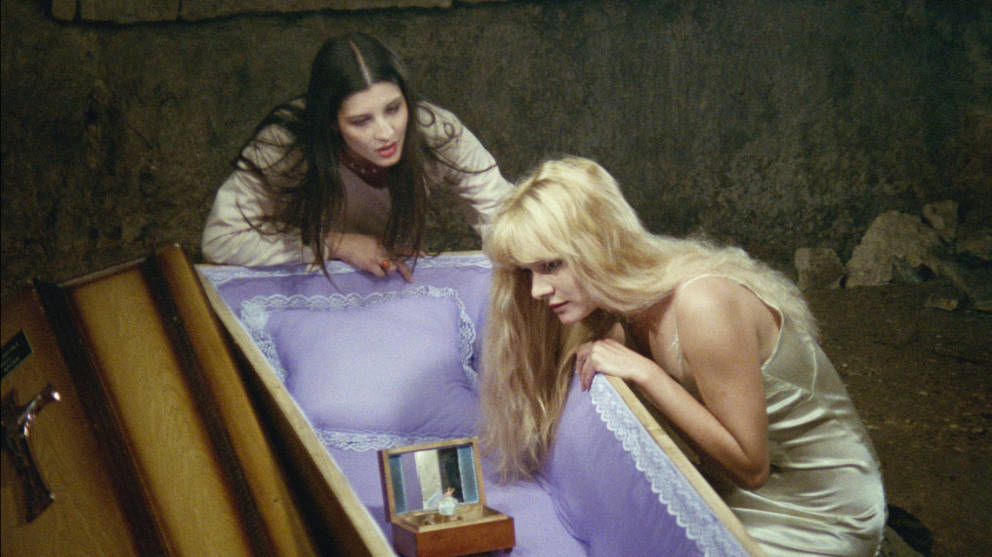
Jean Rollin on The Living Dead Girl (2:39)
Shot in 2007, this is another brief English language introduction to the film by Rollin, who notes here that The Living Dead Girl was made during the post Night of the Living Dead period when interest in the vampire movie was fading. He explains what interested him most about the story (this is also covered in the commentary) and discusses the phone call scene in which the two girls first re-connect.
Jean Rollin at Fantasia (36:22)
Shot in standard definition and framed 4:3, this is essentially a record of Rollin’s appearance at the 2007 Frantasia Festival in Montreal, which was screening his personal copy of his 1971 The Shiver of the Vampires [Le frisson des vampires] and his then latest film (which he predicted would be his last), La nuit des horloges. He is also presented with the festival’s Gargoyle Award. Bookended by brief interviews with Rollin in which he talks about the two films, the first half consists of a lengthy introduction to the screening of Shiver of the Vampires by Rollin, who is introduced by a festival organiser who is a dead ringer for filmmaker Edgar Wright, and by makeup effects artist Benoît Lestang, who got his first break in the business on The Living Dead Girl. This is followed by a post-film session in which Rollin takes questions from the audience on subjects such as what fascinates him about vampires (despite all the interviews I’ve seen with Rollin, his response here still intrigued me), his early love of cinema, and the reasons he prefers original scripts over adaptations of literary works.
Souvenirs de La Morte vivante (15:12)
A documentary on the film by Rollin’s personal assistant, Daniel Gouyette, that carries a 2026 copyright but was clearly filmed some time earlier, being built around interviews with writer and cameo actor (he plays one of the men dumping waste at in the opening scene of The Living Dead Girl) Alain Petit, and Rollin’s frequent assistant director, Jean-Pierre Bouyxou, who passed away in September 2025. Petit has a few intriguing stories about fellow opening scene actor Jean Cherlian, and Bouyxou surprised me when he revealed that he doesn’t rate The Living Dead Girl as highly as other Rollin films, though admits there are sequences he loves. He also recalls arriving at the location when filming was already under way and the first thing he saw was an unselfconsciously naked Françoise Blanchard casually walking across the set for a cigarette break. There are some pregnant pauses as Bouyxou sometimes struggles to find the right words (he always gets there in the end), while Petit has been filmed indoors with a window behind his head, which casts him into almost silhouetted shadow. Rookie autoexposure mistake or deliberate artistic choice? Take your pick, but I’ll need some convincing to swallow it’s the latter.
Françoise Blanchard: Delicate Deadliness (18:39)
Another 2005 interview that has been newly edited for this release, this time with the film’s co-star, Françoise Blachard, whose wide and cheerful smile I found bewitching and who having just turned 50 is as striking as she was back when The Living Dead Girl was filmed. Oh lordy, how old am I again? Blanchard recalls making the transition from modelling to film and finding work with then exploitation specialists Eurociné, whose roster of filmmakers included Jean Rollin, Jess Franco and Pierre Chervalier. She has fond memories of The Living Dead Girl, stating that she learned a lot about filmmaking from the crew, that she got on well with her co-star Marina Pierro, that Rollin allowed his actors to shape their characters and improvise as long as they spoke the dialogue as written, and that she became so immersed in her character that performing a particularly gory scene where the effects malfunctioned triggered her first ever tetanic fit. She reveals that the fiery stunt jump in the film’s later stages came about after she was asked to leap off the battlements into the shallow moat, a request she initially agreed to but then declined after a stuntman assured her that doing so would break both of her legs. She also confirms that all of her dialogue scenes were shot twice, once in French and once in English (more on this now lost version below), and that she preferred the concise nature of the latter. Sadly, the interview is dedicated to Blanchard’s memory as she died just twelve days before her 59th birthday.
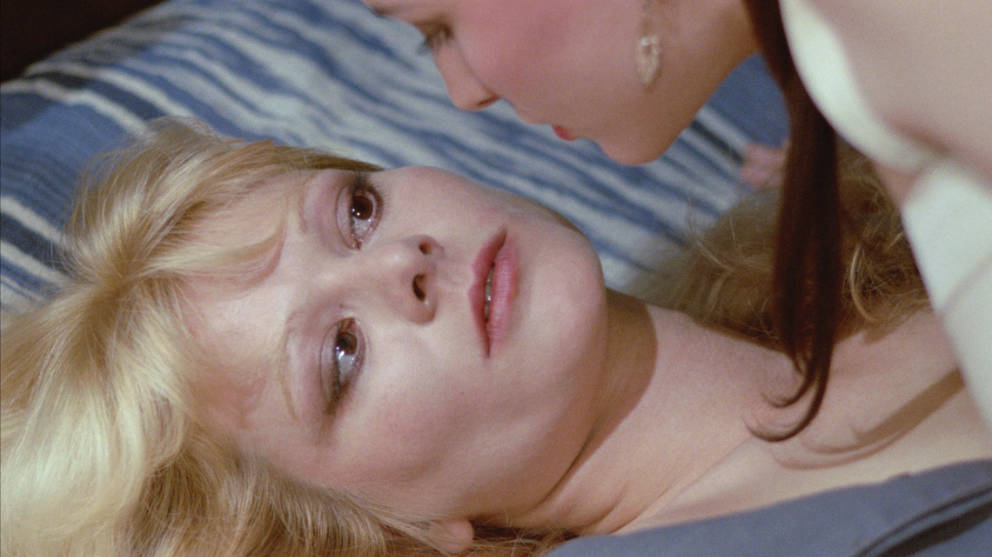
Jean-Pierre Bouyxou: Deliberately Absurd (24:47)
A newly edited version of a 2005 interview with regular Rollin assistant director Jean-Pierre Bouyxou, who here is in full flow and crams a lot of recollections into the 25 minutes this runs for. He outlines how his lifelong love of cinema led to him wanting to make films, recalls his first meeting with Rollin in Brussels and how their friendship really began after he wrote a positive appraisal of The Nude Vampire (La Vampire nue, 1970) that for Rollin was the first time a critic had understood what he was trying to achieve. He talks about the Rollin films he likes and loves and notes that even the less captivating ones have remarkable moments, admits that he enjoyed working on Rollin’s X-rated pornographic films, and tellingly suggests that when working for Rollin, “I was more than an assistant, I was an accomplice.” At one point, when he is talking positively about Rollin and his approach to cinema, Rollin himself chimes in from off screen, “I’ve never heard such nice things said about me before,” and comes into frame to give his friend an appreciative kiss. Bouyxou also talks about working on Jess Franco films and how it compared to working with Rollin. “What they have in common is that they both work quickly and cheaply, and they are both deeply in love with the fantastique and with eroticism, he says. “But Jess Franco is a lunatic. A wonderful, admirable lunatic, but completely mad.” There’s lots more of real interest here.
Philippe d’Aram: Sound Bites (17:26)
Once again recorded in 2005, this newly edited interview is with composer Philippe d’Aram, who scored seven of Rollin’s later films, starting in 1979 with Fascination and including The Living Dead Girl. He outlines how he first got into music and reveals that he was sent to military service by his father after doing badly in school (wow, parents really did that), where his knowledge of music and musical construction was greatly expanded. He explains how his career snowballed after the first film he scored – François Dupeyron’s 1978 L’Ornière – won prizes at several international film festivals, and how he pushed to get the job scoring Fascination for Rollin at a time when composers didn’t have agents in France. He tells us that he likes working with Rollin because he is a true music lover and wishes there were more directors like him and reveals that on the first films he worked on – The Living Dead Girl included – he played all of the instruments himself. There are other film score and music related points of interest raised here, and an off-screen Rollin once again chips in at one point to underscore d’Aram’s words.
La Musique de La Morte vivante (14:47)
A newly filmed interview (even if the wide shot framing and slightly fuzzy quality make it look a little like an older SD blow-up) with score composer Philippe d’Aram, who here gets into the technical and artistic nitty-gritty of composing and recording the score for The Living Dead Girl. The musically savvy will doubtless get more out of this than someone with as little understanding of the subject as I have did, but even I was intrigued by some of the elements I did manage to grasp and was impressed by d’Aram’s inventiveness and willingness to think outside the traditional compositional box.
Benoît Lestang, 17 ans (24:40)
A 2026 documentary on special effects makeup artist Benoît Lestang, who as the title of this piece suggests, was just 17 years of age, still at school and living with his parents when he landed the job of doing makeup effects on The Living Dead Girl. Although a new piece, it’s comprised of archive interviews with Jean-Pierre Bouyxou, Alain Petit (both of whom are filmed in the same location as they were in the Souvenirs de La Morte Vivante documentary), Jean Rollin and Lestang himself. Both Rollin and Bouyxou have since passed, and Lestang sadly took his own life in 2008 shortly after completing some of his most remarkable work on Pascal Laugier’s controversial Martyrs. Between them, they tell the story of how this young makeup effects enthusiast ended up working on his first feature for Rollin. Bouyxou recalls asking Grapes of Death makeup artist Raphaël Marongiu to pop round and give the nervous Lestang a few useful tips, and Lestang admits that he had to postpone his first meeting with the director because it was a school day, something he covered up with a businessman bluff about finding space in his diary. Crucially, we learn why a couple of the makeup effects don’t look quite as realistic as intended, with Lestang revealing that the unavailability of the right materials in France at the time led to the application of make-up turning the prosthetics grey, while Bouyxou claims the effects shot of his character’s eyes being poked out was too bright due to a lighting error. Not for the only time in these special features, Lestang and Rollin tell different stories about why the former slept on the bathroom floor in the châteaux, and Petit has an amusing anecdote about waking one morning to find his pillow caked in what he initially believed was his own blood.
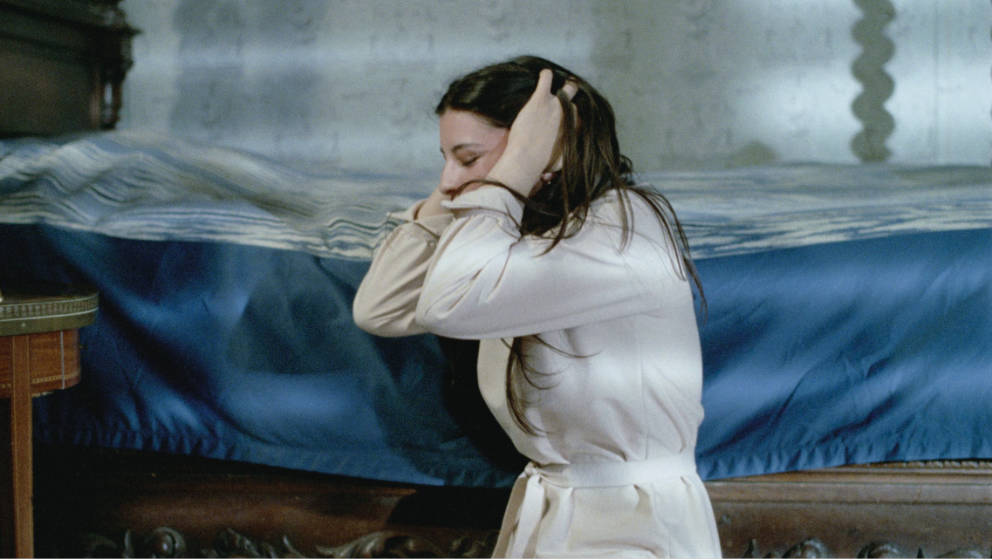
Dead or Alive (15:33)
The same interviews of Jean-Pierre Bouyxou reclining on a couch and Alain Petit almost silhouetted against a window from the previous special features form the backbone of this interesting look at the now lost English language version of the film mentioned by Françoise Blanchard in her interview. Rather than redub the actors in post with English dialogue in the manner of Italian genre movies of the period, the decision was made – apparently at the funding level and above Rollin’s head – to bring in an American with no other directing credits named Gregory Heller who, immediately after Rollin had completed a dialogue shot, would set up his own camera in exactly the same position and film the same shot with the actors speaking their lines in English instead of French. According to Bouyoux, Heller detested Rollin and had nothing but contempt for his skills as a director, to which Rollin responded by completely ignoring him and pretending he didn’t exist. “I’ve rarely met anyone as stupid as this Mr. Gregory Heller,” Bouyxou damningly claims, also revealing that due to the problems the actors had with the English dialogue, they all had to be redubbed again in post anyway. Intriguingly, Petit has no recollection of any such parallel shoot by the Americans, but the testimonies of both Bouyxou and Blanchard seem to suggest he was simply on set on the wrong days.
Outtakes (1:41)
This consists of two excised shots in their raw form without added sound effects or music, the first of which has Greg and Barbara bickering at the festival dance about Barbara’s conviction that Catherine is alive. The second appears to be the only surviving shot from the English language version and has the real estate agent on the phone arranging a sneaky tryst with her boyfriend at the châteaux. I will say that the actress here appears a lot less comfortable delivering her lines in English.
Stephen Thrower: Convulsive Beauty (33:52)
A 2026 critical appreciation by author and musician Stephen Thrower, whose opinions on horror cinema I hold in high regard and who delivers a level-headed assessment of what he feels is Rollin’s most violent film, appreciative of what it achieves but a little more critical than Rigby and Lyons of elements that he feels don’t quite cut the mustard. He notes that Rollin’s films were a mix of poetry from the heart and elements that responded to market expectations, and suggests that the makeup effects here are closer to Herschell Gordon Lewis than Tom Savini, but, he adds with conviction, so what? Rollin’s films were made cheaply, he reminds us, and nobody should approach them with unreasonable expectations. He opines that the mixture of bloody violence and melancholic poetry can initially seem haphazard, but also feels that Rollin pulls it off, and notes the influence of genre luminaries George Romero and David Cronenberg on elements of the film. He is hugely appreciative of Françoise Blanchard’s central performance, which he describes as “amazing” (no quarrel here), but parts company with Rigby and Lyons in his dislike of the scenes involving the American couple, feeling that they have a TV movie styling that jars with the rest of the film and describing Greg as “a particularly nauseating character.” There’s much more here absolutely worth hearing, some of which is covered elsewhere but is approached from a different viewpoint here.
Theatrical trailer (3:23)
A French trailer that leans heavily into the gore and gives only a small flavour of the film’s poetic and melancholic qualities and does include nudity and some of the more violent moments, a couple of which are from angles not used in the final cut. There’s a lot of screaming here, and the trailer commits a cardinal sin by including plot-spoiling footage from the final scene.
There are two Image galleries.
Original Promotional Material features 51 promotional stills, four lobby cards, three scans of pages from the French press book, a single screen featuring two official looking letters relating to the film that my French is not up to translating, two annotated pages of English dialogue spoken by Greg and Barbara, scans of letters sent to Rollin inviting him to participate in the Mostra internationale del film di fantascienza e del fantastic, eight VHS covers (including one for the German release under the title of Scare) and two posters.
Behind the Scenes consists of 18 screens of photos taken during the shooting and promotion of the film, including a couple of screens featuring scans of medium format film strips of a single scene.
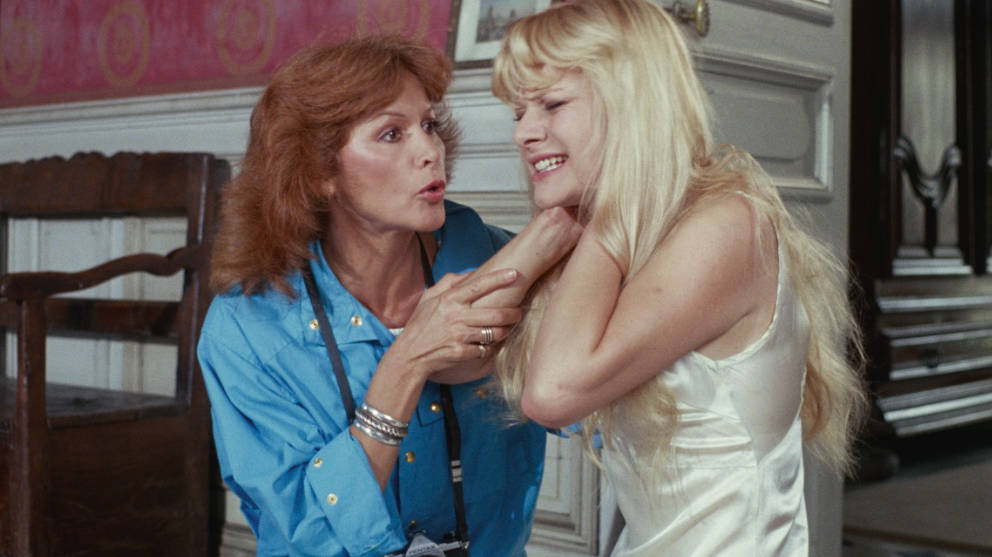
Book
The handsomely produced and richly illustrated 80-page book that accompanies the release kicks off with a new essay by writer and critic Will Sloan, a really perceptive and well written piece peppered with acutely observed comments about the film and Rollin’s non-binary approach to death. I was particularly struck by his assertion that the film gains much of its power from what it doesn’t say. Absolutely.
A synopsis of the film’s plot taken from the original French pressbook is followed by a substantial piece by Rollin himself on the making of The Living Dead Girl, which originally appeared as liner notes on the 2005 Encore Films DVD release. Despite the wealth of detail about the making of the film in the on-disc special features, this essay is still littered with new information and anecdotes about the production, all of it first-hand (the detailed footnotes also run for two pages).
Next is a substantial interview with Jean Rollin by Peter Blumenstock for the January/February issue of Video Watchdogmagazine that spreads its net wider than just The Living Dead Girl to include the production of some of Rollin’s later films, including Killing Car (1993) and Lost in New York (Perdues dans New York, 1989), another Rollin film that I’m very fond of. Once again, there’s a lot of information in this interview that you won’t find in the on-disc special features, and it makes for consistently interesting reading, and that includes the footnotes. Having said that, can I make a quick plea to booklet producers not to use red text on black because it’s really hard to read if you have even minor colour vision problems. Fortunately Rollin’s responses are all printed in easily read white text.
Full credits for the film and details of the restoration have also been included.
final thoughts
When I first saw The Living Dead Girl back in 2005 when it was released uncut in the UK for the first time on DVD by Redemption, I was struck by its gentle exploration of the loneliness that comes with personal loss, and having now reached an age where such loss and heartache is part of my very makeup, I’m even more appreciative of what Rollin achieved here. Yes, the American couple (one of whom is French Canadian with an accent to match) irritate, but they do serve a narrative function and do not detract from the deeply moving and superbly acted relationship around which this captivating film revolves. When it comes to 4k restorations of Rollin’s films, Indicator just keeps knocking it out of the park, and for fans this release is a dream come true, boasting a lovely restoration and transfer and just about every special feature you could possibly hope for, and then some. Not for everyone, sure, but for the willing this gets our highest recommendation. Bravo, Indicator.
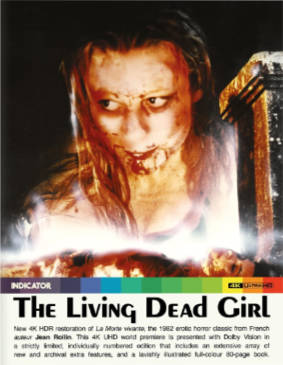
The Living Dead Girl [La morte vivante]
France 1982 | 90 mins
directed by: Jean Rollin
written by: Jacques Ralf, Jean Rollin
cast: Marina Pierro, Françoise Blanchard, Mike Marshall, Carina Barone, Fanny Magiere, Patricia Besnard-Rousseau
distributor: Indicator
release date: 27 April 2026