
Daniel Farson’s Guide to Britain Volume 2
Another time capsule from the late 1950s to the mid 1960s from the Rediffusion archive, DANIEL FARSON’S GUIDE TO BRITAIN VOLUME 2 is a dual-format release from the BFI. Gary Couzens goes back in time.
This is the second volume the BFI has released of television documentaries fronted by Daniel Farson (1927-1997) from the Associated-Rediffusion archive. A-R (from now on) held the franchise for weekdays in the London and South East when ITV was launched in 1955. Via a name-change to Rediffusion London in 1964, it continued until 1968 when it lost its franchise and was replaced by Thames Television. In his documentaries, many of them shown only in the London area, Farson acted as a roving reporter, looking on behalf of the audience at some of the byways of contemporary life they might know little about. In this, he was a predecessor of, and influence on, the likes of Alan Whicker and Louis Theroux: curious, letting people have their say even if he didn’t agree with them (and said so). ITV, the nation’s second channel after a war-interrupted near two decades with just the BBC, was considered by some as a brash, maybe vulgar upstart, particularly because of its it was funded by commercials as opposed to the BBC’s licence fee. However, ITV, of which A-R was a major part, acted as a challenge to the established, occasionally more stuffy establishment voice of the Beeb. Several of the documentaries in this set and in Volume 1 would never have been made by the BBC then, and one in particular broke a taboo on the small screen.
There were fourteen of his programmes in Volume 1. This volume provides another fifteen, from 1957 to 1964.
OUT OF STEP: NUDISM
OUT OF STEP: TUNE IN TO NATURE’S RADIO
OUT OF STEP: ONE MAN AGAINST THE WORLD
OUT OF STEP: THE SEVENTH DAY
“Is it wrong to be out of step? Dan Farson goes out to challenge people who hold odd views about life. Are these people just cranks, or are they one step ahead of us?”
Out of Step was broadcast in the London region only, at 10.30pm in a quarter-hour (or rather a curiously precise sixteen-minute) slot. The episodes themselves were around thirteen and a half minutes to allow for a commercial break before the next programme, which was the news. The series interviewed people who held views out of the mainstream. Shown on Wednesdays from 18 September to 18 December 1957, only six of the fourteen episodes survive. Two were on Volume 1 and so here are the rest of those we are able to see unless someone makes a find. Missing in action are episodes on Scientologists, anarchists, vegans (presumably vegetarians were relatively more mainstream), those couples declining to marry, body-builders and those who said “Down with Work” and aimed to lead an idle life. (“Is a tramp’s life really a happy one?”)
Nudism, the third episode from 2 October, has a little place in history, as it marked the first appearance on record of human adult nakedness on the small screen. It was on late on a school night – so children would have been safely tucked up in bed – and the depravity and corruption was restricted to those metropolitan trendies who were watching. It doesn’t appear to have caused any great uproar, and Mary Whitehouse was seven years away from starting her activities. Reasonably discreet nudity had only recently been seen in the cinema due to documentaries such as the documentary Garden of Eden, which at the time of Farson’s broadcast had been rejected by the then British Board of Film Censors (BBFC) in 1954 but had been passed by some 150 councils, many of them with the suitable-for-all U certificate. They had passed other nudist films as well. The BBFC, under a new Secretary, the more liberal John Trevelyan, bowed to the inevitable and passed Garden of Eden in July 1958 with an A certificate and permitted nudity in these films as long as it was restricted to breasts and buttocks. This was nine months after (a clothed) Farson had ventured inside a naturist camp, so it shows how bold A-R were. It’s all very discreet, with no full-frontals except one of a couple playing badminton in very long shot, barely visible on this Blu-ray let alone on a small 405-line television set in 1957. The BBFC wouldn’t pass full-frontals of either sex until the following decade.
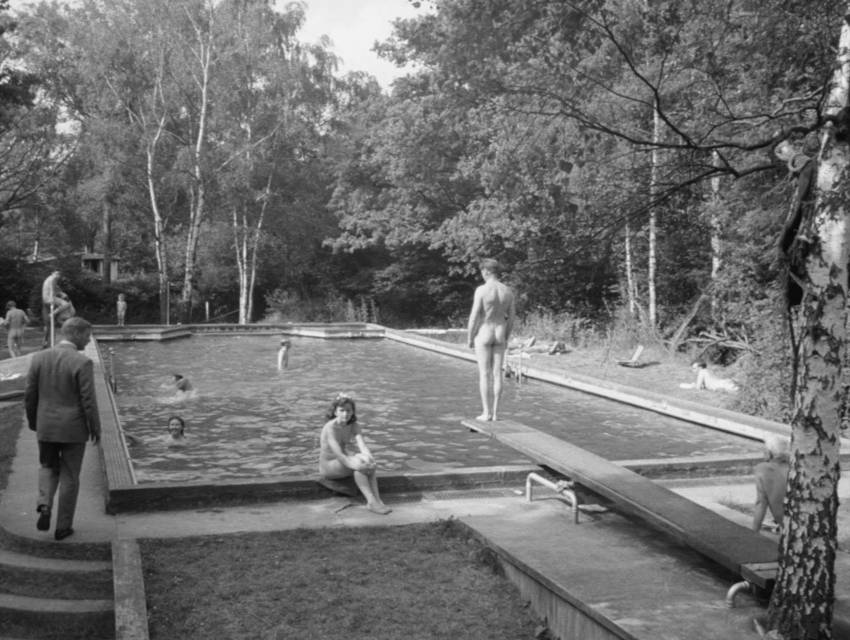
In his introduction, Farson does acknowledge “naturism” (which is the approved term) but “nudism” is used throughout. After some to-camera disapproval from a priest and Farson’s pet reactionary James Wentworth Day (who utters some jaw-droppingly racist comments in Mixed Marriages, which give Volume 1 its 15 certificate). Then he visits Spielplatz in Hertfordshire, which is the oldest naturist club in the UK, founded in 1929. In fact, its founder Charles Macaskie, a man with an impressive beard, his legs strategically crossed, is interviewed, as is his wife Dorothy and their daughter Iseult. Iseult became an advocate for naturism, to the extent of making an uncredited appearance in Carry On Camping (1969). As she is interviewed, her two-year-old daughter Beverly is playing. Beverly is as I write this the current owner of Spielplatz.
The commentary is by Mark Pilkington, who doesn’t so much comment on the episode but fills in details that aren’t in the programme, such as Iseult’s future life and career (she died in 2024). He also discusses the links between naturism, or gymnosophy as some initial adherents called it, to alternative spiritual movements. He’s not interviewed in the film, but one of Spielplatz’s regulars was Gerald Gardner, a leading Wicca practitioner (interviewed later in the series in Witchcraft, which is in Volume 1) who founded his own club, Fiveacres, nearby in Hertfordshire.
Tune in to Nature’s Radio (13 November) introduces us to a more arcane subject, namely Radionics. That’s as practised and advocated by George W de la Warr (known as Bill) who believes that every part of a human being, such as a single hair, or a drop of blood, has a specific resonance, which can be tuned into (with the help of some serious late-1950s electronic equipment) and altered to cure all manner of ills. The same applies to anything organic, so crop diseases have their days numbered. Farson confesses upfront that he finds this baffling and we the audience might well find this hard to follow. One Dr Carthy turns up to rubbish de la Warr’s claims, but we are left to decide.
Mark Pilkington is back on commentary duties. Like Farson, he also finds de la Warr’s initiatives hard to explain. The instruments were operated by his wife Marjorie and were even claimed to be able to view past events. A drop of his or Marjorie’s blood could have given him an unclear view of their wedding day. De la Warr died in 1969, but his lab continued until 1980.
Next up is One Man Against the World (18 December). In the spotlight this time isn’t so much a belief and its adherents, but one man. This is Harold Steele, who as a protest against nuclear bomb tests, proposed to take a boat to the test site and either stop it or, more likely, die. Steele was prevented from doing this, so he regarded himself as a failure. He was nicknamed H Bomb Harold or Suicide Steele. Farson interviews him in his front room with his wife Sheila and it’s clear he has a considerable respect for Steele. He ends with, “He calls himself a failure. Maybe he is by his own standards. But at least he had the guts to actually do something. He was prepared to risk his life while most of us are just content to sit and waffle. Maybe in a world which is completely out of step, Mr Steele is the only sane man.” And with that, as this is the final episode of the series, he hopes we have enjoyed them. There would not be a second series.
The commentary is by William Fowler. He fills in details which aren’t in the programme itself, such as that Steele was a conscientious objector in World War I and was imprisoned as a result. Fowler notes that Steele calls Farson “friend” or “dear friend”, possibly reflecting his Quaker (or it seems Unitarian) background. He didn’t seek publicity and was astonished that he received it, as there was no vanity involved. The flight cost was £400 (about £10000 in today’s money) but visa issues in Japan prevented Steele getting close to the test area. The publicity inspired other campaigners, leading to the formation of the Direct Action Group, which was behind the Aldermaston Marches in the early part of the next decade, and later the Campaign for Nuclear Disarmament.
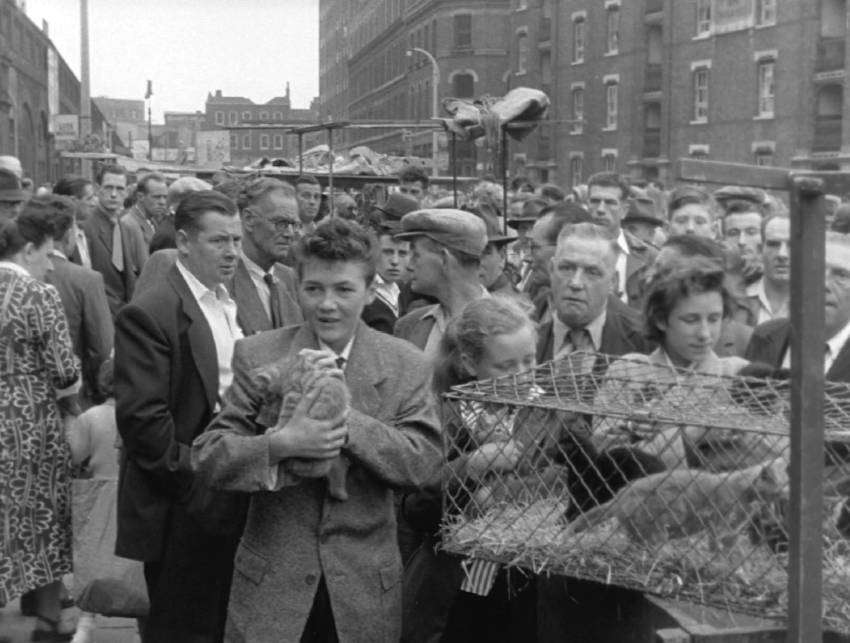
The Seventh Day was broadcast the previous week, on 11 December. This is very much a time capsule as the situation it describes no longer applies nearly seventy years later. This was broadcast before I was born, but many of us reading this are of an age to remember the considerable restrictions on Sunday trading and what you were and weren’t allowed to do on the Sabbath Day. Farson clearly finds them outdated and ridiculous back in 1957, but he interviews people who hold the opposite view, that the Lord’s Day should be kept holy and want even more limits on what you can do on that day. These include Harold Egerton, general secretary of the Lord’s Day Observance Society, and the particularly religious Booth family. We also see young people queueing outside the cinema on a Sunday. Would the country be more Christian if they had to stay at home? History has given us the answer, but you can tell which side of it Farson felt himself to be on. Kenneth Connor appears at the start, performing a stand-up routine demonstrating Farson’s point about what you could or couldn’t do on that one day of the week.
KEEPING IN STEP: CHILDREN’S PARTIES
KEEPING IN STEP: THIS ENGLAND
“Each week, Dan Farson meets a conventional point of view.”
Keeping in Step was the counterweight to Out of Step and followed it to the small screen just two weeks later, beginning on 1 January 1958. Also in a quarter-hour slot on a Wednesday night, it began at 10pm with later episodes going out at 10.30. There were nine episodes in all – a run of six, a three-week break, then three more. Out of those nine, eight exist. A look at Women’s Institutes is the one we can’t see. In Volume 1, we saw the whys and wherefores of weddings and the Stock Exchange. Here are two more, in which Farson meets people who very much live within society’s norms.
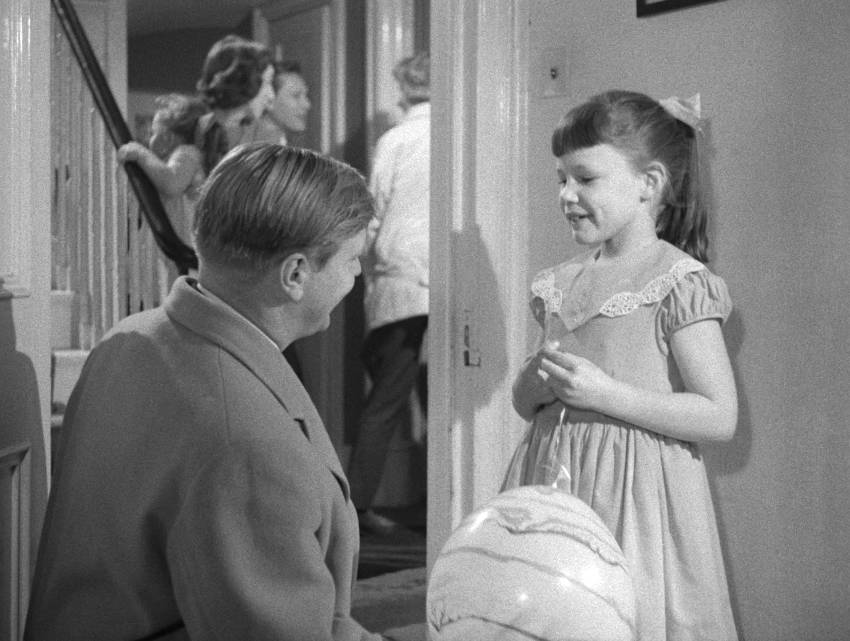
First is a look at Children’s Parties, broadcast on 15 January. Before we reach the party itself, Farson interviews his own maternal grandmother, Enid Stoker, aged eighty-five. She tells him about how different Victorian-era children’s parties were to the ones halfway through the next century. And then on to the party itself – that of seven-year-old Katina Noble. Following Kenneth Connor we now have another face you may have seen in films of the time, as Katina’s mother is the actress Marianne Stone, billed in the credits as Mrs Noble. Her husband was Peter Noble, the film journalist and occasional actor and songwriter. After footage of the 1957-era party games and food, Farson interviews children’s entertainer and model-railway buff Uncle Bertie, real name (as in the credits) Bertram Otto, who talks about how children’s parties are more commercialised now (that is, in 1957) than they used to be.
The commentary is by Dr Elinor Groom, who has her own experience of children’s parties, hosting her fair share as a mum in the 2020s rather than the 1950s. She finds the episode small but quietly fascinating, with more to it than at first appears. Back then, parties were held in the family house but Groom has never done that and isn’t sure if she would have room for the numbers nowadays. Maybe that’s a way that social norms have changed in the last seven decades. They certainly had in the seventy or so years since Enid Stoker went to parties. But given the bows and dresses birthday girl Katina is wearing, maybe things haven’t changed so much after all.
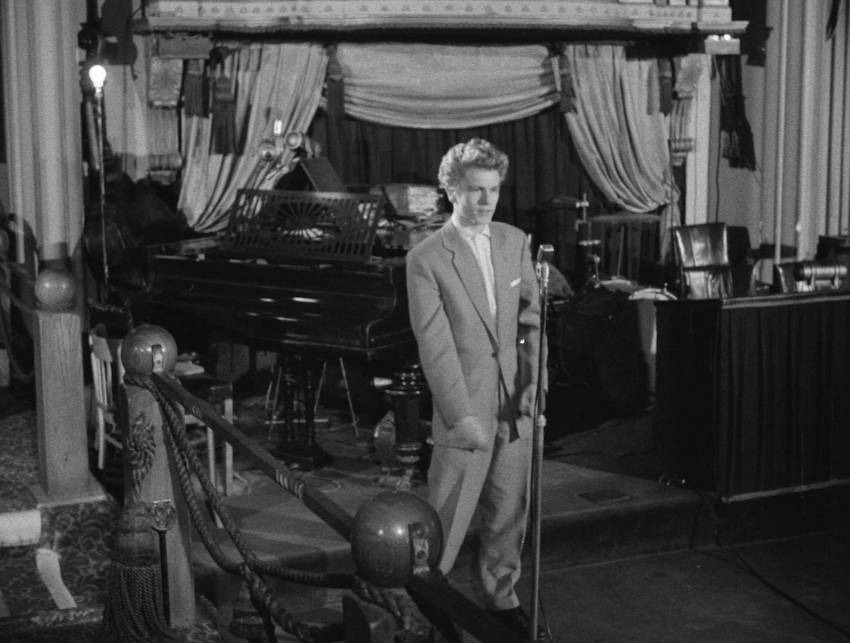
This England was broadcast on 2 April. This was the final episode of the series, though this time Farson doesn’t wish us farewell at the end. However, if you didn’t know it, there’s a somewhat elegiac tone to it, something of a summing-up of a country in a process of change. Given how much change accelerated the following decade, this is fascinating and even horrifying in hindsight. We hear from a vicar – aptly as this was shown on the Wednesday before Easter – who feels that the prestige of churchmen like him is slipping away, with younger people less likely to follow as indeed they laugh at him. His circumstances have been reduced as he and his wife have to make do with “just one” daily and carry their own coals. Meanwhile, a country doctor finds he’s no longer curtseyed to or invited to tea by the patients he visits. However, then Farson and his writers show considerable prescience as to whom he interviews to give another perspective, that of the young. In London, we see none other than seventeen-year-old bequiffed Terry Nelhams, better known by his stage name of Adam Faith. When this was broadcast, Faith had yet to have his first hit single – that was in 1959 with his number one, “What Do You Want?” (the shortest-ever number one, trivia fans, at a minute and thirty-eight seconds). His acting career wasn’t due to begin for another year. Faith makes it clear that his generation, born during the War and coming of age in an era of Cold War, are turning against the old norms, especially established religion. Even the ping-pong offered in youth clubs is unexciting. On to a miner, who sees a massive improvement in both wages and working conditions in his occupation, to the point where he’s almost gentrified. We end the programme, and the series, with Farson musing on all things considered England is on a good course, even if the White Cliffs of Dover are a little grey these days.
William Fowler returns on commentary duties, here in tandem with Vic Pratt. The first thing that they point out is the view of the programme that the opinions of the countryside reflect those of the nation and that a vicar having so many rooms and domestic staff is hardly unusual. Meanwhile, young people have more spending power (see elsewhere on this disc) so can buy things like television sets, while having less truck with organised religion. Meanwhile the doctor is now an end in himself but a “halfway house to the chemist”. On to Adam Faith, Pratt is in his element, giving us some recommendations for Faith deep cuts: he’s seen singing what was the B-side to an early single which never charted.
PEOPLE IN TROUBLE: SEX EDUCATION
PEOPLE IN TROUBLE: UNMARRIED MOTHERS
“Most people have problems and troubles. Some people have more than their share. In this series, Daniel Farson goes out to meet them.”
People in Trouble was a much longer series, twenty-one episodes in all with sixteen surviving. Like its predecessors, it was broadcast in the London area only and wasn’t networked, again post-watershed, often 10.30 or 10.45, once at 11pm, from 23 April to 18 November 1958, with some breaks along the way. They began on Wednesdays, then moving to Fridays before finally settling on Tuesdays. One of them – the jaw-dropping in the wrong way Mixed Marriages – was included in Volume 1. Here are two more.
The series didn’t go in for the location filming of its predecessors, so instead we’re entirely inside the studio. The walls and floor are bare grey (in this black and white production) and the only furniture are the chairs that Farson and his interviewees sit on, facing each other. Sex Education was broadcast towards the end of the run, on 4 November 1958 – not 1 January, as the booklet, or at least the PDF version sent to review, says, as Farson was on screen in the first of Keeping in Step on that evening. If the site of naked breasts and buttocks night have tested the mettle of Londoners staying up late, hearing the words “premature ejaculation” might have caused them to snort their Horlicks up their nostrils. There isn’t a reactionary (not even James Wentworth Day, God forbid) to make a pitch for abstinence before marriage or similarly conservative views, and we are given to follow Farson’s lead that sex education, in schools and at home, needs to be much improved. We do hear from two doctors, but in between Joan – bravely showing her face as well as her voice – tells us of her experiences in marriage, and it being a good twenty-one years before she sought help. She doesn’t detail what the issue was – in 1958, this episode went far enough but not that far – maybe an inability to orgasm, as the commentary track suggests.
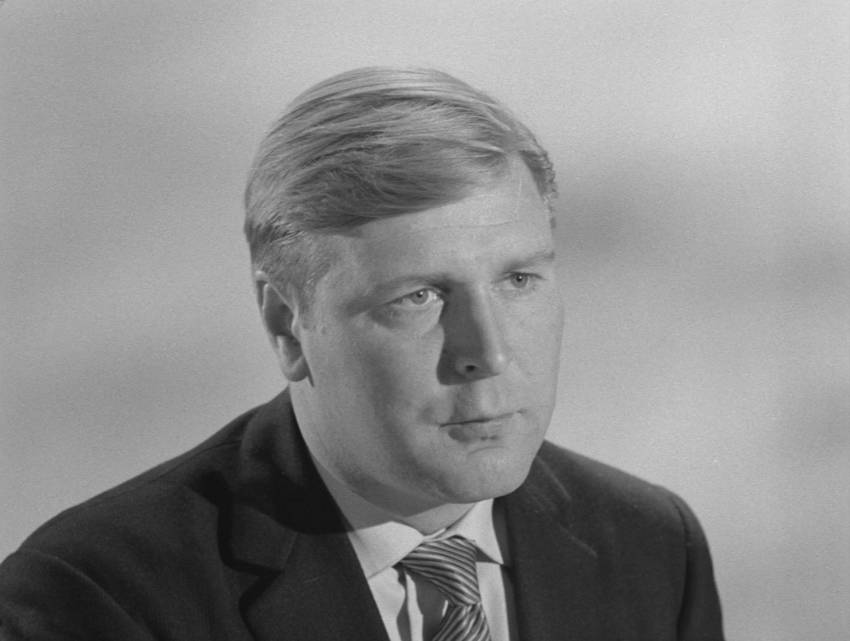
Unmarried Mothers was shown on 30 April, dealing with the subject from a variety of angles: some of the women here are unmarried due to desertion, others were impregnated with no wedding in sight. One of the interviewees remains anonymously, facing away from the camera as Farson talks to her. The subject was a difficult one for television to deal with, having been broached back in 1952 in Britain’s first X-certificate film, Women of Twilight. An even more contentious subject is brought up, that of abortion, which in 1958 was nine years away from being legalised. Another possible outcome is enforced adoption.
The commentaries on both episodes are from Chantelle Boyea and Milo Holmes. They are, as they point out, among the younger commenters on this set, but they do fill in some details not in the programmes. Holmes points out that for many young men, sex education consisted of horror stories about venereal disease in information films shown to them on National Service. Boyea wonders about today’s education – while it exists, are boys taught about periods, for example? Many teenage boys seem to “learn” from porn, with less than desirable results. Regarding Unmarried Mothers, Boyea wonders about some perspectives which probably couldn’t have been discussed in 1958, such as how many of these pregnancies were due to rape. She also brings up the comedy film She Didn’t Say No! (released the same year, 1958) which involved a young Irish woman has seven children by six fathers. It was immediately banned in the country where it was set, until a print was located and shown in 2001.
THIS WEEK: TEENAGE GIRLS [FRAGMENT]
This Week was a magazine programme, half an hour long, shown at 9.30pm on Thursdays and unlike the series above, networked across the then five ITV regions. It was hosted by Ludovic Kennedy and presented, according to its billing, “Exclusive news flashes, features and interviews from all over the world”. Farson’s involvement was in hosting short pieces included with others in the programme, briefer than the episodes of the series above. Soho Striptease was included in Volume 1, along with production material for a never-broadcast interview with Robert Graves.
Teenage Girls was broadcast in the same edition, that of 24 April 1958, as Soho Striptease. At just under three minutes, it’s clearly not complete, but what’s there is better than nothing. It begins alarmingly in a park, with Farson behind a tree and facing away from the camera, looking for all the world like a dirty-mac-wearing Soho denizen he might have reported on elsewhere, approaching a young woman walking past. The reason for this and for his talking to other teenage girls is their concerns about personal safety, something which nearly seventy years later is still an ongoing concern and not just for teenage girls but adult women too.
SUCCESS STORY: THE CRADOCKS
SUCCESS STORY: LADY LEWISHAM
SUCCESS STORY: HANK JANSON
“Why do some people get to the top? Does success mean happiness? In this series, Daniel Farson examines the curious ingredients of success. Each week, he interviews a new personality.”
Success Story was broadcast on Tuesday nights at the late time of 10.45pm, beginning on 9 December 1958. Fifteen episodes were broadcast, though I haven’t been able to determine how many survive. They were partially networked: as well as the A-R region they showed on televisions tuned to Granada and Southern too. Three of them (Shelagh Delaney, Maurice Woodruff and Hank Janson) were on Volume 1. Here are three more.
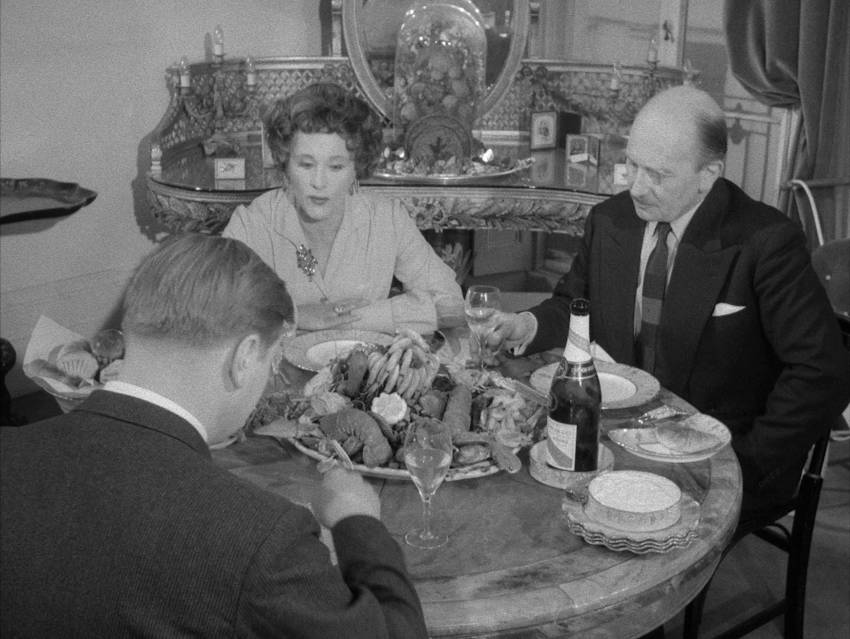
The Cradocks was broadcast on 16 March 1959. The Cradocks were Fanny (1909-1994) and her partner Johnnie (1904-1987). They weren’t actually married even though she took his surname professionally. (They did finally tie the knot in 1977 but this was actually bigamous as she had been misinformed that her previous husband, her second, had died.) They began by co-writing a cookery column under the name “Bon Viveur” in the Daily Telegraph, which led to their television career. They also did stage shows and we seem them at the start at the Royal Albert Hall. Johnnie played the bumbling, put-upon sidekick to the hilt but we see him manfully chopping a roast piglet in half and laying both halves on a towering bed of sauerkraut. Other television chefs like Philip Harben, then broadcasting on ITV, aimed to inspire their audience to cook something more adventurous, especially when rationing was still in force. On the other hand, the Cradocks show us seriously aspirational stuff, to dazzle and impress without a hope of being emulated. After this film clip, we switch to their home and they have Daniel Farson to dinner, serving an assiette des fruits du mer. It’s served with butter laced with edible gold leaf, produce of Belgium. Amongst the piled-up seafood is a live winkle which had strayed in. (Someone presumably got the sack, then.) It seems that the Cradocks had Farson round for dinner a few days earlier, presumably as a dry run for the filming, and she gives him a death stare when he suggests that the pastry which surrounded a fillet steak rather spoiled it. Fanny clearly has no truck with modern trends. When asked what she thinks of vegetarians, she says she feels very sorry for what they are missing. The Cradocks often eat out with business associates but have friends over at home, though that distinction gets blurred too. You sense that Farson and the Cradocks are more polite than congenial to each other, and very much that Fanny is particular was not one to be crossed. She says that she has cooked in evening dress since she was a child and offered a fiver to anyone who spotted any spots which stained any of her clothes. She also tells how she took part in a competition run by triple Michelin starred French chef Raymond Oliver, who disparaged women’s ability to be top-class chefs, and she was level with him.
Jenny Hammerton was for me the star of the show on the extras for the BFI’s release of Cooking Price-Wise, so it’s good that she’s been brought back for something else in her area of expertise. She tells us that she is in her ballgown and fake-fur stole for the occasion of this commentary track and is paired with Lisa Kerrigan who says she feels underdressed by contrast. It’s an entertaining chat, with Kerrigan in particular filling in some extra details. She quotes The Guardian’s Nancy Banks-Smith in describing Fanny as a cross between Barbara Cartland (of whom more in a moment) and Danny La Rue. It seems that the encounter with Farson did not go well at all. It became a scene in the BBC biopic Fear of Fanny from 2006, in which Julia Davis and Mark Gatiss played Fanny and Johnnie and Tom Goodman-Hill Farson, who is told to sod off back to Soho. You certainly didn’t hear that sort of language coming from your TV set back in 1959.
Next up is Harry Edwards, from earlier in the series: 19 January 1959. Again we begin with some archive, of Edwards demonstrating his spiritualist healing powers. Previously a printer, then a twice-unsuccessful Liberal Party candidate (losing his deposit both times), Edwards (1893-1976) set up the Harry Edwards Healing Sanctuary in Shere, Surrey, in 1946, and it is still in operation. Edwards claims an eighty-percent success rate despite understandable opposition from the medical establishment. He likes reading, painting by numbers and jigsaw puzzles. You can tell that Farson is not very convinced by him.
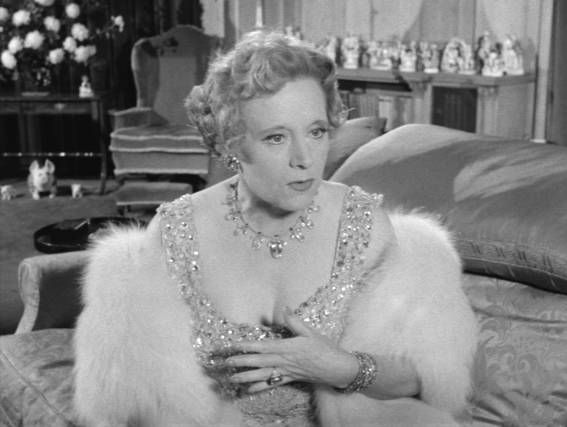
Finally of this batch of three, is Lady Lewisham (5 January 1959). If you are watching this in disc order, which is not broadcast order, you move on from one formidable woman to three generations of them. Farson dons a dinner jacket for the occasion. We begin with Viscountess Lewisham singing “I’m in Love”, which a record sleeve tells us has lyrics by her mother, Barbara Cartland. As Farson points out in his voiceover, Lady Lewisham was a socialite whose very move appeared in the news – when Anthony Armstrong-Jones (the later Lord Snowdon and husband of Princess Margaret) photographs her at the hairdresser’s, or she complains about dirty coffee cups at London Airport, or literally goes down the drain, photographed with her head poking out of a sewer opening. She is interviewed with her mother and her eighty-one-year-old grandmother Polly Cartland. Such a phalanx of copper-bottomed femininity quite disarms Farson, as it does the Viscountess’s brother Ian, who nervously elects to stay out of the limelight. The family later had royal connections. With a later marriage Lady Lewisham became Raine, Countess Spencer and the stepmother of Diana, Princess of Wales. Farson ends the interview by saying that he would hate to be a member of this family if he turned out to be both ugly and a failure.
PURSUIT OF HAPPINESS: RAGS TO GLAMOUR
“If you feel exhausted by the complexities of present-day life, where can you go to get away, not only from your normal surroundings but also possibly from yourself?”
Pursuit of Happiness went out on Thursday nights at 10.45pm from 26 May 1960 for five weeks. Then, after a summer break, there were eight more, from 15 September at 6.45pm, thus introducing Farson to many viewers before their bedtimes. This was also partly networked, with Anglia, Television Wales and West and Ulster joining A-R. Of the run of thirteen episodes, six are lost. People Apart (the fourth) was included on Volume 1.
Rags to Glamour went out on 2 June, the second of the series. In the spotlight is Shirley Anne Field, less than a month short of her twenty-fourth birthday. She has dyed her hair blonde from its natural auburn and asks Farson “Does it look ghastly?” as she welcomes him into her flat. The interview is in three parts, the first in her flat, the second at Pinewood during the shooting of Man in the Moon, in which she starred opposite Kenneth More, directed by Basil Dearden, who can be glimpsed in some on-set footage. The third part takes place in a nightclub. Field seems a little not at ease, talking about her visits to a psychiatrist and wondering if that may have its roots in her childhood and past. She grew up in the care system and was a typist at a gas works before she won a prize as a model and moved from there into acting roles. But by now (1960) she was having leading roles and the future looked bright. Farson’s conversation with her in the nightclub is curtailed by a man asking her for a dance, which she accepts.
On commentary duties is Dr Josephine Botting. With just under fourteen minutes to fill, Botting gives us an overview of Field’s life and career, including the intermittently successful years after this interview was filmed, with something of a revival in the 1980s due to her lead role in My Beautiful Laundrette (1985). She does say that, at this young age, Field comes across as a little naïve and maybe lacking some maturity she would presumably later gain. Botting also spends some time on the episode’s credited writer Rosemary Davies, wondering how much she had to do with the three-scene structure, maybe having interviewed Field beforehand.
SOMETHING TO SAY: SHIRLEY BASSEY
Something to Say was broadcast on A-R on Monday nights in three batches in 1964. It wasn’t networked and went out late, between 10.30 and 11.30pm. It was twice the length of previous Farson series, in a half-hour slot and on this evidence without a commercial break in the middle. Of fifteen episodes, three survive with picture but no sound, five vice versa, two lost altogether.
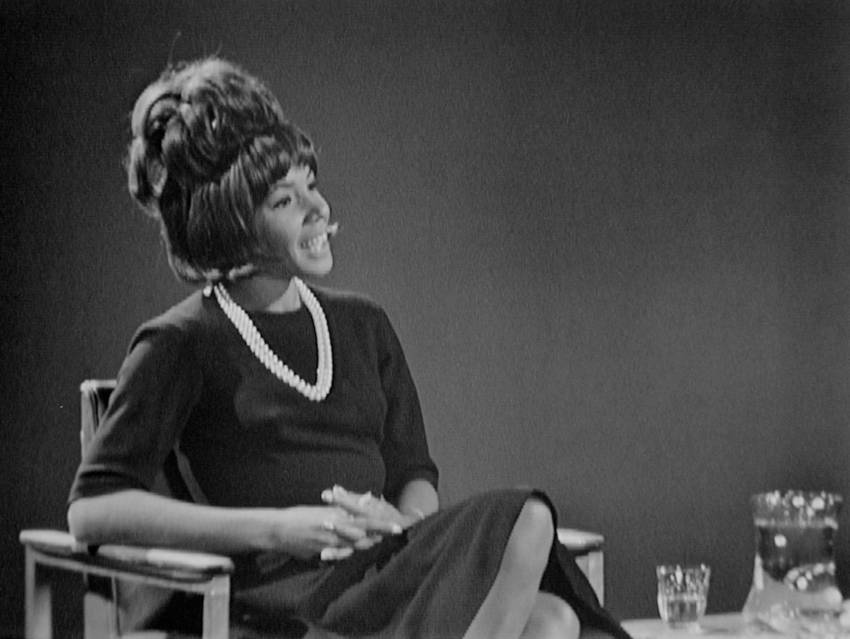
Shirley Bassey was shown on 2 November 1964. Assuming this episode is typical, the show followed the template of People in Trouble: Farson and his interviewee in a bare-wall and -floor studio sitting on chairs facing each other. However, we begin with her top ten hit from the previous year, “I (Who Have Nothing)”. Farson tries to disarm her by pointing out that they are both January Capricorns, sharing a birthday – 8 January, though he was ten years older than her. While her success as a singer is undoubted, she does talk about possible acting roles, for example a biopic of Josephine Baker (didn’t happen) and her being considered for the title role in Lionel Bart’s musical Maggie May. That had been written for Georgia Brown and Bassey was going to do it until the role was given to an “unknown”, though Rachel Roberts was hardly that, though maybe not as a singer. (Brown later took over from Roberts.) Bassey has no favourites among her own songs, though she did record “I (Who Have Nothing)” while seven months pregnant. She comes over as a strong personality, but on the other hand says she despises weakness, especially in men. She also says she has too much love for just one man – in fact, Bassey’s then husband suggested that the daughter (her second) she was pregnant with during that recording was the result of a liaison with Peter Finch.
LIVING FOR KICKS
Living for Kicks was a standalone documentary, as such longer than most of the series episodes so far: thirty-nine minutes in a slot of forty-five, with a commercial break in the middle. (The copy on this disc preserves the End of Part One/Part Two captions.) This was broadcast on Wednesday 2 March 1960 at the earlier time of of 9.35pm and across all nine of ITV’s then regions. As such it has a much higher profile, and was controversial as to what it showed about the nation’s then youth. The programme shows a generation in a time of transition from the rise of rock ’n’ roll in the mid 1950s and the coming of the Beatles, the Rolling Stones and the whole Sixties thing. We begin with many of those boys and girls dancing to a skiffle band, with recent hits on the soundtrack: Lonnie Donegan with “Putting on the Style”, and Adam Faith with his aforementioned number one, “What Do You Want?” amongst others. Then we go to the Whiskey-A-Go-Go coffee bar in Brighton where many teens congregate and we hear from British beat poet Royston Ellis, who claims to be speaking for his generation. Teddy boys are so over (maybe there’s one left, he says, a man called Seamus in Ireland) and a generation with increased spending power – though you may not believe the figure of fifty shillings a week pocket money – are looking to have fun. In 1960 – and this was half a decade before the Pill, remember, even if that was only available to married women at first – people cannot expect their intended to remain virgins until their wedding days. There may have been a sense of what goes on in the urban cutting edge (London and other major cities, say, as well as Brighton, not a city then) may not reflect the attitudes of the rest of the country. Farson contrasts this by ending Part One with a short interview locally to him in Limehouse Lock with Sylvia Subohon, married to Raymond at sixteen and now nineteen and a mother of two, who seems to be quite happy at missing out of the fun others her age are allegedly having. (She isn’t named in the programme credits, but the subtitles spell her married surname as “Subon”. However, a little digging reveals the spelling above – and also suggests the couple had three more children after this programme was broadcast.) After the commercial break, we go to Northampton, a place where the church coffee bar has become a youthful trouble spot. Farson concludes with an interview with an adult, the Countess of Albemarle DBE, figurehead of a report on the attitudes of the young. He signs off by saying that eighty percent of teenagers will leave school at fifteen and many will go on to boring jobs, so he can’t blame them for wanting to have fun. Farson, then of a different generation at age thirty-three, seems to be on their side.
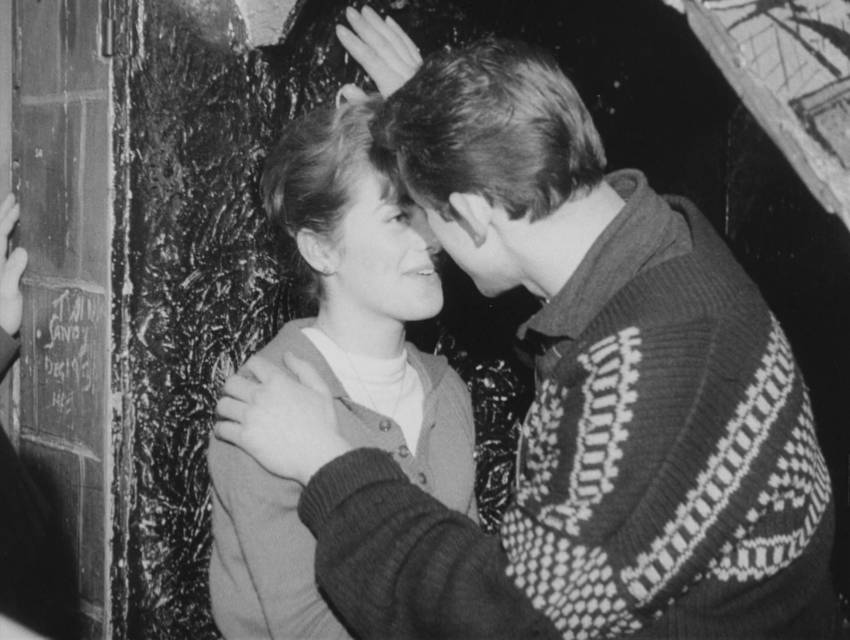
William Fowler and Vic Pratt return on commentary duties. As with This England, Pratt in particular seems in his element when the programme touches on the Sixties (and late Fifties) music. He also introduces a personal note by telling us that his father, who was fifteen when this programme was broadcast, rubbished the claims that he had fifty shillings a week – something like a fifth of that, at that, pocket money augmented by a paper round. The programme does however reveal that older generations did find teenagers with their extra spending power quite threatening. (Older generation thinks younger ones a waste of space and possibly malignant – it never changes.) This moved on from the fears about juvenile delinquency which powered films like Cosh Boy from the UK and The Blackboard Jungle, The Wild One and Rebel Without a Cause from across the Pond, and the associated censorship issues they faced. After the programme went out, some commenters were up in arms about such dangerous stuff pumped into their living rooms, with some Brighton locals saying that the Brighton scenes were set up. Royston Ellis – the man who apparently introduced John Lennon to drugs – was allegedly brought in to say his piece which was intended to stir things up. For his part, Farson was particularly proud of this programme, finding the teenagers generally well turned out and the adults the mean-spirited ones.
At the time these programmes were made, Farson was an enthusiastic participant in Soho’s pub culture, his drinking buddies including the artist (and fellow gay man, then illegal) Francis Bacon, and the photographer John Deakin. Farson’s 1962 documentary about the East End’s pub entertainment led to him buying The Waterman’s Arms, but this business venture failed. He left A-R (by then renamed Rediffusion London) in 1964 and lived in his parents’ house in Devon. He became an author, his books including biographies of Bacon and of Farson’s great-uncle Bram Stoker. He devised a TV quiz show, Gallery (on an arts theme) and was television and art critic for The Mail on Sunday. He died of cancer on 27 November 1997 at the age of seventy.
sound and vision
Daniel Farson’s Guide to Britain Volume 2 is a dual-format release from the BFI, comprising one Blu-ray encoded for Region B only and two DVDs encoded for Region 2. Like the first volume, this is a release from the Associated-Rediffusion archive, and that company’s ident appears as the disc starts. The set has a 12 certificate. Details of the films are not all on the BBFC website at the time of writing, but the 12 is due to Living for Kicks. Nudism has been given a PG certificate. The remaining films, being documentaries containing nothing that would trouble a U or PG certificate, have been exempted from classification for this release.
From an era when much television was broadcast live and therefore very little of it still exists, prefilmed shows like the ones represented here have a much better survival rate. Daniel Farson’s programmes were shot on black and white 35mm film and the transfers are in the original ratio of 1,33:1 and at the original television speed of twenty-five frames per second, at 2K resolution from original elements. There is occasional damage, such as specks and a few scratches but they are in excellent condition, with blacks, whites and greys spot-on. This is far in advance of what you would have seen on your tiny 405-line set at the time of broadcast, and it’s a matter of gratitude that these due to their film origins exist at all when so much television from that era is lost.
The soundtrack is the original mono in all cases, rendered as LPCM 2.0. Given that the soundtracks were designed to be heard via television speakers of the time, they are clear and well-balanced, even given that I and anyone else watching this set would be doing so in much more unforgiving equipment than Londoners gathering around the small box in the corner sixty-plus years ago. English hard-of-hearing subtitles are available on all of the films, and I didn’t spot any errors in them.
special features
Commentaries
Ten of the fifteen films have commentaries available. As I did with Volume 1, for neatness’s sake I have discussed them with the films concerned, but for the record they are: on Nudism and Tune in to Nature’s Radio by Mark Pilkington, One Man Against the World by William Fowler, Children’s Parties by Dr Elinor Groom, This England and Living for Kicks by William Fowler and Vic Pratt, Sex Education and Unmarried Mothers by Chantelle Boyea and Milo Holmes, The Cradocks by Jenny Hammerton and Lisa Kerrigan, Rags to Glamour by Dr Josephine Botting.
Booklet
The BFI’s booklet, which – as with Volume 1’s – is not limited to the first pressing of this release, runs to thirty-two pages plus covers. William Fowler begins with “Daniel Farson: Out of Step”, which covers his afterlife after he had left A-R. It begins with three occasions when Farson in Soho was arrested for drunkenness, all reported in the press. The final occasion, in 1964, led A-R to “encourage” him to depart the channel. Farson’s father, the journalist Negley Farson (whom Daniel had interviewed in an episode of Pursuit of Happiness) had also been an alcoholic, and Farson spent a lot of time in Soho’s drinking haunts. This did affect his professional life – his interview with Wiccan Gerald Gardner for the “Witchcraft” episode of Out of Step led to creative camera angles to avoid showing the black eye he’d gained the night before. Fowler covers Farson’s later career as an author of no fewer than twenty-seven books, some of them on subjects not unrelated to those he’d covered on television. His reputation for drink was belied by the fact that he still regularly appeared on television, for the Wales and West ITV region HTV, run by an old mate of his. He also appeared on the BBC in 1974 in a documentary about his great-uncle and biography subject Bram Stoker. Farson turned to fiction as well, writing the TV play The Frighteners for the 1965 BBC series Londoners, now lost, and two horror novels in the 1980s. In the latter, especially Transplant (1981), Fowler finds some interesting resonances with Farson’s life. Fowler finds him a compelling, if clearly troubled, individual.
This is followed by notes on all the films in the set. The ten which have commentaries have notes written by the commentor or one of them, so inevitably there is overlap between them. The five films which don’t have commentaries tend to have fairly short notes. The notes are written by Mark Pilkington (Nudism and Tune in to Nature’s Radio), William Fowler (One Man Against the World), Dr Elinor Groom (Children’s Parties), Milo Holmes (Sex Education, Unmarried Mothers), Jenny Hammerton (The Cradocks), Dr Josephine Botting (Rags to Glamour) and everything else by Vic Pratt.
Dick Fiddy is up next with “Following in Farson’s Footsteps”. This links with William Fowler’s essay by bringing up Farson’s Soho drinking haunts, one of which is still extant in much the same form as it was in Farson’s day: The York Minster on Dean Street, now called The French House, its nickname back in the 1950s. It has quite a few literary connections, being reputedly the place where Dylan Thomas lost his original manuscript of Under Milk Wood. Fiddy takes us to the Fitzroy on Charlotte Street, very different now but then a hotspot in London’s inevitably underground gay scene, with its clientele mixing with sailors and soldiers on leave. Licensing laws at the time meant that most pubs had to close during the afternoon, but private clubs could stay open. Amongst these were The Mandrake in Meard Street and the Colony Rooms on Dean Street, the latter a particular favourite Farson haunt. Next year is Farson’s centenary and also the thirtieth anniversary of his death, so if you want to do a Soho pub crawl in his honour, directions are right here.
final thoughts
Daniel Farson’s Guide to Britain Volume 1 was a very entertaining release of the man’s television films, offering revealing and sometimes horrifying time capsules of British life in the later 1950s to the mid 1960s, beamed out across the ether into your home and happily still surviving to be watched now. Volume 2 is as good a follow-up. While some series (such as Out of Step) now have all their surviving episodes on disc, there is enough remaining for a Volume 3, if the BFI want to put that out.
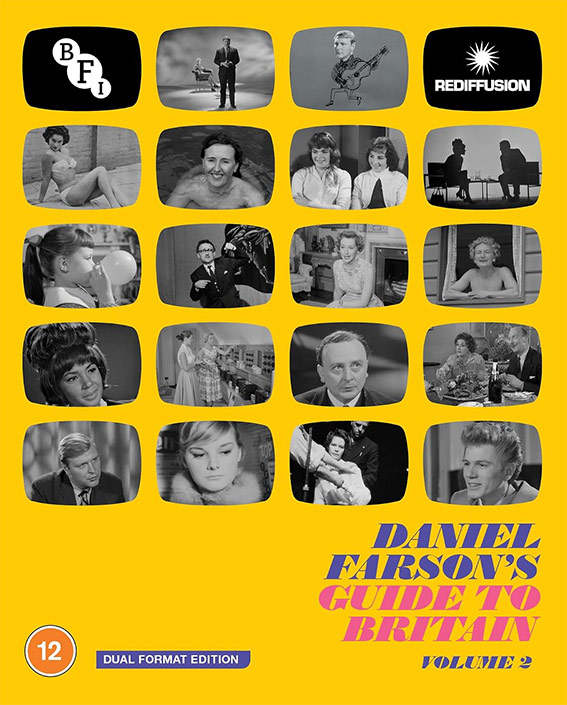
Daniel Farson’s Guide to Britain Volume 2
Out of Step: Nudism
UK 1957 | 14 mins
directed by: Geoffrey Hughes
written by: Elkan Allan
presented by: Daniel Farson
speaking to: The Reverend Dr Davies, J Wentworth Day, Mr and Mrs Charles Macaskie, Iseult
Out of Step: Tune in to Nature’s Radio
UK 1957 | 14 mins
directed by: Geoffrey Hughes
written by: Elkan Allan, Geoffrey Hughes
presented by: Daniel Farson
speaking to: George W de la Warr, Dr J D Carthy
Out of Step: One Man Against the World
UK 1957 | 14 mins
directed by: Geoffrey Hughes
written by: Daniel Farson
presented by: Daniel Farson
speaking to: Mr and Mrs Harold Steele, Sir Wavell Wakefield MP, Professor Rotblat
Out of Step: The Seventh Day
UK 1957 | 14 mins
directed by: Geoffrey Hughes
written by: David Kentish
presented by: Daniel Farson
Those appearing were: Kenneth Connor, Harold Legerton, Campbell Williams, Mr and Mrs Booth
Keeping in Step: Children’s Parties
UK 1958 | 13 mins
directed by: Rollo Gamble
written by: Elkan Allan
presented by: Daniel Farson
speaking to: His grandmother (Mrs Stoker), Mr and Mrs Peter Noble, Bertram Otto and the children
Keeping in Step: This is England
UK 1958 | 14 mins
directed by: Rollo Gamble
written by: Stanley Craig, Daniel Farson
presented by: Daniel Farson
speaking to: The Reverend D Berners Wilson, ‘A Doctor’, W Todd and Adam Faith
People in Trouble: Sex Education
UK 1958 | 13 mins
directed by: Rollo Gamble
written by: Nickola Sterne
presented by: Daniel Farson
People in Trouble: Unmarried Mothers
UK 1958 | 14 mins
directed by: Rollo Gamble
research by: Stanley Craig, Hermione Hobhouse
presented by: Daniel Farson
People in Trouble: Unmarried Mothers
UK 1959 | 13 mins
directed by: Rollo Gamble
written by: Daniel Farson
presented by: Daniel Farson
featuring: Peter Sellers, Diane Cilento, Maurice Woodruff
This Week: Teenage Girls (fragment)
UK 1958 | 3 mins
directed by: John Rhodes
featuring: Daniel Farson
Success Story: The Cradocks
UK 1959 | 13 mins
directed by: Rollo Gamble
written by: Daniel Farson
presented by: Daniel Farson
featuring: Fanny Cradock, Major Johnnie Cradock
Success Story: Harry Edwards
UK 1959 | 13 mins
directed by: Rollo Gamble
written by: Daniel Farson, Nickola Sterne
presented by: Daniel Farson
featuring: Harry Edwards
Success Story: Lady Lewisham
UK 1959 | 13 mins
directed by: Rollo Gamble
written by: Daniel Farson, Nickola Sterne
presented by: Daniel Farson
featuring: Lady Lewisham, Barbara Cartland
Pursuit of Happiness: Rags to Glamour
UK 1960 | 14 mins
directed by: John Frankau
written by: Rosemary Davies
presented by: Daniel Farson
speaking to: Shirley Anne Field
Something to Say: Shirley Bassey
UK 1964 | 27 mins
directed by: Peter Robinson
interviewer: Daniel Farson
speaking to: Shirley Bassey
Living for Kicks
UK 1960 | 39 mins
directed by: Rollo Gamble
presented by: Daniel Farson
featuring: The Countess of Albemarle DBE
distributor: BFI
release date: 14 September 2026