
Plan 9 from Outer Space / Bride of the Monster
Edward D. Wood Jr’s PLAN 9 FROM OUTER SPCE is widely hailed as the worst film ever made. Of course it isn’t, and it gets the Blu-ray treatment from the BFI, with Wood’s earlier film BRIDE OF THE MONSTER on a second disc. Can you prove it didn’t happen? Gary Couzens can’t.
As they say, in preference to the truth, print the legend. And there are plenty of legends available for Edward Davis Wood Jr (1924-1978). For someone who spent his career in less-than-low-budget B movies, often in the SF, horror or sexploitation genres, his life was dramatised, not always accurately, in a major-studio film, Tim Burton’s loving black and white valentine Ed Wood (1994). That wasn’t a commercial success but remains one of Burton’s best, and was an Oscar winner for Martin Landau as Bela Lugosi. But for most of his life Wood’s films were thought of as cheap programmers which played in double bills, there to distract necking teenagers in drive-ins and low-rent cinemas, or as fillers on television – in the US at least, see below. However, cult stardom came knocking around the time he died.
While plenty of films could be called cult movies after the fact, as a concept it took off in the late 1960s and 1970s. Such films were shown again and again, to a core audience who watched them repeatedly and valued them as work that the mainstream had overlooked or simply didn’t get. The most famous examples included The Rocky Horror Picture Show (1975) and Eraserhead (1977), the former a gender-bending major-studio version of a stage experience, the latter a surreal black and white indie its director had spent five years making and which found its audience at midnight screenings. There are many others. For many of us, the major cult movies were identified and celebrated in Danny Peary’s original Cult Movies book from 1981 and its two sequels from 1983 and 1989, two hundred films in all, not all of which I’ve been able to see even four decades later. Included in Peary’s first volume was Plan 9 from Outer Space, a film which by then was being celebrated as the worst of all time, one of several so-bad-it’s-good B-movie efforts.
The cult of “bad films” (which in many cases aren’t bad at all) had been itself solidified with the 1978 book The Fifty Worst Movies of All Time, written by Harry Medved and Randy Dreyfuss. This included major-studio bombs and “grade Z atrocities” alike. As a work of film criticism, there is no beginning to its merits, and it seems to have a possibly invertedly-snobbish animus against world-cinema classics such as Ivan the Terrible and Last Year at Marienbad. Some of the films are even good – The Omen, anyone? It’s notable that Plan 9, nor anything of Wood’s, was included. That waited until the 1980 follow-up The Golden Turkey Awards, by Harry Medved and his brother Michael, based on votes from readers. And so Plan 9 from Outer Space was crowned the Worst Film of All Time and Wood the Worst Director of All Time. Brits of a certain age may remember a 1983 television season on the then-new Channel 4, The Worst of Hollywood, presented by Michael Medved and programmed by Stephen Woolley, then at London’s Scala cinema, which had shown its fair share of Wood’s films by then. Plan 9 kicked off that season and was followed by other films, some of which if anything were far worse.1
Of course Plan 9 isn’t the worst film of all time. It is actually entertaining, unlike much straight-to-video or -streaming sludge aiming to attract the unwary. If you’re an adherent of the auteur theory, there is a case for Wood to be one, as he was a berserk visionary whose vision comes through despite a phalanx of technical ineptitudes and simple lack of talent in any conventional sense. You could also call him an outsider artist, someone who is prized for their unique view and insights, despite lack of merit in the normal course of things.
Two of Wood’s feature films are on this disc. Often if you went to a double bill, it’s the supporting feature you’d see first, as a curtain-raiser to the one you had paid your hard-earned to see. I’ll respect chronological order, and so the support is up first.
BRIDE OF THE MONSTER
Two hunters seek refuge from a thunderstorm (cue Wood’s much-used stock footage of lightning) but are dispatched by Dr Eric Vornoff (Bela Lugosi) and his hulking mute servant Lobo (Tor Johnson). Vornoff is using atomic energy to manufacture a race of supermen. Meanwhile, reporter Janet Lawton (Loretta King) is investigating a series of mysterious disappearances.
Wood’s third feature (of eight in all) gave him the largest budget he ever had. That’s not to say it’s much good, but it approaches competence in many respects. The stock footage – mainly an octopus and an alligator – is actually quite well integrated and the sets aren’t as obviously cheap as in other Wood films, or other Z-movies for that matter. In his final role, Lugosi actually makes an effort. Johnson was a hulking Swedish former wrestler (6’3” and 440 pounds at his heaviest) who had been in movies, mostly in bit parts, since 1934. He had a thick accent, which may have been the reason why only in Plan 9 did Wood entrust him with any dialogue, but he certainly had a presence as well.
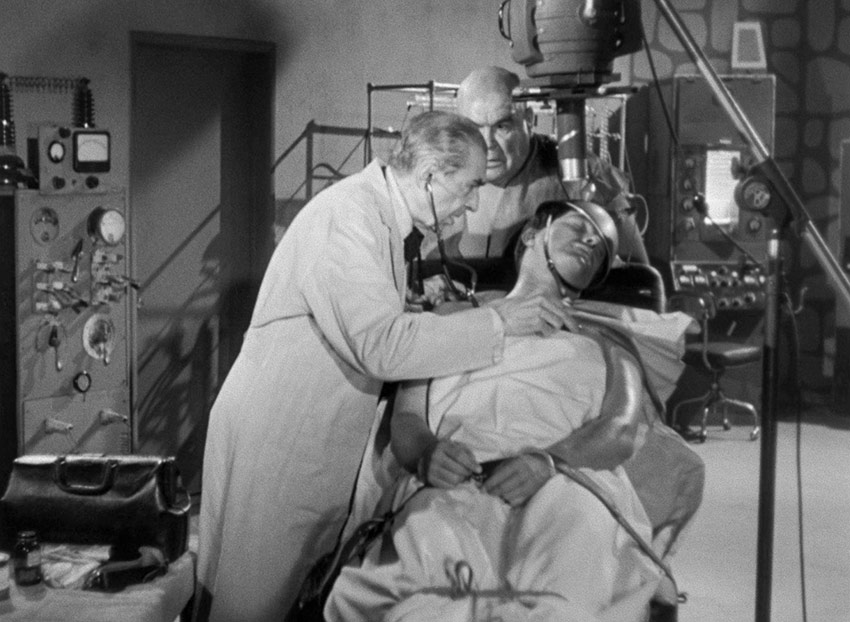
The film began life as a script called The Atomic Monster, written by Alex Gordon. With rewrites by Wood, it started production as The Monster of the Marshes. However, disputes with the actors’ union (brought about by George Becwar, who plays Professor Strowski) shut down the filming for a while. The film had been shot in the studios owned by its first cinematographer, Ted Allan, but when shooting started again, he was replaced by William C. Thompson, and both are credited. (Thompson (1889-1963) was an early starter in the film industry, working from the 1910s, though spent most of his career shooting B-movies. As the credits attest, he was a member of the American Society of Cinematographers by the time of Bride of the Monster.) Funding was provided by Donald McCoy, owner of a meat-packing plant, who put up the money on the condition that he was credited as producer and his son, Tony McCoy, played the lead. McCoy Junior, who was also an associate producer, only had one more credited cinema role, in the 1956 Naked Gun.
To add to the plethora of titles, the film was Bride of the Atom when it premiered in May 1955. However, it had the present title when it was released the following February as half of a double bill with The Beast with a Million Eyes. The distribution deal was made with Samuel Z. Arkoff, who made more money from it than Wood, and it led to his setting up of American International Pictures. The film was picked up for UK release by Exclusive Films, who had began life as the distributor for what would be Hammer Film Productions. Critics who noticed the film at all gave it short shrift. This is the entirety of the review by an unnamed critic in the June 1956 Monthly Film Bulletin: “Singularly crude and tasteless in presentation, this film represents horror fiction at its lowest level.” The MFB doesn’t even know the film’s exact year, billing it as “c. 1954”. Given an X certificate, Bride of the Monster played in a double bill with the (cut) A-certificate They Were So Young, a German-made drama about two models who find out their duties involve “entertaining” elderly clients, so they make their escape… Wood’s films had built their following the USA by turning up in short order on television, but that wasn’t the case in the UK, with the first recorded small-screen showing of Bride being on the Sci-Fi Channel in 2001.
PLAN 9 FROM OUTER SPACE
And here’s the centrepiece of Ed Wood cultdom, his fourth and most famous feature film. We begin with television psychic Criswell, also known as The Amazing Criswell, whose predictions sometimes had a nodding acquaintance with accuracy. He introduces the film, whetting our appetite (or not) for what is to come. “Greetings, my friend. We are all interested in the future for that is where you and I are going to spend the rest of our lives.” You don’t say. An old man (Bela Lugosi) steps out from his house, picks up a flower which reminds him of his dead wife, and walks offscreen – a freezeframe, as his shadow is still on screen when we hear a car and his scream. Meanwhile, a flying saucer (or rather, a flying hubcap) lands in the cemetery and the man and his wife (Vampira, real name Maila Nurmi, in Morticia Addams drag with an implausibly corseted waist and equally implausibly long fingernails) are reincarnated as ghouls. This is the aliens’ “Plan 9”, intending to deter humanity from developing a weapon which could destroy the universe. When all is said and done, Criswell returns to sign off. “Can you prove it didn’t happen?” Let me count the ways. “God help us in the future!”
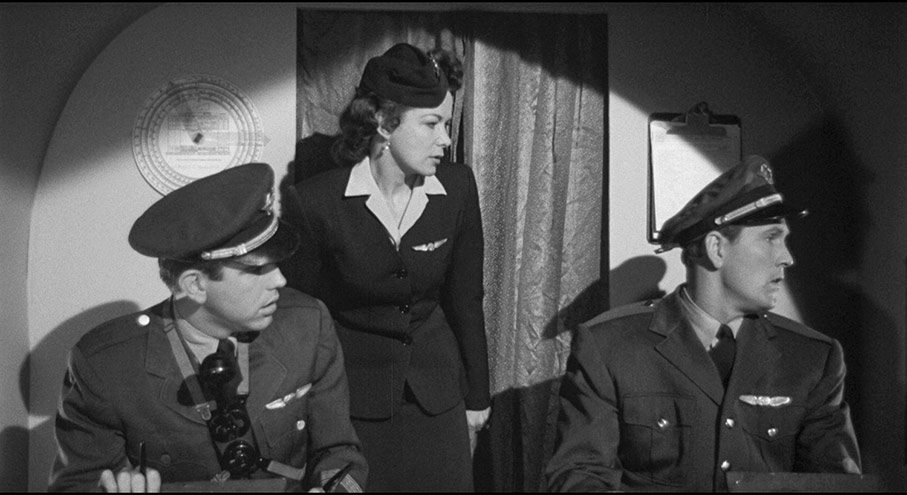
It’s not unreasonable to suppose that no, or few, people deliberately set out to make a bad film. That’s a supposition that might be tested more recently with the temptation to pander to bad-movie cultists on the part of many filmmakers. But cult movies don’t happen deliberately. Behind Plan 9, and other films like it, you sense a wish to make a decent programmer that would play in cinemas and make its money back. But the list of charges against Wood and his collaborators is a long one. There are the very cheap sets – one much-used aircraft cockpit is a mostly blank wall with what looks like a circular slide rule representing God knows what, with a curtained doorway in the centre. Stock footage, including those lightning flashes, abounds, as do continuity errors. The footage of Lugosi was test material Wood had shot for another project which never happened. As Lugosi had died, his place in this film was made up of that footage, and Tom Mason, a chiropractor who stood in for him. The fact that he was notably taller than Lugosi – who, at 6’1”, was not a short man himself – is neither here nor there. He looked nothing like the man either, but never mind, as he walks around with his cloak covering half of his face. While I’m not going to suggest there is a Wood Cinematic Universe, it is notable that Paul Marco plays a cop called Kenton in both this and Bride of the Monster.
Plan 9 was originally Grave Robbers from Outer Space, shot in November 1956. It premiered in Los Angeles in March 1957, but otherwise didn’t find distribution until the following year, playing in double bills and in drive-ins playing mostly to youngsters. It actually made some money. In 1961 it was sold to television and continued its life there. In the UK, it played in June 1960 at the bottom half of a double bill with Devil’s Partner, which also had an X certificate. In that, Ed Nelson plays a devil worshipper who can shapeshift into the form of any animal in order to kill his opponents. The MFB’s also-unnamed reviewer had this to say about Plan 9 in April: “A routine idea, crudely written, directed and acted, provides just about the weakest SF-cum-horror thriller to come out of Hollywood in years. The late Bela Lugosi is seen, sadly, as a ghoul.” As with Bride of the Monster, it didn’t follow the US route and go to television, so the 1983 Worst of Hollywood showing was its British television premiere.
sound and vision
Plan 9 from Outer Space is a two-disc Blu-ray release from the BFI, with the main feature on Disc One and Bride of the Monster on Disc Two. Both discs are encoded for Region B only. Both films had X certificates on their original British cinema releases, but with every submission for home viewing have been passed PG. I hope you won’t be too scared. Kadoyng was a U in British cinemas and retains that certificate on disc. White Lite is a PG for brief nudity, but flashing images will be more likely an issue for some. Other extras, being documentary material, haven’t been submitted for classification, though David DeCoteau does drop an F-word in the Bride of the Monster commentary.
Both feature films were shot in black and white 35mm. Now here’s the thing: these and other films from the mid to later 1950s, from major studios or independents like these, are often thought to be in Academy Ratio (1.37:1), largely because that’s the way many people saw these films, often on 4:3 television sets. However, with the growing threat of television, the cinema industry fought back. As well as processes like CinemaScope, shot with and projected by anamorphic lenses, the studios in 1953 began to shoot their non-Scope films for widescreen. While the entire 1.37:1 frame area was exposed, the shots were composed for a wider ratio, several different ones at first but standardising later in the decade at 1.85:1. On television, such films were shown in 4:3, with the result that there is a lot of headroom in every shot, studio lights and boom microphones could make unheralded appearances at the top of the frame when they wouldn’t have been seen in cinemas, and sometimes you’d find small adjustments of the camera to keep things in shot and to maintain compositions which would not have been necessary if the film had been intended to be shown in Academy. Independent companies followed suit, and within a few years there was no going back: commercial cinemas, outside arthouses and repertory screens, could no longer show Academy. Plan 9 was no different. It’s clearly framed for widescreen from the opening credits onwards. It is presented on its disc in two aspect ratios: 1.85:1 and 1.37:1. I would suggest the latter to be redundant, though the archival commentary was recorded against and is presented with this version. Bride of the Monster, made in 1955, also very much looks like it was framed for widescreen, but is presented here in 1.37:1. Additionally, I have mentioned several times before that Children’s Film Foundation films were 35mm productions shown in commercial cinemas across the land, so would have been widescreen from the mid-1950s onwards. Therefore I can approvingly mention that Kadoyng is presented here in widescreen (1.66:1). Screengrabs for Plan 9 in both ratios follow.
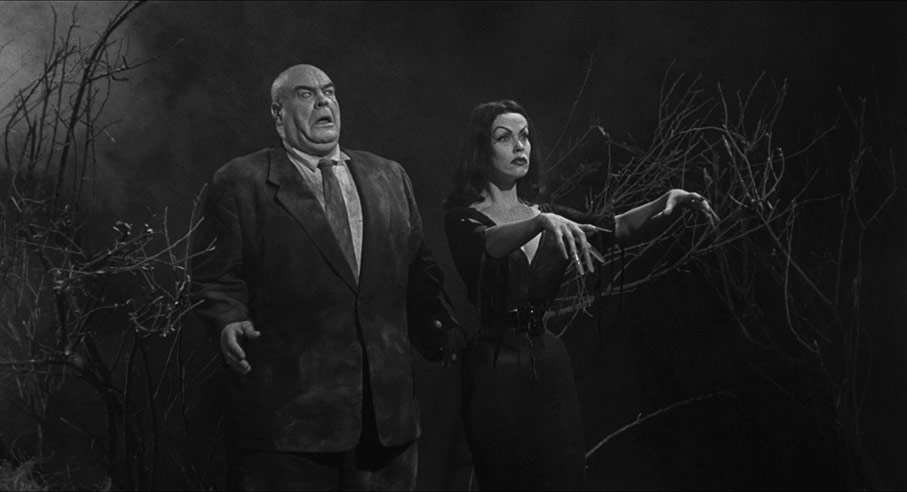
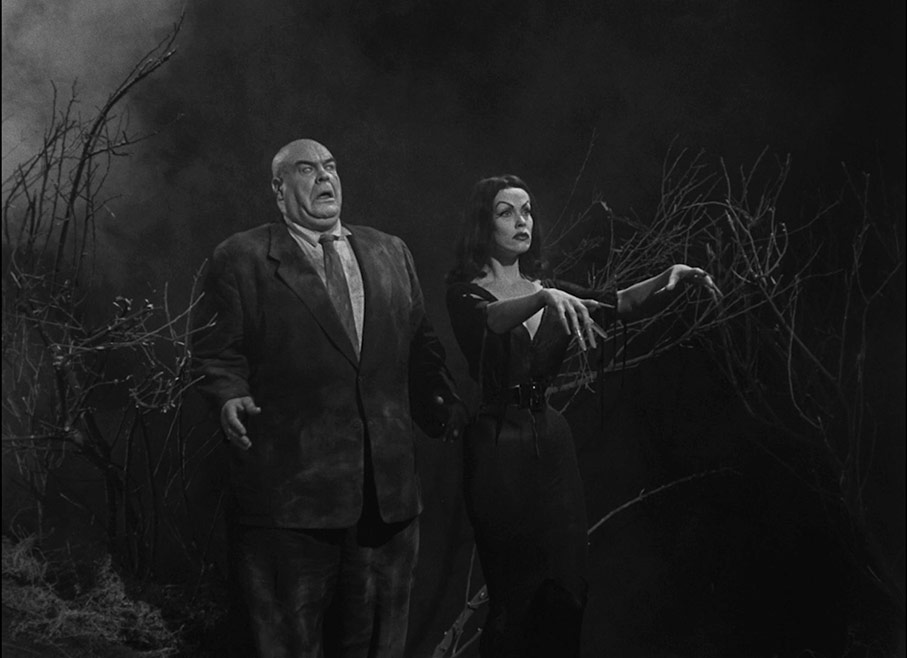
The transfers for both features have been scanned in 4K resolution from 35mm finegrain duplicating positives held by the BFI National Archive. Given that the original negatives are almost certainly long gone, this is the best these films are likely to look. While they may have been done on the cheap, they were still shot by professional cinematographers in 35mm. Blacks and whites are on point, though the greyscale is a little lacking in contrast.
The soundtracks for both films are in mono, presented here as LPCM 2.0. Bride of the Monster has an alternate unrestored track, also in LPCM 2.0. The latter is a little “warmer” to these ears, despite occasional crackles and pops. Subtitles for the hard-of-hearing are available on both features and the Mark Kermode introduction to Plan 9, and I didn’t spot any errors in them. The Out of Step episode had subtitles available on Daniel Farson’s Guide to Britain Volume 1, but doesn’t have them here, at least not on the checkdisc received for review. It also had a commentary, not carried over to this disc.
special features
PLAN 9 FROM OUTER SPACE:
Commentary by Ken Hollings and Vic Pratt
Newly recorded for this release, this commentary features writer Ken Hollings and the BFI’s Vic Pratt. While it’s not formally a moderated commentary, in effect it is one as Hollings is clearly the expert on this particular film, so Pratt acts as feed for a lot of the time. Hollings has provided a video essay for this disc (see below) so inevitably this commentary overlaps with it. That said, there is plenty in this track to be going on with, including such nuggets as the Baptist Church investing in the film being the ones to insist on the title being changed from Grave Robbers from Outer Space. Hollings has a wide frame of reference, at times invoking another tiny-budget semi-underground movie from two decades later, the decidedly less family-friendly Thundercrack!, and at others the use of “fake shemps” à la Sam Raimi, who may well have caught this film on TV at some point. This commentary plays over the 1.85:1 version of the film, and the aspect ratio is discussed along the way.
Commentary by David DeCoteau and Ted Newsom
From 2011, recorded for a DVD release and playing over the 1.37:1 version, this commentary unites filmmakers DeCoteau and Newsom, both well-versed in the kind of exploitation films Ed Wood made. This is more humorous than the Hollings/Pratt commentary, but stays the right side of outright mockery. I’m sure such commentaries and video essays exist, though including one on this disc would not be especially edifying. Newsom was the director of the 1994 documentary on Wood, Look Back in Angora, and because of that he interviewed several of Wood’s friends and colleagues, some of whom are no longer with us. They fill in some additional details, such as the fact that the film was sold to (US) television in 1962 and was not registered for copyright so is now public domain – again, in the US, not in the UK or in Europe. Whatever you might think of the result, the film was made by a professional crew and there were actual actors in the cast, likely paid union minimum of $150 to $170 a week – and this was a union shoot. As for its worst-film status, they nominate such as Robot Monster, The Creeping Terror and Daughter of Horror (a version of Dementia, which is also available from the BFI). The documentary was made the same year as Tim Burton’s biopic Ed Wood, and Newsom had read the script beforehand, correctly predicting that whoever played Bela Lugosi would win an Oscar for it.
Criswell Predicts 2026 (11:30)
Ken Hollings again, with a video essay on the film. At times he quotes Criswell, in synch with the man himself on our screens at the beginning and end of the film. Some of Criswell’s more outlandish predictions didn’t come to pass, unless Mae West became President of the United States in a different timeline to the one you and I live in. Hollings also brings up one of the more surprising connections Plan 9 has: the music score is derived from library music composed by an uncredited Trevor Duncan, who was later the composer for Chris Marker’s classic SF short La jetée (1962).
Mark Kermode on Plan 9 (3:37)
A short introduction by Dr Kermode from 2026 for BFI Player. It covers all the necessary bases without being in any way in-depth, as the short running time would indicate. He says that Wood’s masterpiece is Glen or Glenda (maybe a BFI Blu-ray if it can be licensed?) and describes Vampira as a Theda Bara knock-off – one for the teenagers, that reference. The aspect ratio issue is mentioned and he describes Plan 9 as “honestly terrible and honestly odd”.
Out of Step: Other Worlds are Watching Us (13:53)
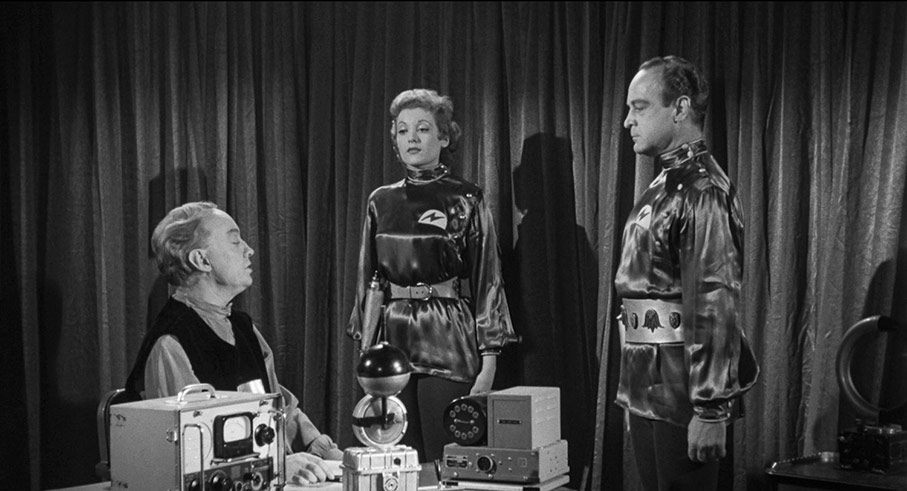
This item previously appeared in Daniel Farson’s Guide to Britain Volume 1 earlier this year. Farson worked for Associated-Rediffusion (the ITV franchise for London and the South East on weekdays) and presented a large number of programmes looking at aspects of life in Britain at the time. Out of Step was a fourteen-episode series of quarter-hours, broadcast in the last quarter of 1957 on Rediffusion only, not networked to the then other ITV regions. In it, Farson interviewed people who held unconventional views.
Other Worlds Are Watching Us was the second episode, broadcast on 25 September, and here Farson meets people who believe in strange lights in the sky being harbingers of alien races. Some of them have even been abducted. This is illustrated at the start by footage from the 1951 classic SF film The Day The Earth Stood Still. UFOs were a big interest of the time, but Farson is clearly sceptical. So is Sir Harold Spencer Jones, the then Astronomer Royal, who points out that even if the aliens came from the nearest star system to the Solar System, Proxima and Alpha Centauri, they would have to travel four years to get here if they travelled at the speed of lights. Maybe they are Methuselahs, he suggests. Other burning questions are asked, such as what the women on Venus are like.
All About Ed (96:06)
Also from 2011, videotaped interviews with four of Ed Wood’s friends, colleagues and, in one case, former wife. These are unedited, so you get focus going in and out and sound checks before the interviews begin. There is a Play All option. First up is Dolores Fuller (38:13) who began her career with an uncredited bit at the age of ten in It Happened One Night (1934). At the Stella Adler’s Acting Studio, she met Warren Beatty. As Wood’s girlfriend, she acted for him in Jail Bait (1954), Bride of the Monster, and particularly Glen or Glenda (1953) in which she was co-lead with the man himself. She had an affinity with Lugosi due to having Hungarian ancestry, and relates that he was in a lot of pain when she worked with him. She was aware of Wood’s transvestism and was accepting of it, though their relationship broke up after three and a half years. After leaving acting, she became a songwriter, with Elvis Presley one of her clients. She says it needed a special kind of woman to cope with Wood, so maybe that was Kathy Wood (28:58), who was married to him from 1956 until his death in 1978 from a heart attack, aged just fifty-four. This interview is date-checked at the start as being recorded on 14 June 1994 and it ends abruptly. Kathy describes her husband as a “big ol’ puppy dog” who always made friends, though she was shocked by his transvestism at first. Her description of his death, alone, is poignant. Next up is Stephen C. Apostolof (21:53), who worked with Wood on Orgy of the Dead (1965), with a script by the latter from his novel, Apostolof directing under the pseudonym A.C. Stephen. Apostolof went on to work extensively in the erotic film genre, as much as that could exist in the 1960s, pre-hardcore days, inspired by early Russ Meyer work like The Immoral Mr Teas (1959). He’s clear that “Eddie” was his friend, but also clear that “the booze killed him”. In answer to a question you may wonder who asked, he tells us, “No, I did not fuck Marilyn Monroe”. If you have the BFI’s Blu-ray of Scala!!!, there’s a story told about Apostolof which understandably is not gone into here. Finally, and more briefly, we hear from Wood’s friend Joe Robertson (7:01). He was a fellow marine and confirms the story that Wood went to battle with a red bra and panties under his uniform. Wood said that he would have preferred to be killed rather than wounded, so that he wouldn’t have to explain that. Robertson also entered the film industry, like Apostolof specialising in erotica. Given that none of the four are still with us, it’s good that we have their input on this disc.
Bela Lugosi Leaves the Sanitarium (6:15)
A television news item from 1955 as Lugosi is interviewed as he checks out after his recovery. The footage is introduced by Ted Newsom.
Theatrical trailer (1:43)
It’s not clear at which stage this trailer was cut, as the title given is not the original Grave Robbers from Outer Spacebut Plan Nine from Outer Space, with the second word spelled out instead of being a digit as it is in the final film.
Image gallery (1:05)
A self-navigating gallery of stills, lobby cards, all in black and white needless to say, and some poster designs in colour.
BRIDE OF THE MONSTER
Commentary by William Fowler and Vic Pratt
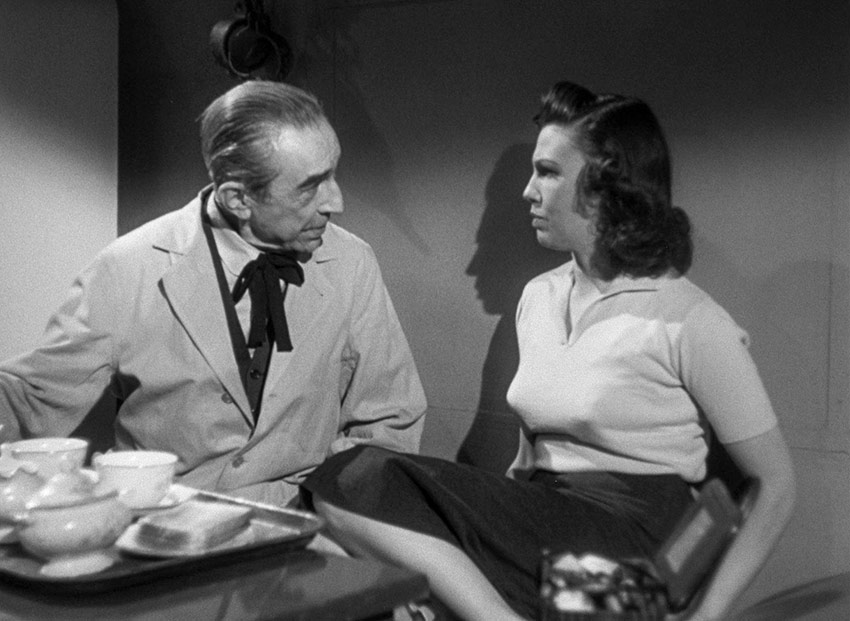
This commentary is newly recorded for this release. While there seemed to be a hierarchy at play in Pratt’s chat with Ken Hollings on Plan 9, he and Fowler are regular co-commentators, so it’s more egalitarian this time. However, Pratt does pull rank a few times, by correcting the pronunciation of Lugosi’s given name: with a long E, as indicated by the diacritic in the original Hungarian – Béla. This goes into more nuts and bolts not available elsewhere on this release, such as its UK trade show, April 1956, presumably when the Monthly Film Bulletin’s unnamed critic (see above) saw it. They discuss its UK release, often as part of double bills into the 1960s. Bride of the Monster had the biggest budget of any of Wood’s feature films, and it does show in comparison to the Poverty Row aesthetics of Plan 9. That does make it less funny though. We go into more academic territory with the suggestion that Wood’s films, including this one, explore performances of gender. Fowler and Pratt also give full weight to Lugosi’s performance, no doubt his last great one, even if his son (Béla Junior) thought that Wood was exploiting him. Whatever the circumstances, and whatever his fellow cast were up to around him, Lugosi always gave his all, and he does so here.
Commentary by David DeCoteau and Ted Newsom
As with their other commentary in this release, this was recorded in 2011 for a previous DVD. This was the one they did first, as at one point they refer to going on to Plan 9 next. Inevitably, this is a little out of date as some people have passed away since this was recorded. One of those is Ted Newsom, who died in 2020. As with Plan 9, there’s a jokey tone to this, just this side of mockery of the film being discussed. They go into some detail about production circumstances, such as George Becwar’s complaint to the acting union causing the production to be shut down for nearly two months, after which it was restarted with a change of cinematographer. William C. Thompson was colour blind, which wasn’t a disadvantage when shooting in black and white. Sometimes the two explain things for listeners not au fait with terminology such as “short ends”. There’s also an undue casualness in places, with Newsom not identifying people as he hadn’t looked them up in the IMDB before the recording.
White Lite (2:50)
This is a short film directed by artist Jeff Keen in 1968, included for its references to Bride of the Monster. It was shot on and presented in black and white negative film, extra distressed with scratches, spots and what looks like emulsion decay. The soundtrack was created by colouring and scratching the soundtrack area, and full of hiss and crackle it is.
Kadoyng (60:17)
The BFI’s releases from the Children’s Film Foundation archive are usually DVD-only, but every once in a while one of the CFF’s productions makes its way to HD as a Blu-ray extra. Such is the case with this film from 1972. The children are the frequent configuration of two boys and a girl, here siblings – Billy (Adrian Hall), Barney (David Williams) and Lucy (Teresa Codling). They come across an Easter Egg-shaped spaceship. Its one inhabitant is a humanoid alien (Leo Maguire, also the screenwriter). His actual name is Reject 642, but in case he might get a complex he’s renamed Kadoyng, after the noise the eye on a stalk growing from the top of his head makes. Needless to say, several hats are pressed into service. The three children and the alien become involved in a campaign to prevent a motorway being built through the picturesque village of Byway. The ending features some memorable sinking ground. Bill Owen leads the adult cast. Of the three children, Codling and Williams have the best moments, with older brother Hall rather fading into the background. He had made his debut in 1968 as Jeremy Potts in Chitty Chitty Bang Bang, and continued to act until 1983. The infectiously cheeky Williams may not have acted again (the IMDB as I write this confuses him with an Australian actor of the same name born in 1922), while Codling also continued until 1983.
Theatrical trailer (1:33)
A pretty standard trailer, promising thrills and chills to those who may be inclined to head out to their local fleapit.
Image gallery (1:10)
Also a self-navigating item, again with stills and lobby cards (some from the UK, credited to the distributor Exclusive Films and with the X certificate), and poster designs, the latter in colour.
Booklet
The BFI’s booklet, included with the first pressing of this release only, runs to thirty-two pages plus covers. Following a spoiler warning, we begin with “‘They’re Not Laughing at Me, Are They?’” by Will Sloan. He begins, not with Wood, but with J. Edward Reynolds, the Southern Baptist who made his money in electronics and ran an apartment building in Los Angeles where Wood lived. Wood by this time had met Alex Gordon, who had introduced him to Bela Lugosi. This resulted in Bride of the Monster, which Gordon and Wood co-wrote. With the test footage Wood had shot of the great man, who had just died, Wood pitched Plan 9 to Reynolds, who raised the finance for the film. Being baptised himself was a small price to pay for Wood. Reynolds appears in the film as one of two gravediggers. The film was shot in four days. Reynolds died in 1960, by which time Plan 9 was playing on American television, to be seen by young film fans and future directors like Joe Dante and, pertinently, Tim Burton. Then the latterday fame courtesy of the Medveds and their books. Sloan says he feels a little jealous of those who saw Plan 9 without knowing much about it in advance, without the baggage it has accumulated over the decades. He comes to it as a fan, appreciating it now less for the continuity errors and other technical flubs, but for its overworldly quality.
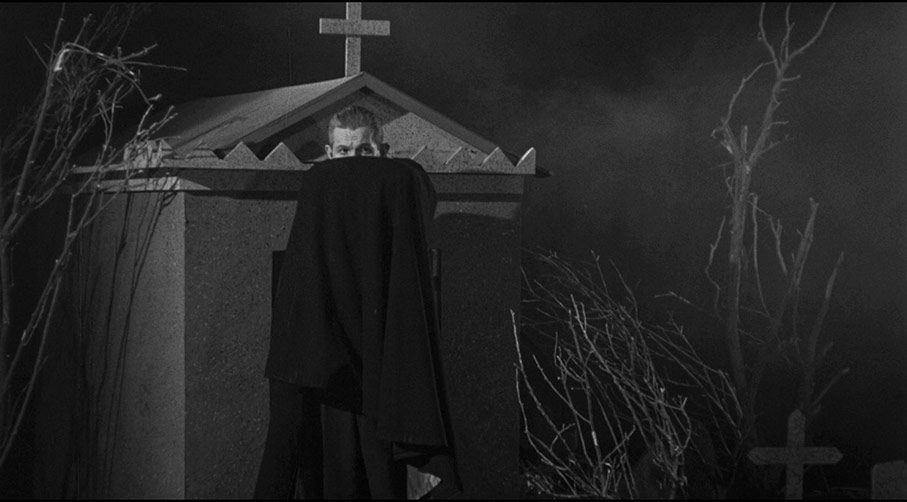
Next up is “Plan 9 for Shirlee and Bunny,” by Jaye Hudson, who tackles Wood’s oeuvre from a trans angle. Shirlee was Wood’s alternate name when he was in drag. Bunny was John Breckinridge, who acts in Plan 9 and who also had an interest in drag. They were rumoured to have been lovers for a while. It’s clear that gender was an abiding concern of Wood’s, with Glen or Glenda originating as an attempt to make a film about transwoman Christine Jorgensen, whose transition had made headlines in the early 1950s. Jorgensen had turned down the offer to have a film made about her life, so Wood’s film became a fictional one with his playing the lead. (There was a later film, The Christine Jorgensen Story, made in 1970.) Wood’s film was shot in four days and was released four months after Christine Jorgensen had been in all the papers. Bunny later sought to transition, but this never happened. Gore Vidal used interviewed Bunny and used the surname in his novel Myra Breckinridge, which became a film released in 1970, eight years later featuring in The Fifty Worst Films of All Time. Meanwhile, for the rest of his life, Wood appeared as Shirlee on many occasions, saying on one of them, “That’s the real me!”
“Flaming Saucers: Plan 9 and UFOs Over America” is by Mark Pilkington, who contributed the booklet essay and commentary for the Out of Step episode included in this release. Pilkington says that not even Criswell could have predicted that people would be watching the skies seven decades later after the film was made, just before the Space Race began with the launch of Sputnik 1. Criswell had a vested interest in UFOs, having been one of 1500 at the first-ever UFO conference in Los Angeles in 1953, with apparently over 2000 turned away. In fact, the wobbly flying saucers in Plan 9 are actually similar to reports from the time. At a time of international tensions, UFOs fed into people’s anxieties, with books, sober or otherwise, and documentaries proliferating on the subject. There was also an announcement that a Martian would broadcast on the radio, but this proved to be a no-show.
“Bride of the Monster” by Vic Pratt and William Fowler continues what they started with their commentary, with an emphasis on Bela Lugosi’s participation. “Ed Wood at the Scala”, is by Jane Giles, who ran the place at the time when Plan 9 first turned up there, courtesy of a 16mm print, in 1980, as part of all-nighters and, once, a double bill with Glen or Glenda as a Wood tribute hosted by Michael Medved. Plan 9 mostly played in double bills with other trash-movies, but occasionally with other films such as Eraserhead. The cinema didn’t last long enough to have been able to showEd Wood, but no doubt it would have done if it could.
Jan Manthey contributes “Paul Marco, We Love You”. Manthey and his friend Vic (Pratt) dreamed of producing a film magazine, which would have featured the films of Ed Wood. Discovering that Paul Marco was still alive, Pratt wrote to him. A year later, he replied, the letter being reproduced in the booklet. Manthey’s feelings towards the man, now no longer with us, are encapsulated in the title of his essay.
There are no cast and crew listings for either Plan 9 or Bride of the Monster in the booklet. However, as usual, there are notes on and credits for the special features, with brief pieces by William Fowler on White Lite and Vic Pratt on Other Worlds Are Watching Us, and an extended piece by Pratt on Kadoyng. The booklet also features plenty of stills.
final thoughts
Worst film ever made? Certainly not. Entertainingly bad films? Yes indeed. There’s not a lot more to be said about Ed Wood and his films nowadays but the BFI presents these two of his works well, with well-chosen extras and a comprehensive booklet worth buying one of the first pressing for.
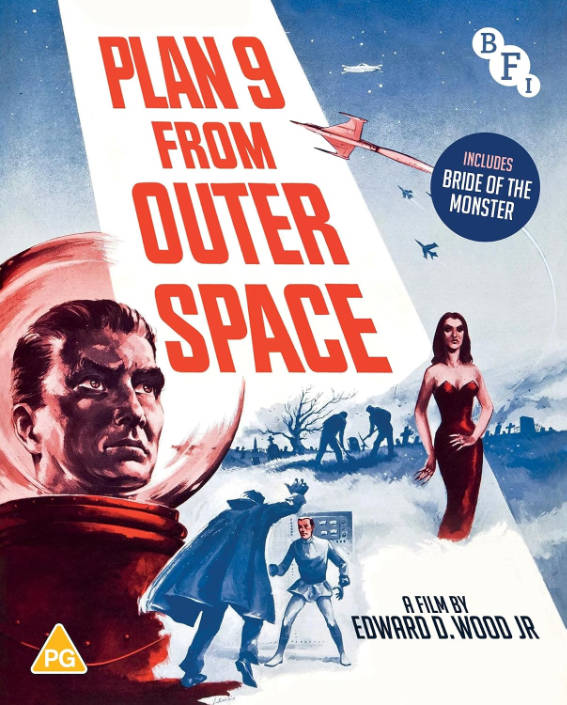
Plan 9 from Outer Space
USA 1958 | 79 mins
directed by: Edward D. Wood Jr.
written by: Edward D. Wood Jr.
cast: Gregory Walcott, Mona McKinnon, Duke Moore, Tom Keene, Tor Johnson, Maila Nurmi (as Vampira), Bela Lugosi, Criswell
Bride of the Monster
USA 1955 | 70 mins
directed by: Edward D. Wood Jr.
written by: Edward D. Wood Jr., Alex Gordon
cast: Bela Lugosi, Tor Johnson, Tony McCoy, Loretta King, Harvey B. Dunn, George Becwar, Paul Marco
distributor: BFI
release date: 19 October 2026
- The films were, all late on a Saturday night after pub closing time, in order of broadcast: Plan 9 from Outer Space, The Creeping Terror, The Wild Women of Wongo, They Saved Hitler’s Brain, Mars Needs Women, Godzilla vs. The Smog Monster, The Thing with Two Heads, Eegah, Robot Monster and Santa Claus Conquers the Martians. Each film was introduced by Medved, and during the showing subtitles appeared on screen pointing out the “good” bits. In the early hours of one Sunday morning, the following showed up during They Saved Hitler’s Brain: “Is anyone still awake out there?” One of them was me, watching the worst film I have ever seen in my life.[↩]