
Full House [Brelan d’as]
Three crimefighters for the price of one in FULL HOUSE (BRELAN D’AS), directed by Henri Verneuil in 1952, having its first UK commercial release on an Indicator Blu-ray. Gary Couzens investigates.
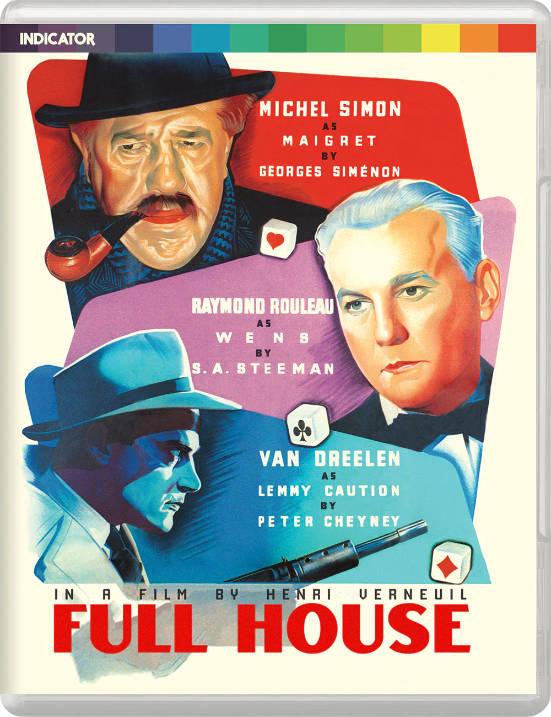
Full House (Brelan d’as, literally “three aces”, brelan being a poker term meaning “three of a kind”) is a portmanteau film, three stories of between thirty-four and forty-two minutes, each featuring a famous figure from the printed page. In order of star billing, though not that of appearance on screen, they are Georges Simenon’s Inspector Maigret (Michel Simon), S.A. (Stanislas-André) Steeman’s Inspector Wencelas Vorobeïtchik, or Inspector Wens for short (Raymond Rouleau), and Peter Cheyney’s FBI agent Lemmy Caution (John Van Dreelen, billed simply as Van Dreelen). The three episodes in this film are based on original stories by these authors, all adapted for the screen by Jacques Companeez.
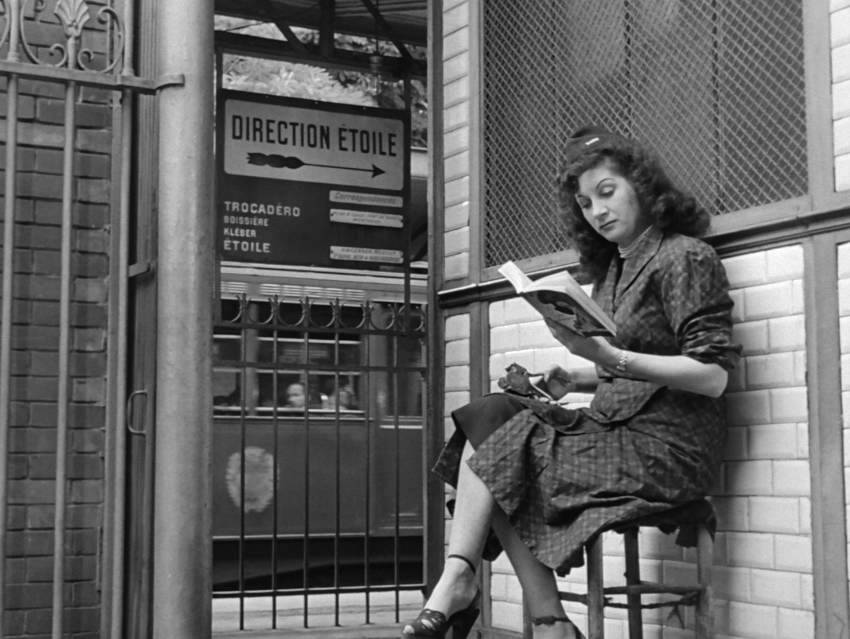
But first we have a short prologue. As the narrator (Jacques Morel) tells us, this could be any day in Paris, any Parisian secretly or not so secretly reading a novel. A ticket seller on the Métro is in her imagination in Texas due to the western she is reading. A man is so absorbed in his book that he misses his bus. Another woman is in a café, book in one hand, croissant in the other. A boy buys a crime novel and tries out his hard-boiledese by calling the seller “cutie”. An elderly gent shuffles away with his book inside a plain wrapper, for his delectation and maybe titillation back home. And so we move on to the stories themselves.
First up is the blond-haired Inspector Wens, in The Alibi of Inspector Wens (L’alibi, de Monsieur Wens). The Inspector investigates the murder of a woman, an affair which involves multiple disguises and crosses and double-crosses. However, in classic whodunnit style, Wens explains it all to the gathering and to us.
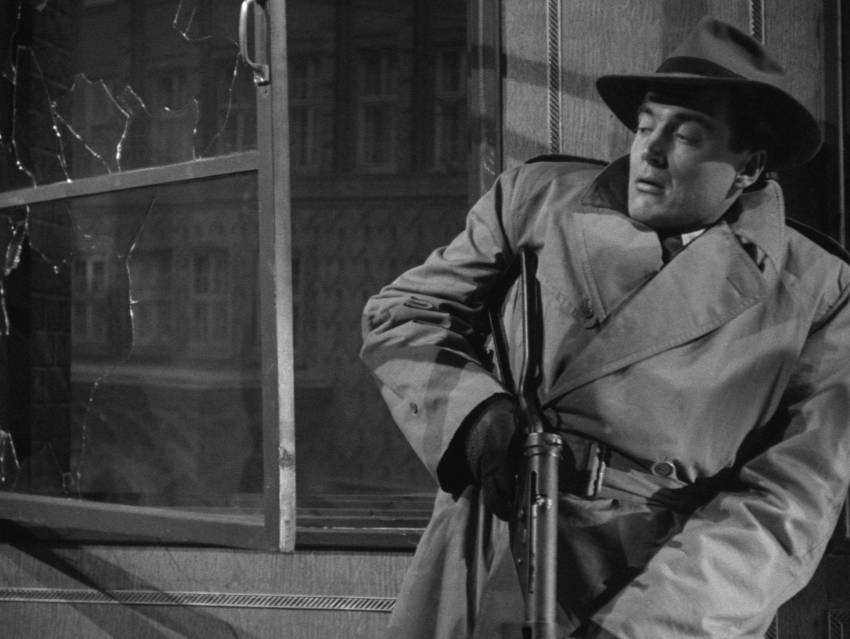
Next, we’re in New York, but not for long, as Lemmy Caution is in a plane to Paris in I’m Tender-Hearted (Je suis un tendre). Caution has sent so many gangsters to the electric chair he’s risked a power shortage in the USA. He is in pursuit of Rudi Siguella, a kidnapper and bank robber who’ll shoot someone just to keep in practice. The trail takes Caution from Paris to Hamburg (where the film had a location shoot) and back again, in the slightly longest and certainly the most convoluted of the three stories. Lemmy Caution is probably best known outside French filmgoing circles as the protagonist of Jean-Luc Godard’s Alphaville (1965), where he was played by Eddie Constantine. In Verneuil’s film, Caution proves himself not such a softie after all.And finally we have Simenon’s much-filmed on big and small screens Inspector Maigret, in The Evidence of the Altar Boy (Le témoinage de l’enfant de chœur). Said altar boy, Justin (Christian Fourcade), witnesses a murder, but the police don’t believe him. Except, that is, Maigret, who helps Justin and in the end takes the law into his own hands.
Full House shows that what one country’s view of another’s cinema is not necessarily that of people in that country. In the UK at least, French cinema released and shown included classics from the likes of Jean Renoir, Marcel Carné and others. In the later 1950s to early 1960s, the New Wave broke and Jean-Luc Godard, François Truffaut, Louis Malle, Alain Resnais, Agnés Varda, Claude Chabrol, Eric Rohmer and others became names to conjure with for British cinephiles. Yet their films were for the most part not what French cinemagoers were spending their hard-earned francs on, even if some of the New Wavers disdained it. More avowedly commercial product didn’t always cross the Channel. Full House is a case in point. While other films by Henri Verneuil did see the light of British projector lamps, Full House wasn’t one of them. This Blu-ray marks its first British commercial release.
Henri Verneuil (1920-2002) was French-Armenian, born (as Ashot Malakian) in what was then part of the Ottoman Empire and is now Turkey. At the age of four his family fled to France following the Armenian genocide. After working as a journalist before entering the film industry. His first film as director, the short Escale au soleil (1947), starred the French comedian Fernandel, with whom Verneuil was to work several more times. Verneuil was a proficient craftsman, adept in several genres and many of his films were popular successes. However, that didn’t cut much ice with the New Wave contingent who started out as film critics, consigning Verneuil’s work to the “cinéma du papa” they were striking out against as old-fashioned. They categorised him as one of their “honest tradesmen”. The New Wavers’ films, while fêted overseas, were often not exactly box office. Truffaut, for example, had one of the biggest hits of any New Waver late in his career with The Last Metro. Meanwhile, the French public bought tickets for the films of Verneuil and those like him.
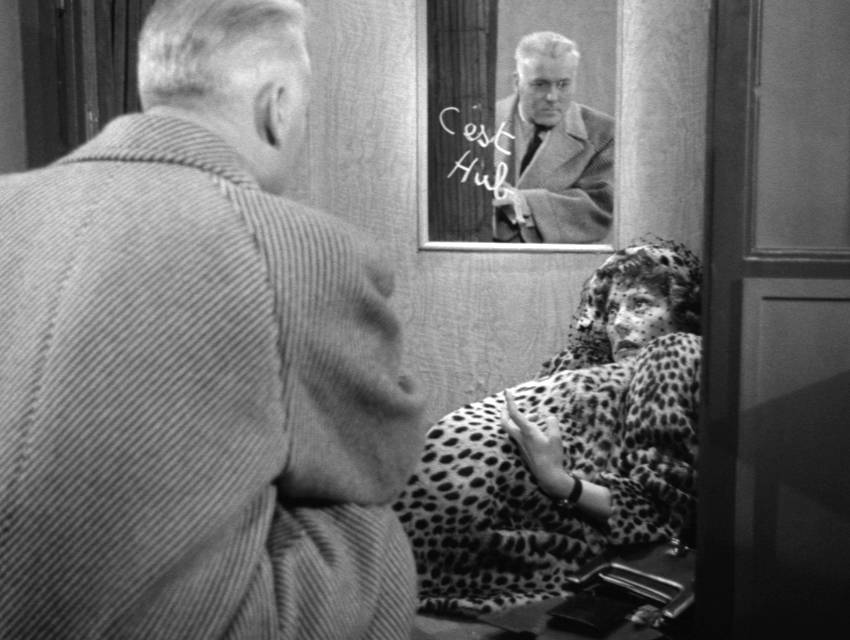
You can see this in Full House, the three stories told with a brisk professionalism, with a few stylistic effects thrown in, such as the focus pulling back and forth just before Justin faints in church. Verneuil ably manages changes of tone from one episode to the next, beginning with light irony in the Wens segment with the next two becoming progressively more serious and at times darker. Although the three segments inevitably have different casts, the crew is the same throughout, and the film is well shot in black and white by André Germain.
Released on 12 September 1952, Full House opened at four of Paris’s first-run cinemas. It had competition that week, as it opened at the same time as both Vittorio De Sica’s Umberto D, which had the lion’s share of the critical attention, and another portmanteau film, Max Ophuls’s Le plaisir. It’s fair to say that those two have gone on to be much better known than Verneuil’s film, but Full House played for a respectable five weeks at its cinemas before going wider to the Parisian suburbs and around the country. So French filmgoers were satisfied, but unlike De Sica’s and Ophuls’s films Verneuil’s film didn’t cross the Channel.
Once the final story has ended, our narrator takes us back to Paris and that ticket-seller, now beside the Thames in her head, as she is reading a Sherlock Holmes. But that, the narrator says, is another story.
sound and vision
Full House is released by Powerhouse as spine number 344 in the Indicator series, a Blu-ray encoded for regions A and B. The film has a 15 certificate. The reason for that is “brief nudity”, namely two shots of a topless stripper in the background not in sharp focus. That might well not have been left in if the film had been submitted to the BBFC circa 1952, even with the X certificate which had been introduced the previous year. What this goes to show is that at the time France was more liberal in what it would allow on screen than other countries, the UK and US certainly among them. (Sweden was another more liberal country – see for example, some of Ingmar Bergman’s early films.) There is also a scene of a young girl standing in a tub being washed by her mother, but that would be deemed “natural nudity” and wouldn’t attract a 15. Michel Simon, being a documentary containing nothing which would exceed a PG certificate, has been exempted from classification for this release.
The film was shot in black and white 35mm and as you would expect for a film from 1952, was in Academy Ratio, so this transfer is in the intended 1.37:1. The transfer is derived from a 4K restoration from the original 35mm nitrate negative and is sharp, with wide greyscale and the contrast so necessary in black and white spot-on. It’s maybe sharper than a 1952 cinema print (nitrate or safety stock) would have been, as a 35mm cinema print is three generations from the original negative while this restoration is taken from that negative, so for example rear projection is maybe more noticeable now than it would have been in cinemas back then.
As for the sound, it’s the original mono, rendered as LPCM 1.0. There’s nothing to report here: the film is the result of French technical expertise, and dialogue and sound effects and music are as they should be. There are optional English subtitles (on as default) for this French-language film and the documentary Michel Simon and I didn’t spot any errors in them. They aren’t hard-of-hearing subtitles, though, so some German and English dialogue, and a couple of songs in the latter language, go unsubtitled.
special features
Michel Simon (14:51)
This is a black-and-white Danish-made documentary from 1964, which accompanied John Frankenheimer’s The Train (which featured Michel Simon in the cast) in Denmark’s cinemas. It later shared Denmark’s Bodil Award for Best Documentary with another film by the same director, Ole Roos, P.H. Lys, a portrait of the designer Poul Henningsen.
Despite its Danish provenance, the audio of this black-and-white film is entirely in French, namely either voiceover or address to camera by its subject, who for some of the time is holding his cat Nenette or his dog Boy. But we begin with a series of still photographs, some of Simon seated with a camera pointed at him, with Simon relating in voiceover how he received a letter from a Japanese rice farmer who cycled twenty-seven kilometres there and back to see him in Panique (1946, also based on a Simenon novel, one later remade in 1989 as Monsieur Hire, directed by Patrice Leconte) and recognised a kindred spirit. After the title card, Simon appears on screen. He says he finds talking about himself painful, as it’s not him you see on the screen but the character he played. He does regard himself as a character actor. However, his life has been “a tragedy from the start”. He arrived in Paris in 1912, aged seventeen, scraping a living while staying at the Hôtel de la Renaissance, seeing that as a sign – as he was half-dead, maybe he could stay at the Rebirth Hotel, even though all sorts of lowlives were also living there. However, he went on to an acting career, of a hundred and thirty-three films and seventy-three stage plays (as of the making of this documentary, that is).
However, his first three films (including Renoir’s La chienne (1931) and Boudu Saved from Drowning, from 1932) were banned by the police or condemned by the church. Simon thought his career was over, but then came Jean Vigo with L’atalante (1934), a great film but a commercial failure which had been taken out of the hands of its soon-to-be-deceased director, as Simon goes on to relate. Simon says that he has said that every film would be his last, but he has not been one to keep promises. He says that his closeness to animals – not just the cat and dog but a monkey he feeds a banana to, and some birds – something you can’t get in a theatre or cinema. However, there have been compensations in the acting roles he has had. However, he calls himself an amateur, who fell into the theatre by accident and managed to make a career of it.
Simon continued to make films until 1975, the year he died at the age of eighty.
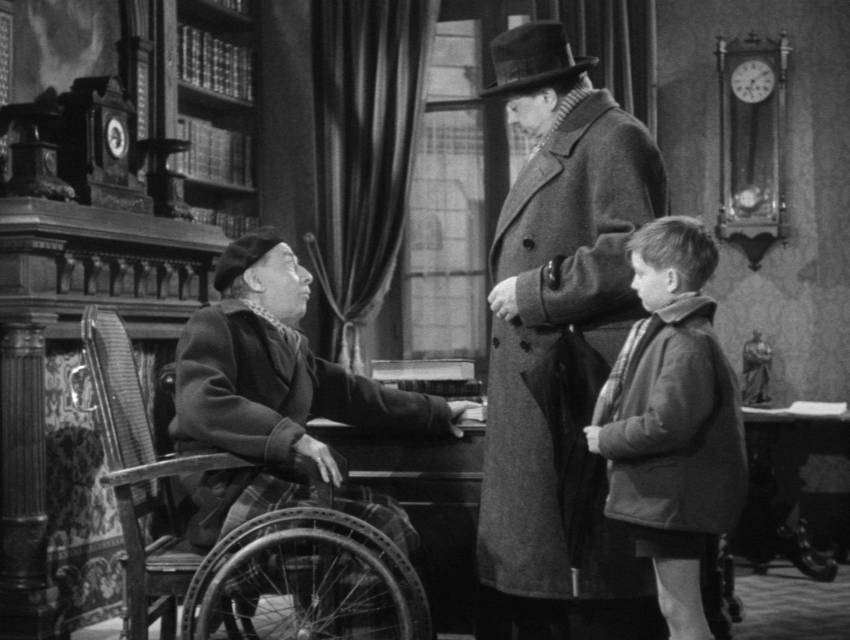
Image gallery
A gallery of twenty-nine images, navigated by the NEXT button on your remote. It comprises stills (all black and white), lobby cards, posters and the original press kit.
Booklet
Indicator’s booklet, available with the limited edition of this release, runs to thirty-six pages. It begins with “Série Noire (et Blanc)” by Eric Smoodin, which could have done with a spoiler warning, so read it after you have seen the film. This is a comprehensive overview of the film and Henri Verneuil’s career as a whole. I’ve taken information from it for this review. “Three Aces” by Jeff Billington, concentrates on the film’s protagonists and their literary roots and creators. This draws on newspaper and magazine accounts, for example an interview with Simenon’s second wife Denise which gives an account of his lifestyle and what sounded like an ironclad schedule enabling him to write a novel in eleven days, often published under multiple pseudonyms. Throughout his career he published around four hundred of them. This piece is particularly useful regarding the least-known of the three authors, S.A. Steeman and his Inspector Wens, and we also hear about the British writer Peter Cheyney, who began as a reporter before turning to crime of the written variety. While by no means as prolific as Simenon (very few writers were), he still produced two novels a year, dictated at the rate of 3000 words a day.
Also in the booklet is “An Artist” by Ib Monty, from 1965. This is a review of Michel Simon, translated from Danish. The booklet includes a cast and crew listing for Full House and Michel Simon and plenty of stills.
final thoughts
Full House is an entertaining triple bill in one, a good example of the more commercial end of French cinema, which brought in audiences at home but didn’t travel much outside the country. Although all three protagonists have had their stories filmed elsewhere many times, aficionados of crime fiction will want to look out for this film containing them all. The booklet in this limited edition gives us necessary context and the film is well presented on this Indicator Blu-ray.
Full House [Brelan d’as]
France 1952 | 117 mins
directed by: Henri Verneuil
written by: Jacques Companeez (adaptation), André Tabet (dialogue); from short stories by Georges Simenon, Stanislas-André Steeman (as S A Steeman), Peter Cheyney
cast: Michel Simon, Raymond Rouleau, John Van Dreelen (as Van Dreelen), Nathalie Nattier, Arlette Merry
distributor: Indicator
release date: 20 July 2026