
Small wonder
Before making the masterful Coach to Vienna and The Ear, director Karel Kachyna collaborated with his regular screenwriter Jan Procházka on LONG LIVE THE REPUBLIC! [AŤ ŽIJE REPUBLIKA], an extraordinary and ambitious melding of reality, memory and fantasy set in late WWII Czechoslovakia. A mesmerised Slarek discovered an unexpected personal connection with its young protagonist on Second Run’s recently released Blu-ray.
I do love it when a film delivers key locational, temporal, sociopolitical and character information without spelling it out with a post-title text crawl, scene-setting narration or overly expository dialogue. With that in mind, here’s how the opening scenes of director and co-writer (with his friend and regular collaborator Jan Procházka, from Procházka’s own autobiographical novel) Karel Kachyna’s 1965 Long Live the Republic! [Ať žije republika] unfold.
It begins with a static shot of diminutive young Oldřich (Zdeněk Listibǔrek) despondently measuring his height in the family kitchen and worrying that he might never grow up and spend his life being referred to by the pejorative nickname ‘Midget’. The opening titles follow, then we join Oldřich and his father (Vlado Müller) outside the house as they look skyward at a propellor driven plane circling overhead, one that Oldřich theorises is on an observational mission. That his father impatiently dismisses such comments as useless says something about their relationship from the off. The father then sends the boy to buy two crowns’ worth of whitewash from local stolen goods fence Josef Petrželá, curtly telling him not to visit someone named Vitlich and ordering him to leave “those dogs” alone. As Oldřich prepares to depart on a bicycle that is clearly way too large for someone of his short stature, his mother (Naděžda Gajerová) calls from an open window for him to take care and not fall off. Oldřich reassures her with a smile that signals that their bond is far stronger than the one Oldřich has with his father, a connection that is then emphasised by the POV shot looking back at her as the boy departs.
The social and historical situation is economically signposted as Oldřich passes a nearby house whose owner is outside busily boarding up the windows, while a nearby business is tellingly identified on its firmly closed doors as a blacksmith in lettering that is printed in German as well as Czech, under which is handwritten in Czech only, “Blacksmith after the war!” Oldřich briefly pauses his journey to observe a family trying to corral a large pig in their backyard, and angers the mother by laughingly wishing her a good morning, suggesting that he may have a history of winding her up. It’s then that he spots four boys, all of whom are also looking skyward at the circling plane and whom Oldřich amusingly describes in sparsely employed voiceover as “Europe’s biggest nitwits.” Rather than greeting them or even giving them a wide berth, he elects to cycle directly towards them, causing them to scatter and immediately chase after him on foot, much to the mischievous Oldřich’s amusement. As they mock him, hurl stones in his direction and call him by his disliked nickname, he cycles fast enough to stay safely out of reach and fires back at them with a self-composed taunt that describes them individually as Čumát the idiot, Kaderka the thief, Vašák the shitbag, and Rez the boy who lives in a stinky house. This cheerful bravado is then cut sharply short when Oldřich crashes his bike into shrubbery and is sent sprawling. We’re then shown not what actually happens but a vision of how Oldřich imagines things would ideally play out, as he punches one boy out, dangles another from a tree by his trouser belt, and pushes a third into a nearby pond. This prompts the fourth to crawl apologetically towards him on all fours with the toppled bucket that Oldřich had dangling from the handlebars in his mouth like an obedient dog. This instantly establishes Oldřich as a Billy Liar-like dreamer, an aspect of his character that will later become a major component of a story that is told entirely from his perspective. When he snaps back to reality, he is left hugging a severely grazed knee as the gang of four laughingly belittle him before walking away.
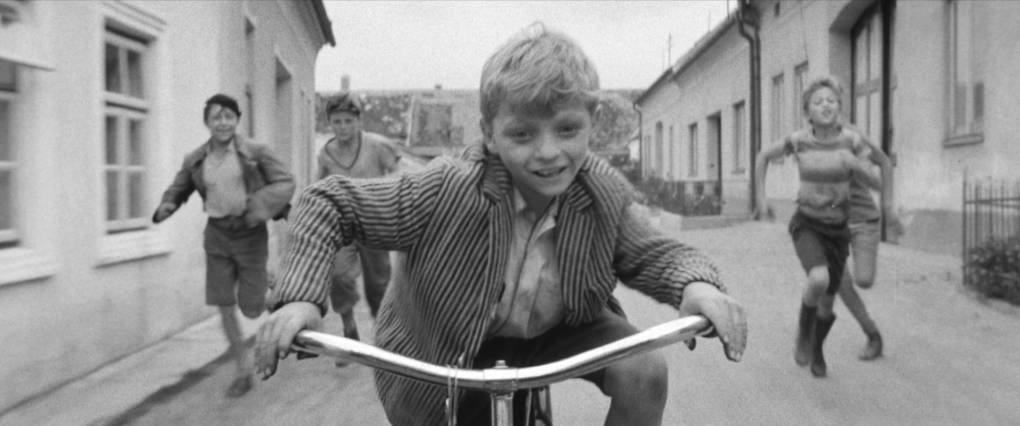
All of this unfolds in fewer than four minutes of impeccably staged and filmed screen time in which Oldřich remains the principal focus of Closely Observed Trains and Larks on a String cinematographer Jaromír Šofr’s often thrillingly mobile camera, which glides along with Oldřich as he somehow pedals and balances his oversized cycle, intermittently switching to his point-of-view. Equally impressive here is Miroslav Hájek’s sharp editing, which moves the chase at a belting pace and shows a real sense of forward-looking flair when the tumble Oldřich takes is seemingly observed by the angelic statue that he almost collides with. This is captured from three angles in rapid succession, and when I say rapid, I mean it – the first two shots run for half-a second apiece and the third almost instantly tilts down to the fallen Oldřich as he glares accusingly up at the stone angel as if it is somehow judging him for his folly.
More is revealed about Oldřich as he gets to his feet, rubs the leaves of a plant onto his wound (I’m old enough to remember when this was still common practice with countryside folk even in the UK, dock leaves for nettle stings and all that), and says a polite good morning to a man named Kaderka as he approaches on his horse-drawn cart. When Kaderka stonily ignores the boy’s greeting and almost squashes him against a wall as he passes, Oldřich reacts by running after him and pulling the cork from the huge barrel on the rear of the cart, spilling its contents all over the road.
When collecting the whitewash from the gruff and miserly Petrželá, the plane from earlier once again circles overhead, and we get our first hint of the shifting nature of the front line when Petrželá asks the knowledgeable Oldřich whether the aircraft is Russian or German. “Messerschmidt,” Oldřich confidently replies. “A fighter plane.” Oldřich then ignores his father’s instructions and heads to the house of the aforementioned Cyril Vitlich (Gustáv Valach). It tuns out that he’s not home, but Oldřich eases into his stoutly fenced yard anyway to briefly play with “those dogs,” focussing on the small litter of puppies being watched over by their mother. It’s then that we get the most unambiguous bit of scene setting, as Oldřich arrives in the town square to discover a group of German soldiers jovially battling with each other to get access to a lone public water pump. One of them even makes friendly overtures to Oldřich, asking if he speaks German, and then switching to Czech to ask if he was expecting a Russian. As the soldiers depart, Oldřich spies a dropped cigarette case and pockets it, and a short while later arrives back home to be berated by his extended absence by his father. Oldřich claims that Petrželá wasn’t home, which his father knows for a fact is a lie, one he slaps the boy sharply across the face for telling, which prompts his concerned wife to caution him, “Don’t beat him in the street.” Get that? Not, “Don’t beat him,” just don’t do it where your actions can be witnessed by others. Intriguingly, the father uses the remaining whitewash (Oldřich nicked some himself to obscure wording on a sign located close to Cyril’s home) to paint the Czech for “Typhoid” on the gates to his yard. Again, the reason for doing this is not explained, and we are left to speculate that this is a ploy to discourage any invaders from entering the premises. At this point, we are a mere eight minutes into this 132 minute film, and there is so, so much more to Oldřich’s story yet to tell.
An aside, but, I hope, a relevant one. Just occasionally I get asked why I picked the name Cine Outsider (okay, DVD Outsider in its original and rather short-sighted form) for this site. As it happens, there are a variety of reasons, but a key one stems from my own lifelong status as someone who never really fitted in and who became a non-conformist not as a political statement but because the conventions by which most people comfortably live (morally rather than financially) just never worked for me. For some in this position, this can lead to a disconnect with society that can prove damaging for them and potentially even those around them, especially now that we have the likes of Chat GTP to confide in and take sometimes catastrophic advice from. In that sense I’ve been lucky, having (eventually) found a niche way of living that I could afford and that would allow me to live my life with a level of independence and isolation that suits my temperament down to the ground.
Having said that, being a willing outsider as an adult is one thing, but as a kid it’s a very different story, as it’s at that age that events can conspire to shape you into the social outcast that you might later become. Kids tend to form bonds with anyone their age with whom they have a connection and often strive for popularity within their social group, and if that group rejects, belittles, and even bullies them, the seeds for the direction their life might later take are sometimes sewn, to be potentially either watered or poisoned by how they relate to others when they hit their teens. I certainly did not need some overpaid, state-the-bleeding-obvious shrink to tell me that’s how my own later world view and personality was initially shaped.
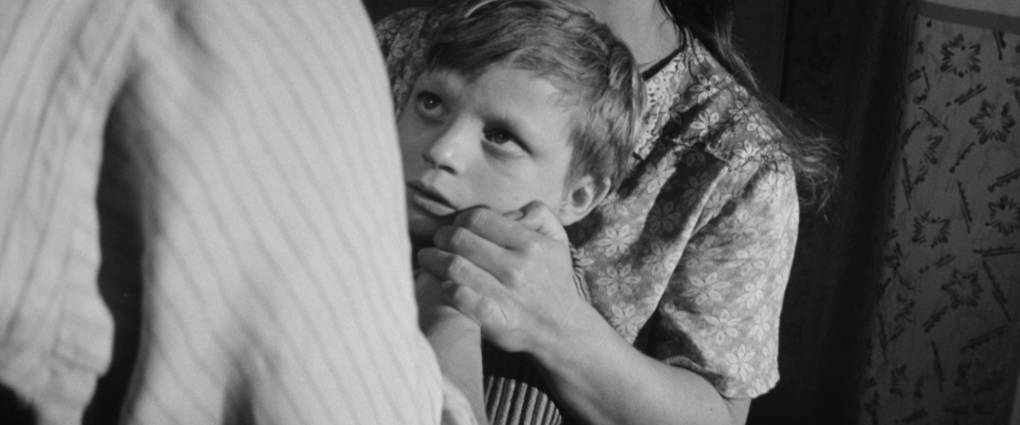
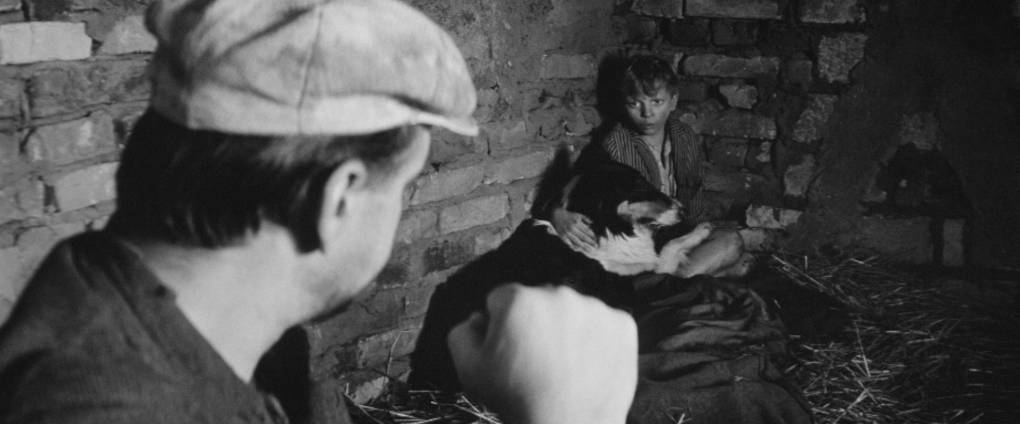
I’ve come clean on all this specifically to make clear why I found Oldřich Vařeka (Zdeněk Lstibůrek), the 12-year-old lead character of Long Live the Republic! [Ať žije republika] so instantly and easily relatable, despite the vastly different circumstances under which we lived our formative years. Oldřich, you see, spent his childhood in a village in the Czech region of Moravia, and we join him in spring of 1945 when the Second World War was in it closing stages, and I genuinely do not have anything in my youth that is remotely comparable to that. An only child, he lives with a caring mother and a brutish father who viciously beats him for seemingly any infraction. That Oldřich is able to anticipate these thrashings is neatly captured by a throwaway moment when, before heading inside after his latest escapade, he shoves a hat stuffed with straw down the back of his shorts to absorb the caning that he knows full well will follow. I should note at here that my own father never hit me once, despite the sometimes serious trouble that I repeatedly landed myself in, but I was young at a time when corporal punishment was still deemed acceptable and took repeated canings from school heads, and even on occasion from my furious mother (whom I dearly loved but whom I gave good reason to be livid with me), so my empathy with Oldřich was strong on this point. And for those backward-thinking souls who still believe that a return to hitting kids as a punishment would be a good thing, know that it never persuaded me to change my ways, just pushed me to be a far better troublemaker and avoid getting caught. I also strongly related to Oldřich’s relationship with the other village kids of his age, a gang of boys with whom he would clearly like to hang out but who regard him with contempt and mock his short stature with the aforementioned nickname, to which the sparky Oldřich responds with individually targeted insults of his own. There’s even a flashback (one that eventually develops a poetically fanciful element) in which Oldřich is chased by a large group of boys and climbs a tree to escape, only for his pursuers to start pelting him with snowballs in a sequence that that triggered a specific memory from my own childhood, though in my case the snowballs were apples and they really hurt when they made contact.
Oldřich’s fractious relationship with his father and the rejection of the other village boys forces a degree of survival-inspired and curiosity-driven independence on him that gets him into all sorts of adventures and ultimately lands him in even more trouble with a father whose bullying was a catalyst for his behaviour in the first place. The boy clearly has a more civilised father-son relationship with Cyril, to whose farmhouse he heads after running away from home, not for the first time if Cyril’s response is anything to go by. Cyril treats the boy with a kindness and concern for his safety that is lacking in his father, feeding him and warning him of dangers that lay ahead in these turbulent times. When he removes the wheels from his carts to prevent looters from stealing them, he assures Oldřich that he is just playing a game, but when those looters show up, the two hide in an attic room watching through a small window like resistance comrades in hiding from the Gestapo.
In one of the most moving sequences after he has run away, Oldřich repeatedly heads home but stays hidden a safe distance from the house, shivering in heavy rain and snow as his mother calls out for him. He eventually responds to her pleas and approaches, despite distrusting her claim that his father is asleep and will not beat him. Unsurprisingly, his father is very much awake and is about to beat the boy when he is stopped by his wife who, fearful that he will hit her son so hard he will kill him, reluctantly takes on delivering the punishment herself. Egged on by a tearful Oldřich, who knows that her blows will be less damaging than anything dished out by his father, she slaps him repeatedly, an act that prompts her to weep in despair, but which may well have saved her son’s life.
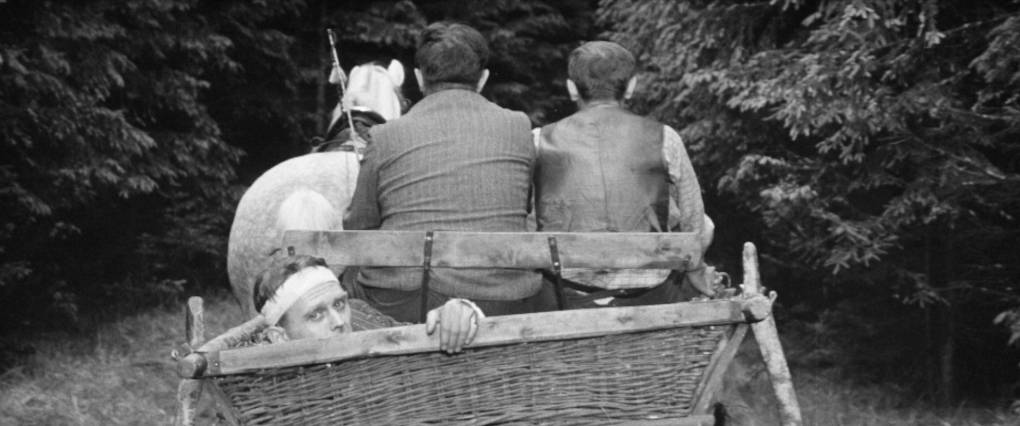
Things take a turn for Oldřich when his father assigns him the job of transporting a cartload of hay and oats away from the soon-to-be occupied village, giving him specific instructions on the route he should take. The still defiant Oldřich confidently looks his father squarely in the eye as he repeats his orders verbatim, and even this prompts the man to start clenching his fits in anger. Although tasked with – and clearly capable of performing – the responsibilities of an adult, Oldřich is still a child with a child’s curiosity and sense of risk-taking adventure. Thus he soon pauses his journey to drink milk from the churn he was given for the journey and observe the lengthy column of villagers leaving their homes with whatever goods they are able to carry. He drops in on Cyril, who warns him to get moving as the Russians will soon be here and lets the boy take his dog Iza to keep him company as he enters the forest. Here he encounters and is chased by the four village boys, who are also driving carts and have presumably been sent on similar missions by their respective families. In what may be the film’s only slice of almost Hollywood-like coding, Oldřich’s cart is being pulled by a single dappled white horse, while those driven by his pursuers are each pulled by two dark horses. It’s to the film’s credit that it was only on my second viewing that this really registered.
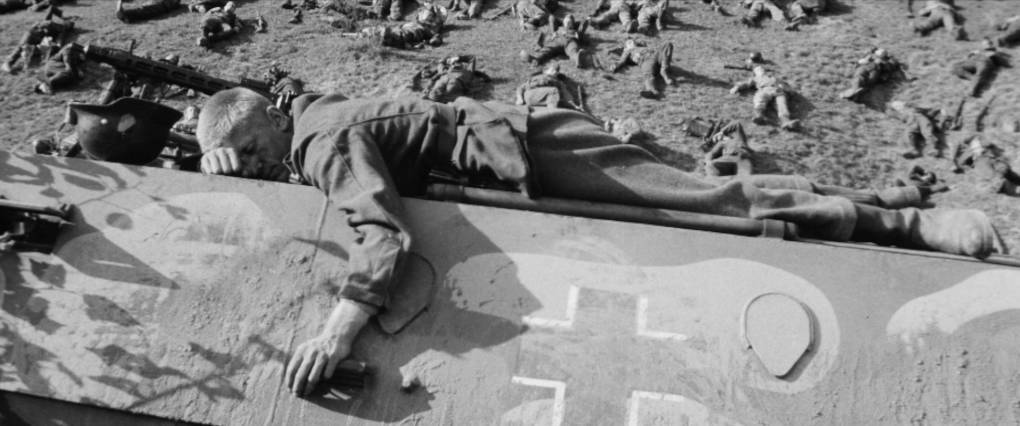
By now, the narrative has already started to fracture to the point where reality, memory and fantasy are becoming almost interchangeable, with recollections providing backstory details about individual characters, the most painful of which reveals why the once happily married Cyril now lives alone in a farmhouse home that feels too big for one person. As Oldřich pushes forward in his own staccato way, events unfold in a manner that would test the resolve of a determined and athletic adult, let alone a young boy. It starts when he is hijacked and his horse and cart are stolen by two retreating German soldiers in order to transport one of their injured comrades to safer territory. Oldřich secretly follows and when he attempts to sabotage their efforts by dislodging one of the cartwheels, he takes a beating from one of soldiers so severe that it knocks him unconscious. On two occasions, first impressions are memorably usurped, firstly when Oldřich discovers what looks like a field littered with the bodies of dead German soldiers who unexpectedly turn out to just be sleeping in the midday sun, then later when he is chased by a Russian soldier whom he assumes intends to do him harm but who is instead trying to protect him from enemy gunfire. When he unexpectedly meets up with Cyril again, he is genuinely startled when Cyril slaps him for his insolence. “I’m not your son,” Oldřich tells him sullenly, “so stop hitting me!” Later, he unexpectedly finds his stolen horse being held in a Russian controlled corral and is chased again, then unexpectedly befriended by an injured Russian officer (Yuriy Nazarov), whom he leads to an abandoned German motorcycle and sidecar that the two ride around, risking life and limb for the sheer fun of doing so like a true father and son on a mad day out.
Reality becomes the connecting thread for the increasingly lengthy and dominant flashback and fantasy sequences, with events in the here and now triggering related memories or becoming a launchpad for escapist fantasy, with the two sometimes intermingling to eye-widening effect. It’s all too easy, at a time when even complex compositing and special effects work can be knocked up convincingly by a single individual on their laptop computer, to forget just how much work and how many resources were once required to realise the sort of visually complex and expansive scenes on display here. Several of these must have required a huge amount of work and resources for a sometimes short amount of expressive screen time, whether it be the squadron of uniformed boys (Oldřich included) performing synchronised movements for a sizeable audience of parents and dignitaries, or the cheerful daydream that has Oldřich of outrunning professional race cars on the German motorcycle along a track lined with what looks like hundreds of spectators. The abovementioned sequence in which Oldřich comes across a field of sleeping German soldiers lasts a mere 20 seconds in total and required the costuming of more than 50 extras, all of whom are only seen together in a single wide shot that runs for a mere seven seconds of screen time. There are many such examples, particularly in the film’s second half, when memory and fantasy become so intertwined that it occasionally becomes difficult to differentiate the two, and some of these visions are genuinely astonishing in scale and scope. Perhaps the most visually arresting begins with Oldřich recollecting a conversation he had with his mother while she was washing sheets in the yard of their home, a scene that then expands into a surrealistic representation of her daily grind, as she waters an entire huge hillside of laid out white sheets, while the giant hay bale on which Oldřich likes to play is shown constructed entirely of laundry waiting to be washed. Today, this would be created and composited on a computer, but back then this must have involved physically constructing the sheet-stack, a nearby cart also piled with laundry, and laboriously laying sheets out over the hillside in the hope that the wind wouldn’t pick up and disrupt them before the shot was captured.
With the entire film revolving around Oldřich, a huge amount rests on the shoulders of young Zdeněk Listibǔrek, and he’s genuinely astonishing here, committing so completely and with such honesty and consistence to the character that it never feels like a performance at all. His willingness to seemingly put his body and even life on the line for the role did have me wondering if his parents or guardians were kept in the dark about just what he was asked to do, some of which would probably give Child Protection the heebie-jeebies if this was asked of such a young actor on a Hollywood production. Blows delivered by his parents never look fake, his crash helmet-free motorcycle sidecar ride with the Russian soldier sees the vehicle riding at high speed over rough ground and nearly tipping over at one point, and in a sequence that pre-empts a famous early scene from Elem Klimov’s 1985 masterpiece Come and See [Idi i smotri], he is shown fleeing from a series of what looks like dangerously close and very real explosions.
From what I can gather from my limited research, outside of home turf and the realm of Czech New Wave cineastes, director Karel Kachyňa is not as widely known here as many of his contemporaries, which might be in part down to a lack of availability of his films in the UK even today. It doesn’t help that this film, along with his other politically critical works Coach to Vienna (Kočár do Vídně, 1966), The Nun’s Night (Noc nevěsty, 1967) and The Ear (Ucho, 1969) were all banned at one point on home soil, and after the authorities refused to even release The Ear, Kachyňa was fired from his teaching position at the Film and TV School of the Academy of Performing Arts in Prague. As far as I’m aware, the only other Kachyňa films currently available on disc the UK are the equally superb Coach to Vienna and The Ear, both of which were released on Blu-ray by Second Run, which makes this release of Long Live the Republic! (also from Second Run, bless ‘em) doubly welcome. I say doubly because even without the political backstory, this really is a hell of a film, both as a technical and artistic achievement and as a work of very distinctive vision and imagination in which the personal, the whimsical and the political are consistently and captivatingly intertwined.
The performances, cinematography and editing are all exemplary but are always in the service of the characters and the broken mirror manner in which Kachyňa has elected to tell the story, and his confidence here cannot be overstated. Not only does he trust his audience to differentiate between present, past and daydreamed fantasy – as well as the scenes in which the latter two are interwoven – with only visual or musical cues to guide them, but also that they will not become disorientated by time jumps that move forward from one situation to another with no clear indication of how much time has passed and what may have occurred between the two scenes. Such faith is not misplaced, as no matter how sudden or how fluid the reality/memory/fantasy switches become, I never lost my place, even if it took a second viewing to really appreciate the cultural, historical and subtextual relevance of every narrative turn, every dreamlike childhood memory, and every wishful fantasy. The fact that the story is told entirely from the viewpoint of young Oldřich is often reflected in the expressive and adventurous camera placement, whether empathically matching Oldřich’s eyeline, looking upwards at seemingly towering adults, or down at the boy in a manner that emphasises his self-consciously small stature.
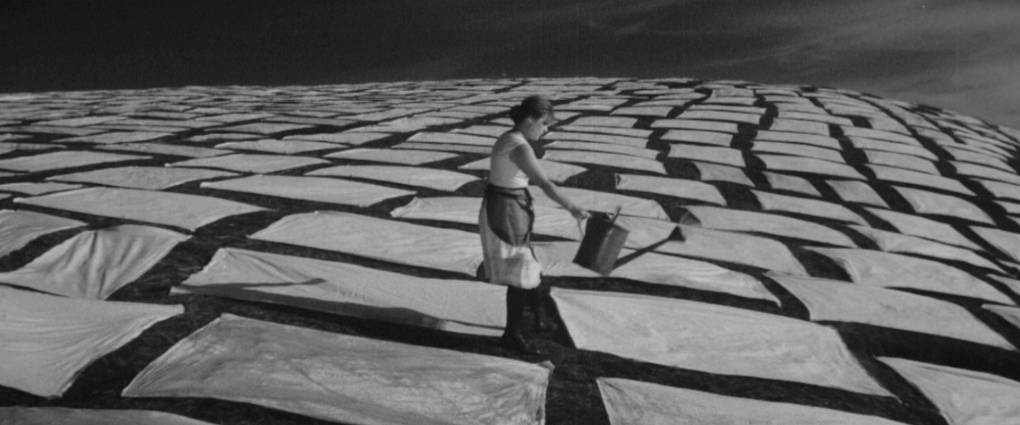
Although set in the later stages of the Second World War, Long Live the Republic! is not a war film per se but a complex, multi-layered coming-of-age story that happens to be set in a period of transition between German occupation and the arrival of the liberating Soviet army, a superficially celebratory moment in a story that still has a couple of sharp stings in its tale. It concludes on an ambiguous note that initially reinforces Oldřich’s outsider status but simultaneously hints that maybe, just maybe, a brighter future might lay ahead for this remarkable child who has been forced by circumstance and the folly of men to grow up before his time.
sound and vision
The back cover of this Blu-ray states that Long Live the Republic! is presented here from a new HD transfer of the best existing materials by the Czech National Film Archive, and when judging the picture quality, it is worth keeping the term ‘best existing materials’ in mind. That said, for the most part this is a very fine transfer, with Jaromír Šofr’s scope monochrome cinematography presented in its original aspect ratio of 2.39:1 and boasting a very nice tonal range, with solid black levels and generally sharp and well-defined detail, with only a handful of shots looking a tad on the softer side. The image also sits solidly in frame and a very fine film grain is visible. What does seem clear is that the original negative was not the source for this transfer, as evidenced by some visible reel change markers, which as far as I’m aware are only added at the printing stage. The resulting digital master has also not undergone a serious clean-up, and there are quite a few dust spots and the occasional brief fine scratch visible, but if it’s a choice between the dust and an automated digital scrub that impacts the grain and the fine detail, I’ll take the dust every time. For the most part, this is a minor issue that doesn’t impact the film and one that I quickly stopped even noticing. I’m personally happy we have the film at all and that it looks as good as it does.
The original mono soundtrack is presented here as dual mono Linear PCM 2.0 and is also in good shape, with the expected tonal restrictions still allowing for clear presentation of the dialogue, sound effects, and composer Jan Novák’s impressive score, and is free from background hiss and obvious signs of wear.
Optional English subtitles are activated by default.
special features
The City Cinematheque (31:22)
A 1998 episode of the American TV series The City Cinematheque – which was/is co-produced with the Department of Media and Communication Arts of The City College of New York and hosted by Professor Jerry Carlson – that was part of a retrospective of the work of director Karel Kachyňa, whom Carlson describes up front as “a great Czech filmmaker whose works we don’t know as well as we should.” I’ll second that. Following an introduction to a screening of Long Live the Republic!, Carlson interviews Kachyňa about this film, The Ear, and what was then his most recent work, the 1994 The Cow [Kráva]. Kachyňa talks about his interest in representing events from a child’s viewpoint and his long-standing relationship with his regular screenwriter Jan Procházka, and reveals that The Ear was immediately banned and shown only to the security services as an example of how low some people could sink. Later in the interview, the lead actress of The Cow, Alena Mihulová, joins Kachyňa to talk about being directed by him and the difference between acting for the camera and in theatre, and Kachyňa chips in to reveal why and how he cast the lead roles in that film. A really valuable grab by Second Run. Both interviewees deliver their responses in Czech, which is translated by the same male voice-over.
A Memory for the Present (Paměť našeho dne) (9:52)
An excellent short film from 1963, written and directed by Jan Němec in the year before the release of his extraordinary debut feature Diamonds of the Night (Démanty noci). Contemporary footage of everyday life in the then Czechoslovak cities of Bratislava, Ostrava, Zlín, Brno and Prague (titled Praha in Czech) is contrasted with WWII archive material depicting the invasion, occupation and liberation of the same locations. It’s sharply edited by Zdeněk Stehlík, whose later editing work includes Jindřich Polák’s delightful science fiction comedy Tomorrow I’ll Wake Up and Scald Myself with Tea (Zítra vstanu a opařím se čajem, 1977), and considering the sheer amount of archive footage that he and Němec must have gone through, the selected clips are impeccably chosen. Often matching the locations precisely, the difference between the peaceful nature of modern life (the short was produced for the Czechoslovak Army Film Unit, so this aspect is a little idealised) and the destruction being wreaked upon these cities and their occupants just two decades earlier is often stark but never feels overstated. Some of the time-shift continuity cuts are superbly done, with archive footage of a protesting citizen being marched off by German army soldiers switching to a newly filmed shot of tourists arriving at the same location at the same walking speed. Then, as they look up admiringly at the nearby cathedral, Stehlík cuts to wartime footage of the same building’s spire in flames as tanks fire shells in its direction. It’s all aided immeasurably by an evocative music score by Jan Klusák – whose feature work includes Jaromil Jireš’ marvellous Valerie and Her Week of Wonders (Valerie a týden divů, 1970) – who at one point expressively weaves the sound of marching boots into the composition. Be warned, the archive footage does include shots of dead and injured soldiers and civilians, and a brief wide shot in which ordinary citizens are being gunned down by the occupying army.
Booklet
A single essay here by Second Run regular and author of The Czechoslovak New Wave, Peter Hames, but it’s a thorough, compelling and hugely informative one that examines the film and the careers and work of director Karel Kachyňa and writer Jan Procházka.
final thoughts
Marvellous. I’ve so far only seen the three Karel Kachyňa films released in the UK by Second Run but have been genuinely knocked out by them all. Long Live the Republic! is perhaps the most ambitious of the three, at least in the sheer breadth of its scope and the effort and organisation it must have taken to bring so many diverse and resource-heavy scenes so poetically to the screen. As for the Blu-ray, who cares about a few dust spots on the source print when it means we get access to such a terrific film in such otherwise fine condition? Bravo once again to Second Run for this release, and while this review may be late, I hope it conveys just how much I enjoyed this film and the reasons I now hold it in such high regard. Highly recommended, and if you haven’t already picked this up and are planning to do so, remember that Second Run’s Blu-ray releases of Coach to Vienna and The Ear are still available and should also be considered essential purchases.
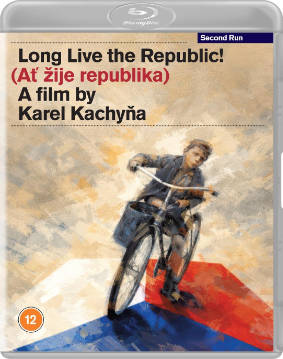
Long Live the Republic! [Ať žije republika]
Czechoslovakia 1965 | 132 mins
directed by: Karel Kachyňa
written by: Karel Kachyňa, Jan Procházka; from the novel by Jan Procházka
cast: Zdeněk Lstibůrek, Naděžda Gajerová, Vlado Müller, Gustáv Valach, Yuriy Nazarov
distributor: Second Run
release date: 16 March 2026